
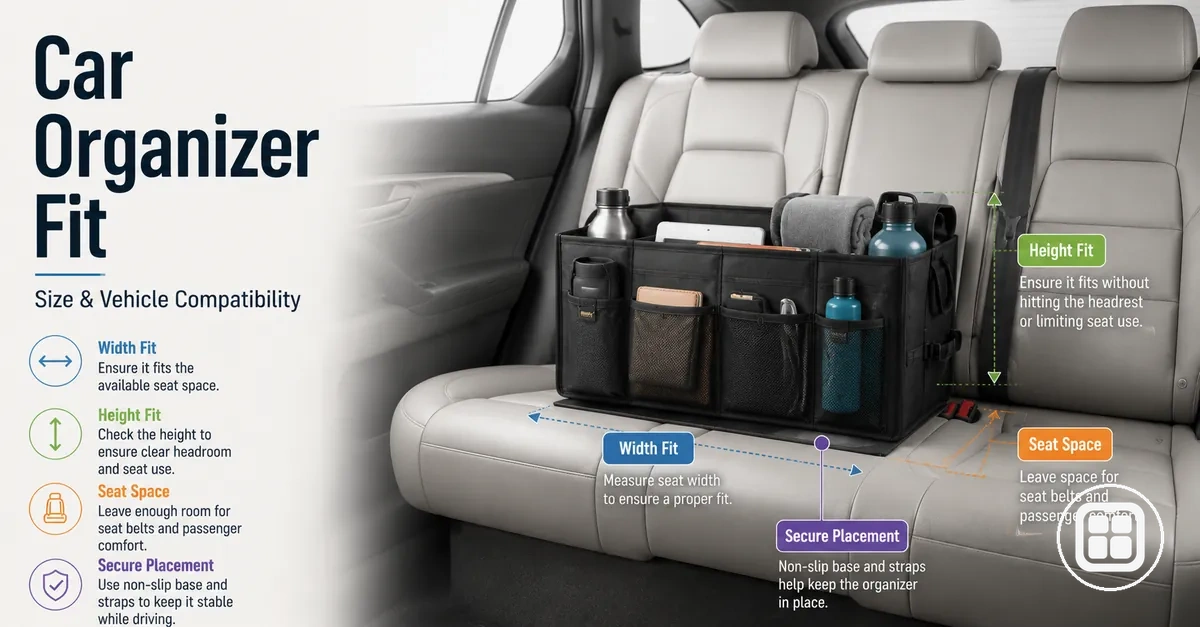
Car organizer compatibility and fit guide
Car organizer compatibility refers to how a car organizer aligns with available vehicle space, organizer dimensions, and the intended placement area inside a vehicle. It focuses on whether the storage structure can be positioned and used without restricting access or creating instability. This relationship is conditional because fit changes based on vehicle layout and the design of the organizer.
In practical use, compatibility becomes clearer when a car organizer is placed in different vehicle zones such as the trunk, backseat, or console area. Each placement area offers different clearance, access paths, and surface conditions that influence how the organizer sits and performs. Organizer dimensions and securing method, including straps or anchor points, directly affect stability and how well the unit stays in position during use.
Car organizer compatibility depends on the interaction between vehicle space, placement area, and securing method rather than a single fixed measurement. Dimensions, clearance, and stability conditions work together to determine whether the fit is practical for everyday use. The following sections explain these factors in more detail to support clearer decision-making before selecting a setup.
How car organizer compatibility works
Car organizer compatibility is the relationship between a car organizer and available vehicle space that determines usable fit. It defines how well the organizer aligns with the vehicle area without restricting access or creating instability. This depends on how dimensions interact with placement inside the vehicle, and compatibility combines size, location, and restraint conditions such as anchor points and stability.
When a car organizer is placed in a compact backseat pocket or a larger trunk area, the outcome changes based on vehicle area and placement. How car organizer compatibility works becomes clearer when the relationship between clearance and placement alignment inside the vehicle is observed.
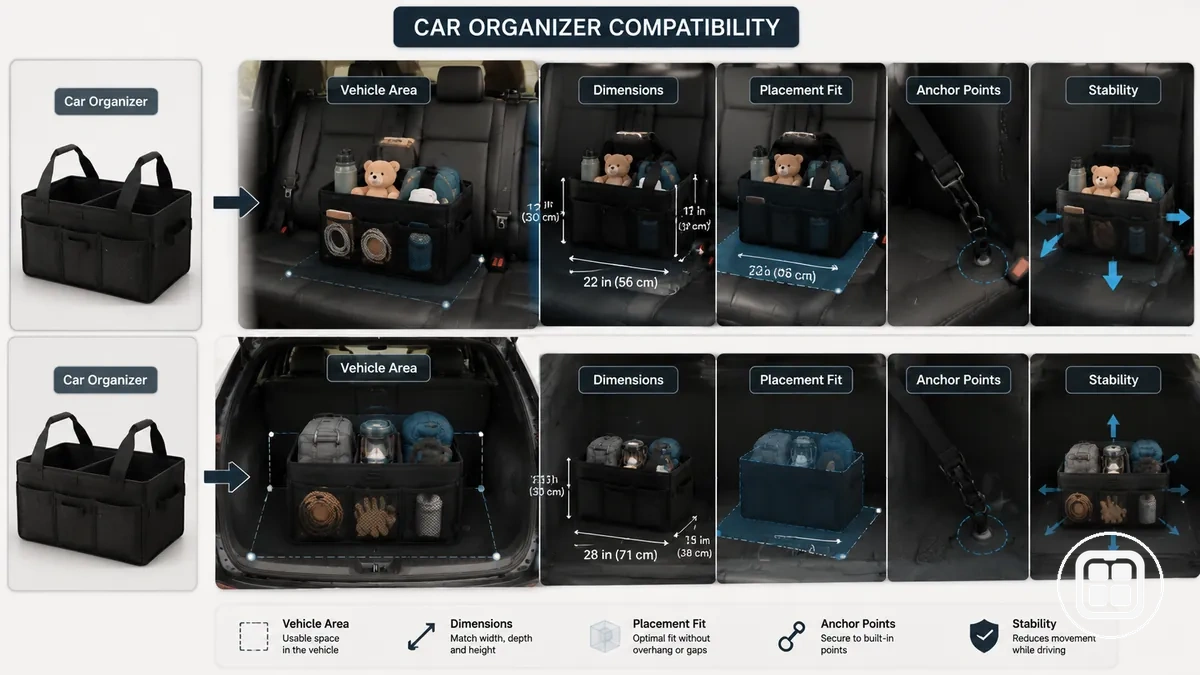
Different vehicle layouts influence how dimensions interact with usable space, especially where straps, anchor points, and surface contact determine stability. Small shifts in placement can change movement risk and access efficiency even when the organizer itself remains the same.
Car organizer compatibility cannot be judged by dimensions alone. It also depends on how placement conditions and stability requirements interact within the vehicle area. This boundary separates compatibility analysis from full organizer-type selection via Back to hub overview.
Fit factors that affect organizer placement
Car organizer compatibility depends on vehicle space, footprint, access path, strap reach, surface texture, and load behavior inside the vehicle area. These elements work together to determine how the organizer sits and functions in real conditions. The overall fit outcome changes because organizer placement is a condition-based fit issue influenced by multiple physical constraints.
In compact cabins or shallow trunks, usable space limits how a car organizer footprint aligns with the available area. Fit factors that affect organizer placement becomes clearer when observing how clearance, access path, and surface texture interact under real vehicle conditions.
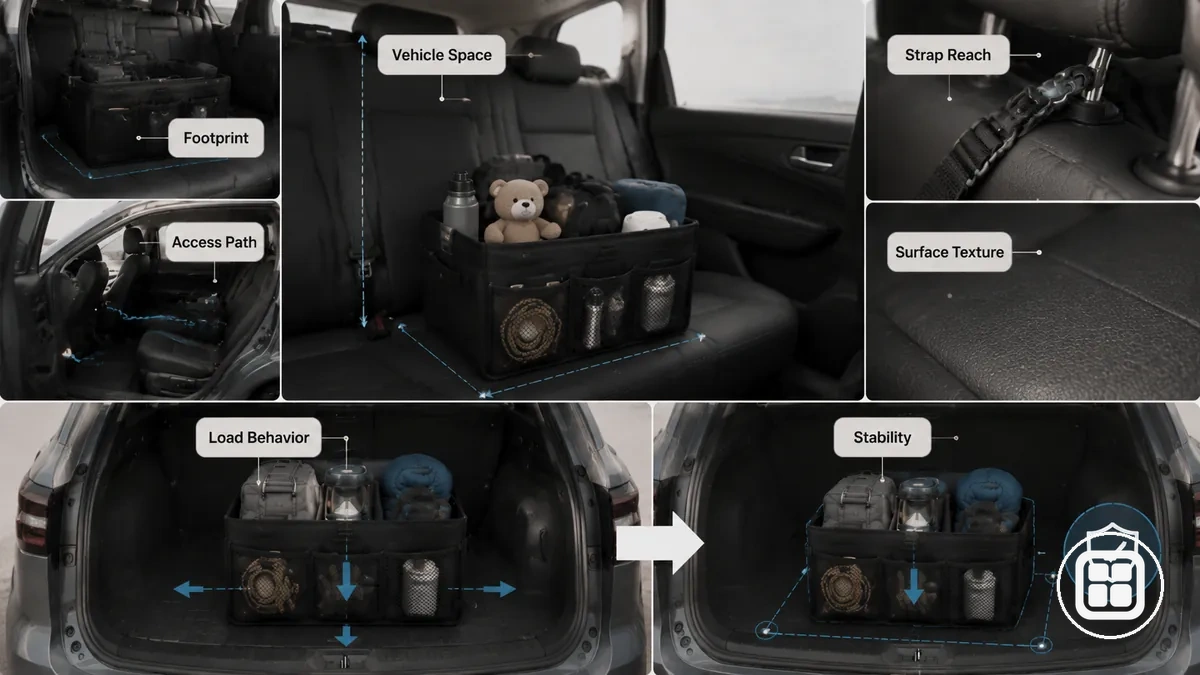
Strap reach and anchor points influence how securely the organizer stays positioned, while load behavior can shift balance during movement. These conditions affect stability even when the organizer size appears suitable for the space.
Unstable organizer placement often occurs when strap reach or surface texture does not align with load behavior inside the vehicle area. The following checklist helps verify physical, access, and secure fit conditions before evaluating placement reliability.
- Vehicle space – limits usable area and affects overall placement flexibility
- Footprint – determines how much surface the organizer occupies and how it aligns with clearance
- Access path – influences how easily stored items can be reached during use
- Strap reach – affects how securely the organizer connects to anchor points
- Surface texture – impacts grip and sliding risk during movement
- Load behavior – changes stability when weight shifts inside the organizer
In vehicles with uneven cargo floors or irregular seat backs, these fit factors interact more strongly, which can increase movement risk and reduce placement stability unless conditions align properly.
Vehicle space and organizer footprint
Vehicle space and organizer footprint define how a car organizer fits within usable space inside a vehicle. This relationship depends on length, width, height, folded state, and clearance rather than empty cabin space alone, which means usable space must be evaluated instead of unused areas that cannot support stable placement.
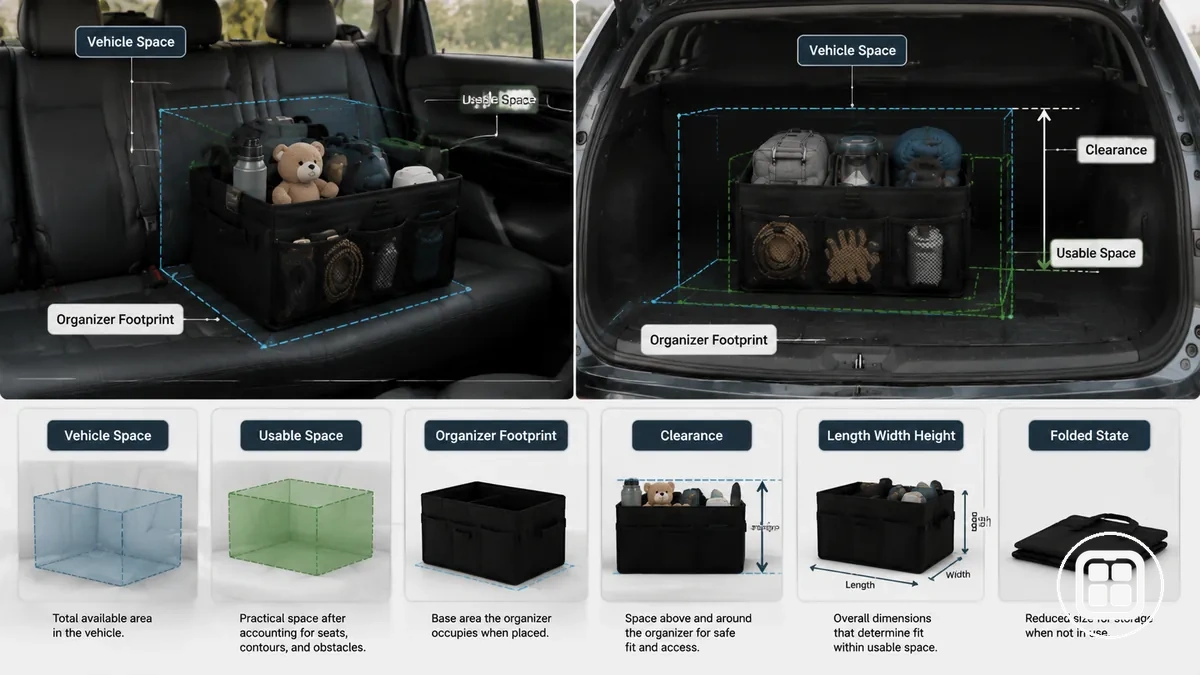
Vehicle space and organizer footprint interaction becomes clearer when clearance and access conditions are observed together. Footprint performance changes when folded state or cargo-floor shape reduces effective usable space, even if the external dimensions of the organizer remain unchanged.
A shallow trunk or tight rear seat area can reduce usable space enough that the same organizer footprint requires adjusted positioning. In such cases, clearance and seat access determine whether the footprint remains functionally usable within the available space.
Seat, trunk, console, and cargo-area placement
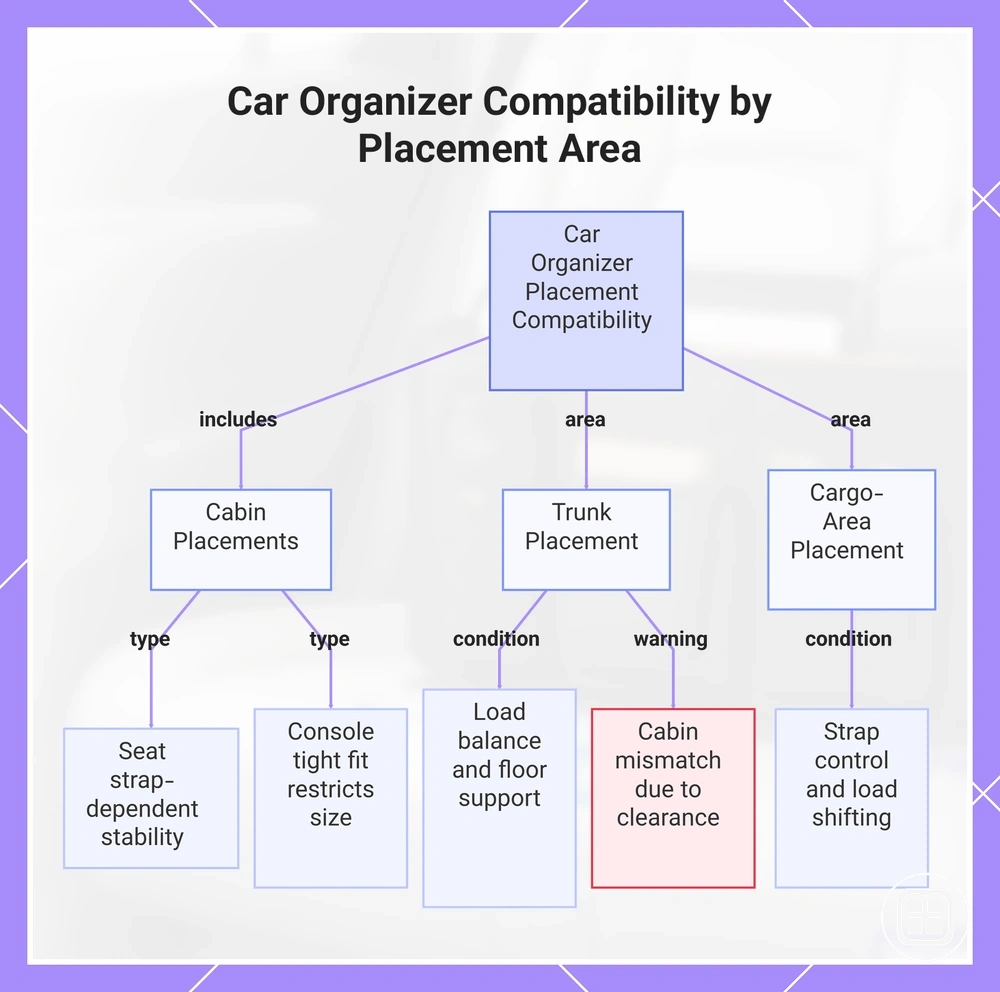
Car organizer compatibility changes based on the vehicle area where placement happens, because seat, trunk, console, and cargo-area conditions directly affect space availability, access behavior, and stability. Each placement creates a different fit condition shaped by straps, anchors, and movement control, which makes compatibility dependent on where the organizer is positioned.
Seat placement typically offers quick access but relies heavily on strap-based attachment, so stability can vary when anchors are weak or when movement occurs during travel. Trunk placement provides more usable area for larger footprints, but stability depends on load balance and cargo-floor support. Console placement is more restricted in space, which limits organizer size but improves access control. Cargo-area placement varies widely in clearance, so compatibility depends on how well straps and anchors control shifting during load changes.
- Seat placement – limited space with strap-based attachment; access is easy but movement risk may increase without strong anchors
- Trunk placement – larger usable area; stability depends on load balance and secure positioning on the cargo floor
- Console placement – tight fit condition; improves access but restricts organizer size due to space limits
- Cargo-area placement – variable usable area; stability depends on strap control and load shifting behavior
Trunk compatibility does not always match cabin suitability because cabin placement often involves tighter clearance, different access paths, and higher sensitivity to movement. View organizer types
This chart shows how car organizer compatibility varies by placement area, highlighting key factors for seat, console, trunk, and cargo-area placements.
Mounting points, straps, and surface stability
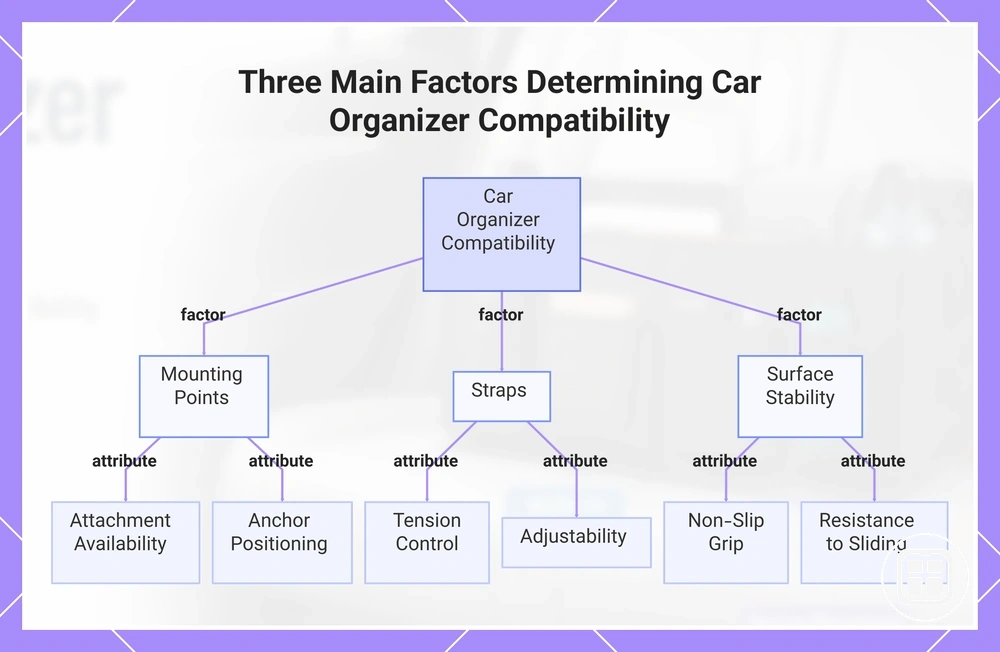
Mounting points, straps, and surface stability determine car organizer compatibility by controlling whether the organizer remains usable after placement inside the vehicle area. This securing setup is a fit condition because even correctly placed organizers may shift or lose stability if attachment and surface grip do not align with load movement.
Mounting points define where straps or hooks can connect, and compatibility depends on whether these attachment points match strap reach and hook position. Straps influence how tension is distributed across the car organizer, and weak alignment with mounting points can reduce stability during load movement. Surface stability also affects usability, since a non-slip surface helps limit sliding when anchors are under tension and the vehicle is in motion.
Key securing conditions:
- Mounting points – determine attachment availability and anchor positioning inside the vehicle area
- Straps – control tension and adjustability, affecting how firmly the organizer holds its position
- Surface stability – depends on non-slip surface grip and resistance to sliding under load movement
- Anchors – provide fixed securing locations that support stability during movement changes
- Load movement – influences balance and can reduce stability if not controlled by straps and anchors
When mounting points, straps, and surface stability are not aligned, compatibility decreases even if the initial placement seems suitable, because movement inside the vehicle area can gradually affect usability.
This chart shows how mounting points, straps, and surface stability affect car organizer compatibility and why alignment between them is critical for long-term usability.
Organizer size and specification checks
Organizer specifications determine compatibility by translating listed dimensions into usable fit conditions inside a vehicle area, rather than treating them as fixed guarantees. This means organizer specifications must be evaluated against footprint and clearance before comparing with actual usable space, since vehicle layouts can vary.
Organizer specifications include dimensions, expanded size, folded size, compartment depth, strap range, and clearance needs. These values describe different usage states of a car organizer, where expanded size affects full deployment space, folded size affects storage flexibility, and strap range influences attachment reach to anchors. Clearance and usable space together determine whether these measurement values can function properly in real placement conditions, especially when access space is limited or irregular.
Interpreting organizer specifications requires connecting measurement data to practical fit outcomes instead of assuming direct compatibility. The table below helps convert size details into decision signals by comparing footprint, clearance, and access conditions before selection.
| Specification | What to compare | Fit meaning |
|---|---|---|
| Dimensions | Vehicle usable space | Overall footprint compatibility |
| Expanded size | Available clearance | Space required during full use |
| Folded size | Storage area | Space needed when not deployed |
| Compartment depth | Access space | Practical usability for storage reach |
| Strap range | Anchor point distance | Attachment flexibility and usability |
| Clearance needs | Vehicle fit area | Restriction level for placement and access |
This interpretation helps align organizer specifications with real-world vehicle conditions, where both exterior footprint and access space must be evaluated together to guide a reliable selection decision.
Dimensions, expanded width, and usable storage depth
Dimensions, expanded width, and usable storage depth define car organizer compatibility by describing how space is consumed when the unit is open and loaded inside a vehicle area. The key sizing doubt comes from how expanded width and internal depth translate into real usable storage depth during actual use, which depends on access and clearance conditions.
Exterior length, height, expanded width, lid clearance, and divider depth together determine how the car organizer behaves in active use. Exterior length and height shape the physical footprint, while expanded width affects lateral space consumption when fully opened. Lid clearance controls whether the unit can open without obstruction, and divider depth influences how usable storage depth is distributed across compartments when items are placed and shift during load conditions.
To interpret these values correctly, it helps to relate each dimension to its functional impact on usable storage depth and access behavior:
| Dimension | Check | Why it matters |
|---|---|---|
| Exterior length | Linear space availability | Defines overall footprint requirement |
| Height | Vertical clearance | Influences stacking and access space |
| Expanded width | Lateral usable space | Determines space use when fully opened |
| Divider depth | Internal storage structure | Affects usable storage depth distribution |
| Lid clearance | Opening space above unit | Controls accessibility during use |
Compact, foldable, and large-format fit ranges
Fit range depends on compact, foldable, and large-format organizer types because each format changes how folded footprint, expansion range, rigidity, and placement flexibility behave under different usable space conditions. This makes fit behavior conditional rather than fixed, especially when the organizer is used in varying storage environments.
Compact formats reduce folded footprint and increase placement flexibility in limited usable space, but they usually restrict expansion range when deployed. Foldable formats balance folded footprint and expansion range, which creates moderate rigidity and adaptable placement flexibility depending on load conditions. Large-format organizers increase expansion range and structural rigidity, but they can reduce placement flexibility because they require more usable space during full use.
The comparison below summarizes how format choice affects fit range behavior across key criteria without implying a fixed superiority.
| Format | Fit advantage | Fit limitation |
|---|---|---|
| Compact | High placement flexibility in limited space | Limited expansion range under load |
| Foldable | Balanced folded footprint and expansion range | Moderate rigidity depending on usage |
| Large-format | High expansion range and rigidity | Reduced placement flexibility in tight spaces |
Vehicle-specific compatibility considerations
Vehicle-specific compatibility depends on body style because sedan, small car, SUV, van, and cargo area layouts change how space shape, anchor points, and usable space interact. This creates conditional fit behavior where compatibility varies based on vehicle-specific compatibility factors such as trim and interior layout rather than a uniform outcome across all vehicle categories.
Space shape, seat arrangement, cargo depth, and anchor availability influence how a car organizer performs inside different vehicles. In a sedan or small car, tighter interior layout and limited cargo area can reduce placement flexibility, while SUVs and vans may offer more adaptable cargo depth but still vary based on trim and interior layout differences. Anchor points and seat arrangement also affect stability, especially when load shifts occur during use.
The comparison below shows how vehicle category changes fit conditions rather than defining fixed outcomes, since interior layout and trim variations can alter real usability.
| Vehicle category | Fit condition | Compatibility caution |
|---|---|---|
| Sedan | Limited cargo area with tighter space shape | Reduced placement flexibility due to compact interior layout |
| Small car | Minimal usable space and restricted cargo depth | High sensitivity to dimensions and folded footprint |
| SUV | Moderate to high cargo depth with variable layout | Trim and interior layout may change anchor accessibility |
| Van | Expanded cargo area with flexible seat arrangement | Stability depends on load distribution and anchor configuration |
| Cargo area | High space availability with open layout | Fit depends on securing points and interior layout variability |
Sedan and small-car organizer fit
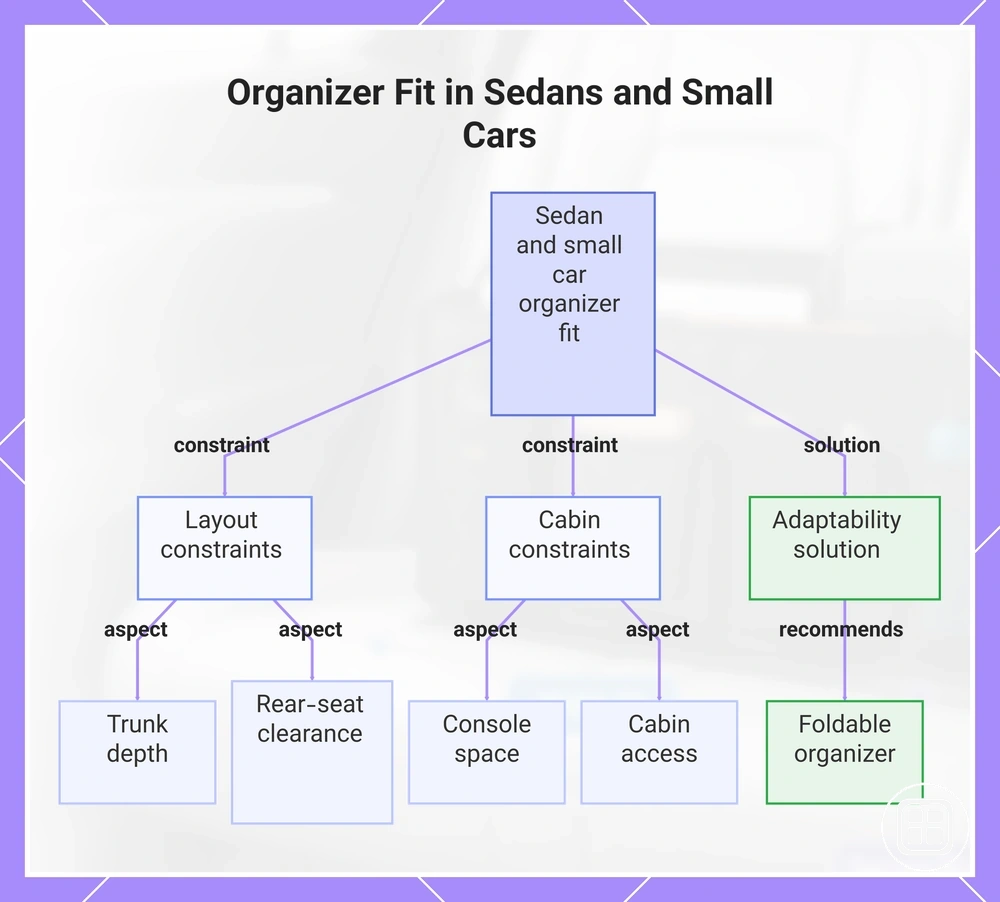
Sedan and small-car organizer fit depends on limited cabin layout where trunk depth, rear-seat clearance, and console space determine usable placement conditions. In a sedan and small car environment, compatibility is constrained by reduced footprint and restricted access, so a foldable organizer often becomes more adaptable due to space variability. :contentReference[oaicite:0]{index=0}
In a sedan or small car, trunk depth affects how much horizontal storage space is available, while rear-seat clearance influences whether seat-back or floor placement remains practical. Console space can further limit usable positioning when cabin clutter reduces movement efficiency. These conditions interact with access constraints, meaning even small changes in layout or load can affect overall stability and usability.
- Trunk depth – limits usable storage length and reduces expansion potential in compact trunks
- Rear-seat clearance – affects seat-back positioning and available legroom interaction
- Cabin access – restricted movement space can reduce ease of use in tight interiors
- Console space – narrow layout limits placement options and accessory fit
- Foldable organizer – improves adaptability when footprint and access conditions vary
This chart shows the main constraints and the recommended solution for fitting an organizer in a sedan or small car.
SUV, van, and larger cargo-area organizer fit
SUV, van, and cargo area organizer fit depends on larger interior layouts where cargo width, anchor availability, and floor conditions create both expanded placement flexibility and variable load stability. In these vehicle categories, compatibility is influenced less by space availability alone and more by how movement control and securing points interact within the larger cargo area. :contentReference[oaicite:0]{index=0}
In an SUV, van, or larger cargo area, cargo width increases placement options, but floor texture can change sliding risk and affect stability during motion. Anchor availability and strap reach determine how securely a car organizer can be fixed, especially when load shifts occur across wider rear storage zones. Seat-folding configurations may also change the usable cargo shape, which can improve footprint capacity but alter stability depending on how evenly the load is distributed.
- Cargo width – expands placement flexibility but may increase movement variability without proper securing
- Floor texture – influences grip and sliding behavior in larger cargo spaces
- Anchor availability – defines how reliably straps or hooks can secure the organizer
- Strap reach – affects connection strength between organizer and distant anchor points
- Load stability – varies based on how weight shifts across expanded cargo layouts
Universal and adjustable fit claims
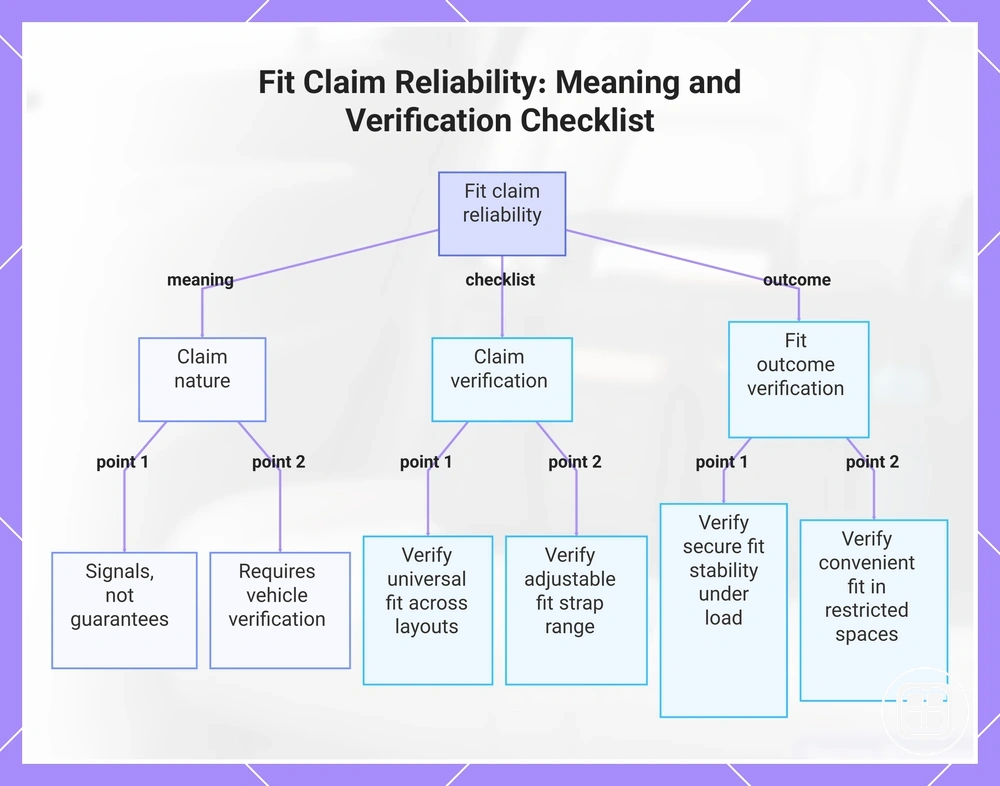
Universal fit and adjustable fit claims are fit language signals, not guarantees of compatibility, and a fit claim must be verified against real vehicle conditions before assuming reliability. :contentReference[oaicite:0]{index=0} In many cases, these claims indicate adaptability potential rather than confirmed performance across different vehicle layouts.
The reliability of a universal fit or adjustable fit claim depends on how adjustable straps, modular panels, strap range, and attachment points interact with vehicle variation. When adjustable straps provide sufficient strap range and align properly with attachment points, the overall reliability of the fit claim increases; when these elements do not align, the claim becomes less dependable across different vehicle configurations.
Universal and adjustable fit language can be interpreted through a structured comparison of fit behavior, where physical fit, secure fit, and convenient fit describe different outcomes based on condition rather than marketing intent.
Fit evaluation checklist (claim → condition → verification):
- Universal fit claim – depends on vehicle variation and size compatibility → verify across multiple cabin and cargo layouts
- Adjustable fit claim – depends on adjustable straps and modular panels → verify strap range and panel flexibility under load
- Secure fit outcome – depends on attachment points and anchor strength → verify stability during movement and load shift
- Convenient fit outcome – depends on access design and placement flexibility → verify usability in restricted cabin or cargo conditions
This chart explains the nature of universal and adjustable fit claims and provides a verification checklist for evaluating their reliability.
When universal fit is reliable
Universal fit is reliable only when flexible dimensions, a common placement zone, sufficient strap tolerance, and low obstruction risk align with real vehicle conditions. :contentReference[oaicite:0]{index=0} In these situations, the universal fit claim can function as a usable compatibility signal, but it remains dependent on how consistently these conditions appear across different SUV, van, and cargo area layouts.
The reliability of a universal fit increases when design flexibility reduces dependency on exact vehicle matching. Even in larger cargo areas, the claim becomes meaningful only when placement, securing, and access conditions remain stable across variations in interior structure.
Conditions that support reliable universal fit:
- Flexible dimensions – allow adjustment across different vehicle layouts without rigid alignment requirements
- Common placement zone – supports installation in standard rear seats, trunks, or cargo areas
- Strap tolerance – ensures adjustable securing across varying attachment point distances
- Low obstruction risk – reduces interference with seat movement, cargo access, or interior components
When adjustable straps or modular panels change fit
Adjustable straps and modular panels change fit by improving adaptability across different vehicle layouts, but they do not resolve all compatibility limits. :contentReference[oaicite:0]{index=0} Fit improvement depends on how strap length, buckle position, anchor direction, panel rigidity, expansion range, and load distribution interact with available space and securing points inside the vehicle.
The effect remains conditional because adjustable straps and modular panels only modify how the car organizer responds to variation in vehicle structure. Strap length influences reach to attachment points, buckle position affects locking stability, anchor direction changes tension alignment, panel rigidity controls structural support under load, expansion range defines usable adjustment capacity, and load distribution determines balance during movement. When these elements align, fit improves; when they conflict, compatibility limits remain.
Condition checklist for fit change:
- Strap length – must match distance to attachment points for stable securing
- Buckle position – should support secure locking without tension loss
- Anchor direction – must align with force flow to maintain stability
- Panel rigidity – should support load without deformation
- Expansion range – must fit available space without overextension
- Load distribution – should remain balanced to reduce shifting during movement
Compatibility features that improve secure use
Compatibility features improve secure use by influencing stability, access, and restraint after size and placement checks are already satisfied. :contentReference[oaicite:0]{index=0} A compatibility feature does not define whether an organizer fits a vehicle, but it affects how securely it behaves once installed in real movement conditions.
Anti-slip base, anchor, buckle, compartment, pocket, and access opening work as securing features that change how stability and usability behave under load. An anti-slip base reduces movement risk on vehicle surfaces, anchors and buckles control restraint under shifting force, compartments support balanced load distribution, and pockets or access openings affect how items are reached without disturbing placement stability. Each feature changes a specific condition of stability or access rather than overall fit alone.
The value of these features is determined by whether they improve stability and usability under real constraints, not by their presence alone. The table below shows how each compatibility feature translates into fit condition and decision impact.
| Feature | Fit condition | Effect or decision |
|---|---|---|
| Anti-slip base | Surface friction level | Reduces movement risk and improves stability |
| Anchor | Availability of fixed points | Improves restraint under load shifts |
| Buckle | Tension locking alignment | Maintains secure fastening during movement |
| Compartment | Load distribution requirement | Supports balance and reduces shifting |
| Access-based storage need | Improves usability without relocation | |
| Access opening | Reach and clearance conditions | Enables access without destabilizing placement |
Anti-slip bases, anchors, and buckles
Anti-slip bases, anchors, and buckles reduce movement risk by improving restraint between the car organizer and the vehicle surface, but the effect depends on surface grip, cargo-floor texture, and buckle tension conditions. :contentReference[oaicite:0]{index=0} When these elements align, stability may improve under motion; when they do not align, movement risk can still persist depending on load and vehicle conditions.
The anti-slip base influences surface grip, the anchor defines restraint through fixed securing points, and the buckle controls tension that holds the organizer in position. Cargo-floor texture can increase or reduce friction, which directly affects how the anti-slip base performs. Anchor availability and hook position determine whether restraint remains consistent, while buckle tension affects how firmly the system holds during movement or load shifts.
- Anti-slip base – depends on surface grip and cargo-floor texture → helps reduce movement risk by improving friction stability
- Anchor – depends on anchor availability and hook position → improves restraint under shifting load conditions
- Buckle – depends on buckle tension and locking alignment → maintains positional stability during movement
Compartments, pockets, and access points that affect placement
Compartments, pockets, and access points affect placement because access design can change how a car organizer fits and remains positioned inside a vehicle, especially when lid clearance, divider access, and opening direction interact with available space. :contentReference[oaicite:0]{index=0} Placement is therefore influenced not only by size but also by whether access features remain usable without forcing repositioning in the vehicle area.
Front-facing pockets, side pockets, and compartments influence placement stability by changing how items are reached and how the unit is oriented inside the space. Lid clearance determines whether the organizer can open without obstruction, while divider access affects how internal sections are used without shifting placement. Blocked openings can reduce usability and may require repositioning to regain functional access, especially in tighter layouts where space constraints limit movement flexibility.
For example, in a compact trunk, side pockets that extend outward may require adjusted placement to avoid blocked openings against interior walls, while in an SUV cargo area, higher lid clearance can support more flexible placement without interfering with access points or divider access during use.
How to check car organizer fit before choosing
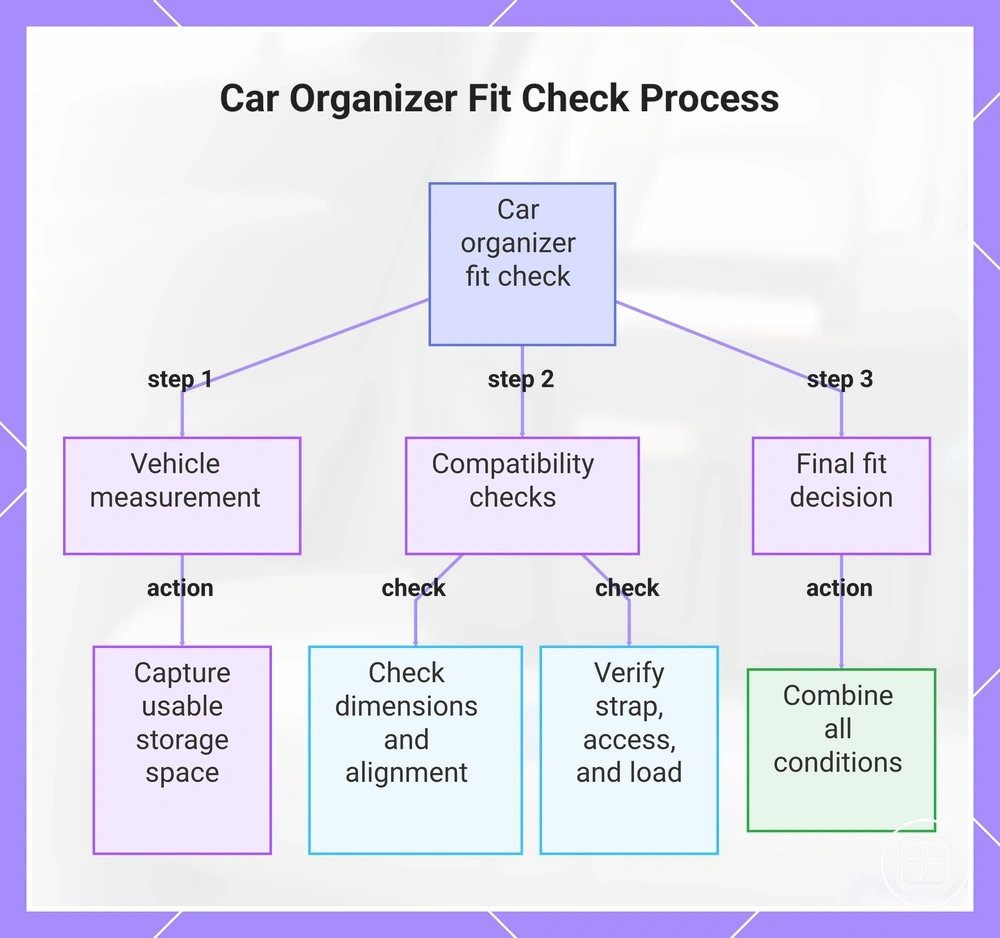
Fit check for a car organizer depends on vehicle measurement, organizer dimensions, strap compatibility, access clearance, and load movement, and it works as a conditional verification process before selection. :contentReference[oaicite:0]{index=0} It helps reduce mismatches between usable vehicle area and storage placement, but the result always varies by vehicle layout and installation conditions.
Incorrect fit issues can often be reduced by following a structured process that compares usable vehicle space with organizer specifications. This approach focuses on measurement and compatibility checks before deciding suitability:
- Measure vehicle area – capture usable storage space to establish baseline vehicle measurement conditions and spatial limits
- Check organizer dimensions – compare product size with measured space to identify potential placement constraints
- Verify space alignment – assess whether organizer dimensions match usable area without forcing tight or unstable placement
- Confirm strap compatibility – check whether straps or anchors align with available fixing points for secure positioning
- Test access clearance – ensure compartments and openings remain usable without obstruction after placement
- Assess load movement – evaluate whether shifting weight could affect stability during real use conditions
- Make final fit check decision – combine all conditions to determine suitability rather than relying on a single measurement
In real vehicle use cases such as compact trunks or SUV cargo areas, strap compatibility and access clearance often influence placement more than raw size alone. Load movement can also change stability once the organizer is in use, especially under variable driving conditions. Because of these interacting factors, fit check outcomes depend on combined conditions rather than fixed rules.
Final selection should only be made after confirming vehicle measurement, organizer dimensions, strap compatibility, access clearance, and load movement together. This ensures the fit check reflects real usability rather than theoretical size matching.
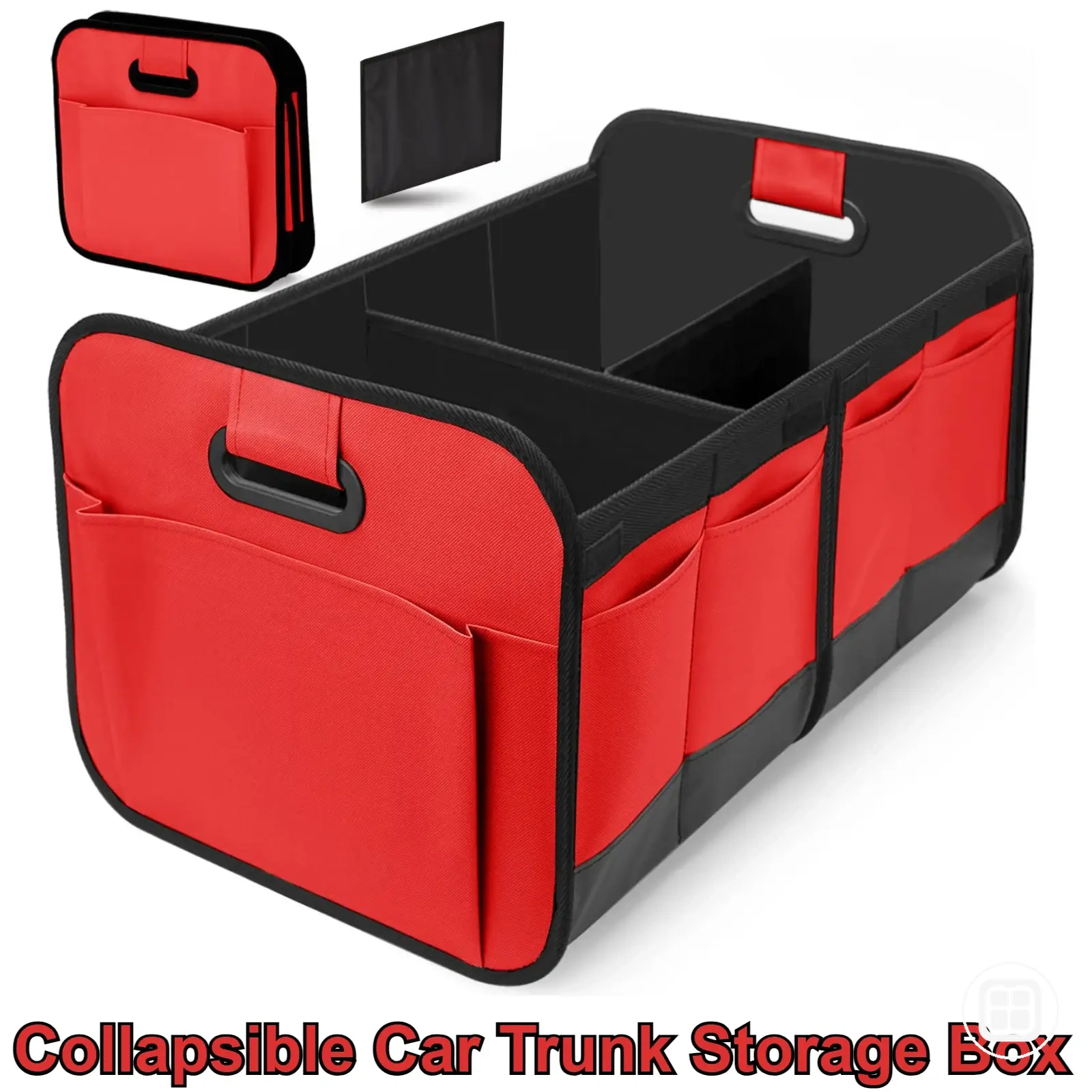
Here are product examples that may make comparison easier. Before buying, always review the compatibility criteria, essential features, and product details.
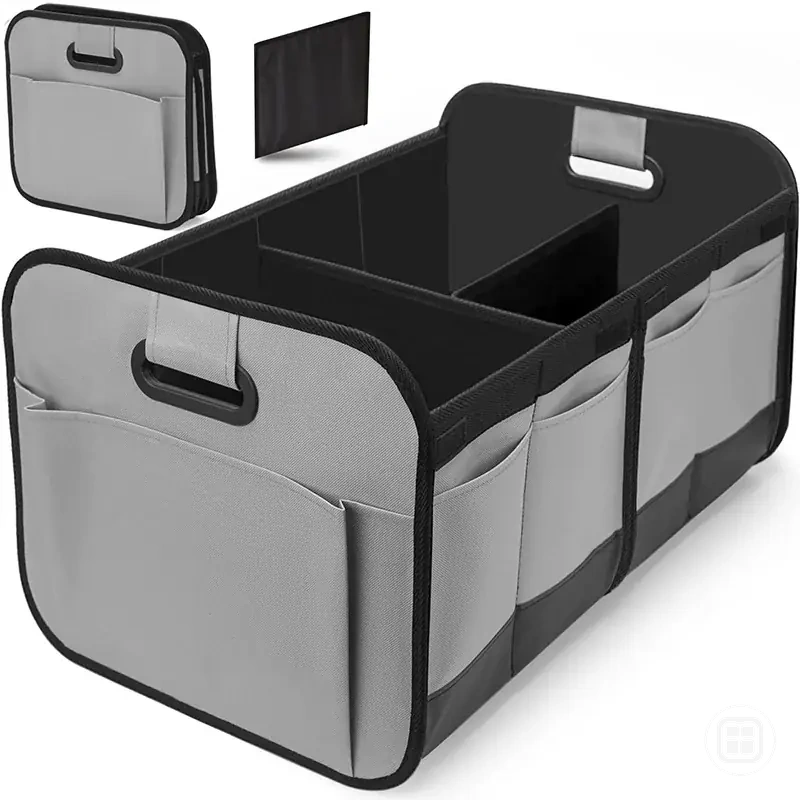
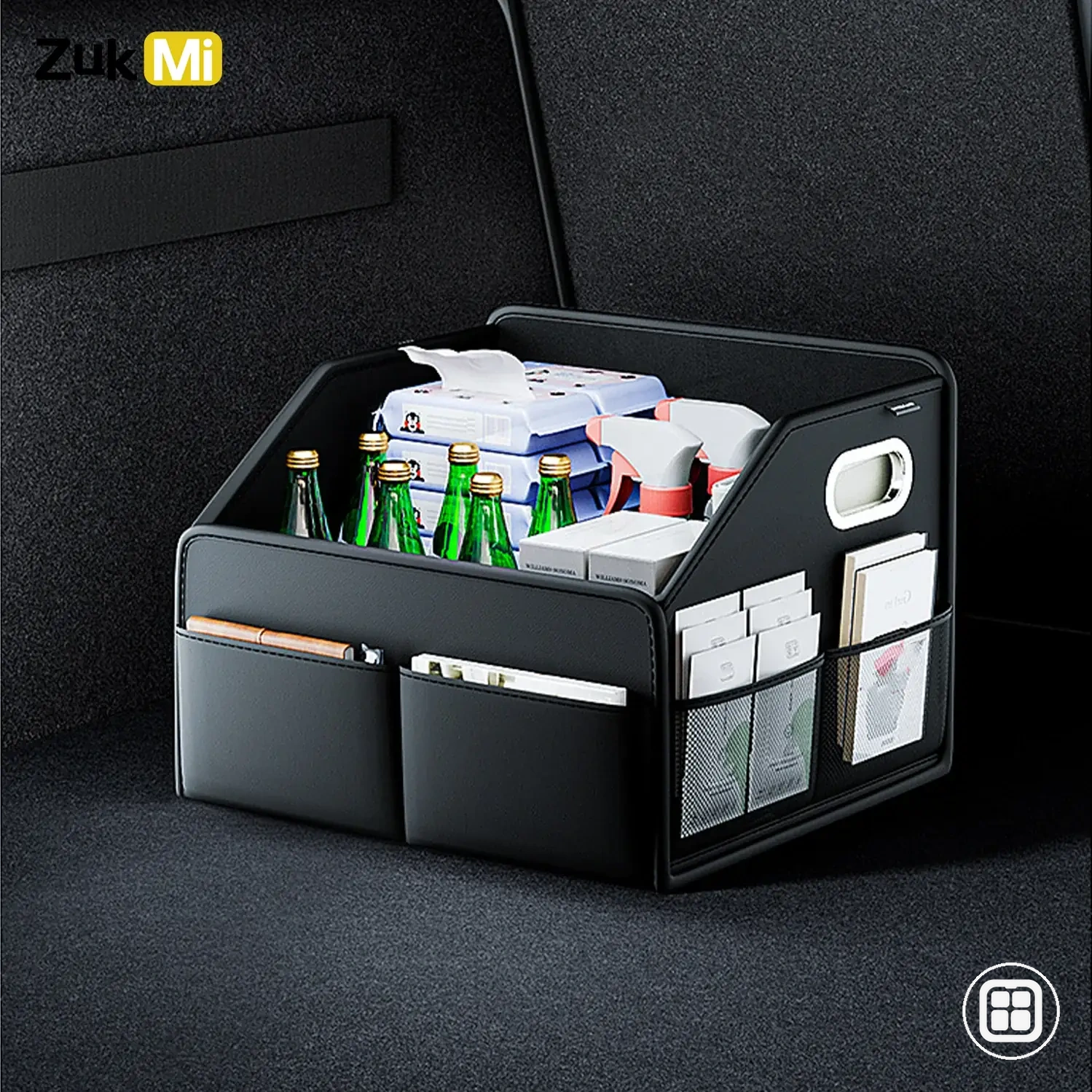
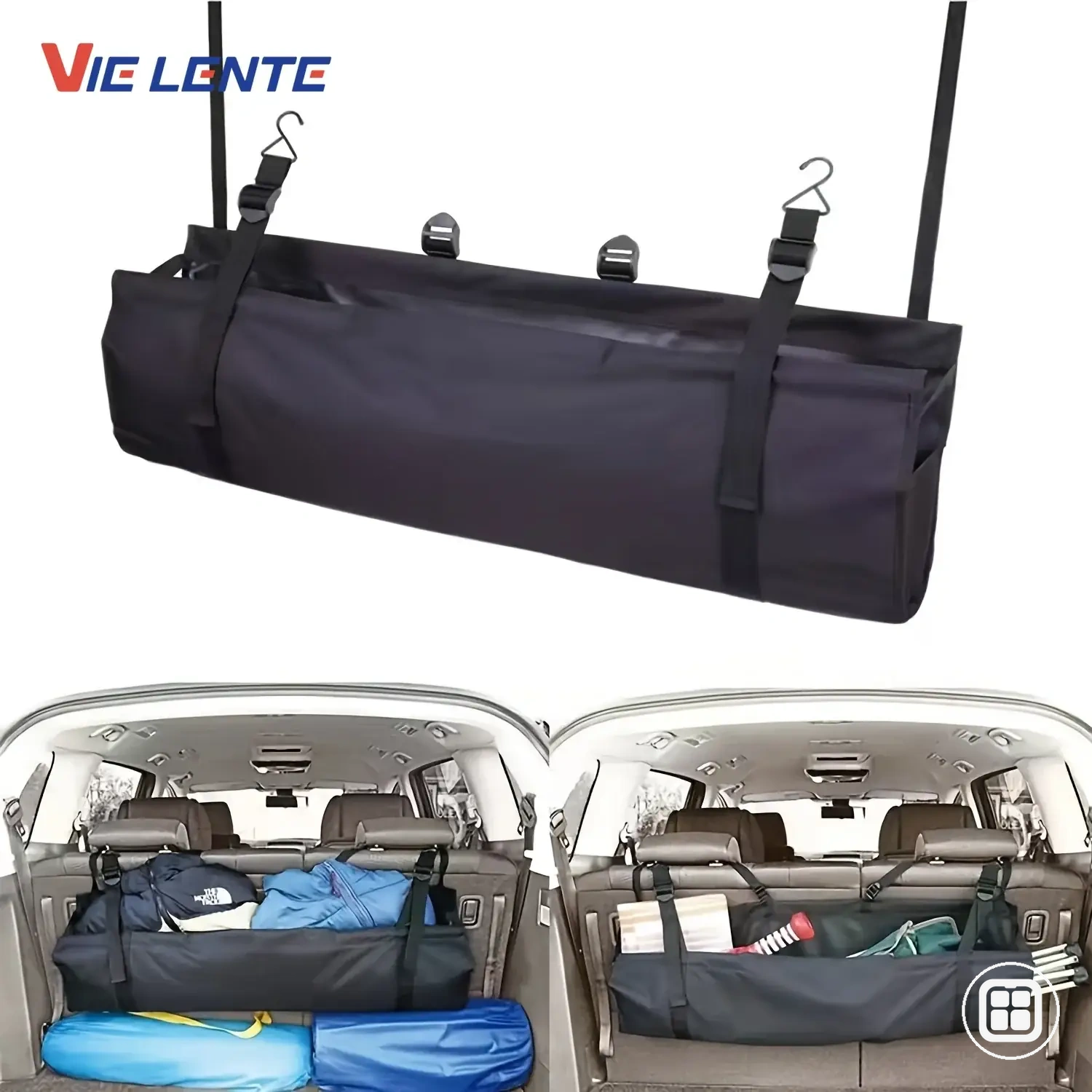
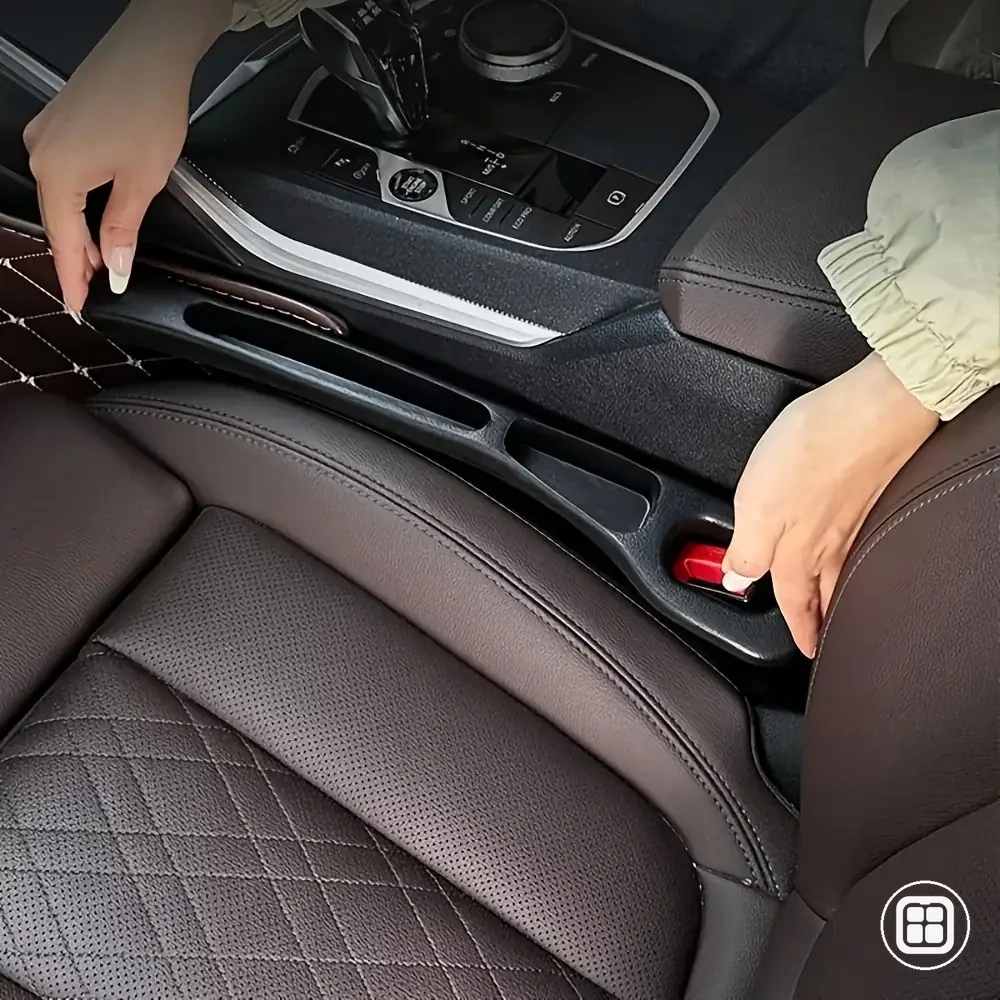
This chart shows the step-by-step process to check car organizer fit before choosing, including measurement, compatibility checks, and final decision.
Common compatibility limits and fit problems
A fit problem in a car organizer usually appears as a symptom of size mismatch, weak restraint, or poor placement conditions, where the organizer does not align properly with the usable vehicle area. :contentReference[oaicite:0]{index=0} These compatibility limits typically show up during use rather than at first inspection, especially when vehicle layout and organizer structure do not align.
Fit problems often come from interacting causes, where each symptom can point to different likely cause conditions depending on the setup. Slipping is usually linked to weak restraint or low surface grip, collapsing may relate to overloading or insufficient structural support, and blocked access often comes from wrong type selection or restricted placement context. The same symptom may therefore require different checks depending on the vehicle and load conditions.
| Symptom | Likely cause | What to check |
|---|---|---|
| Slipping | Weak restraint or low surface grip | Anchor stability and base contact condition |
| Collapsing | Overloading or structural mismatch | Load level and organizer support strength |
| Blocked access | Wrong type or restrictive placement | Opening direction and surrounding space clearance |
| Poor placement | Size mismatch with vehicle area | Vehicle measurement alignment vs organizer dimensions |
These diagnostic patterns help interpret fit problem behavior without assuming a fixed correction path, since adjustment, repositioning, or selecting a better-matched format may be required depending on the specific vehicle and load movement conditions.
Sliding, collapsing, and unstable placement
Sliding, collapsing, and unstable placement are fit problem symptoms that usually indicate compatibility limits caused by size mismatch, weak restraint, or incorrect placement conditions inside the vehicle setup. :contentReference[oaicite:0]{index=0} These movement issues typically appear when smooth surface contact reduces grip, weak anchor points fail to hold position, soft sidewall support cannot maintain structure, overloaded compartment conditions exceed capacity, or incorrect placement direction disrupts balance.
These symptoms can be diagnosed through local condition checks that connect each instability pattern to its likely cause and response context:
- Sliding – likely caused by smooth surface or weak anchor conditions → check surface grip level and anchor engagement for stability
- Collapsing – often linked to soft sidewall support or overloaded compartment → check load level and structural support condition
- Unstable placement – commonly related to incorrect placement direction or mixed restraint conditions → check orientation and repositioning alignment within usable vehicle space
Poor access, blocked space, and wrong organizer type
Poor access, blocked space, and wrong organizer type describe a fit problem where the organizer cannot function properly because access paths, usable clearance, and product design do not align with the vehicle layout. :contentReference[oaicite:0]{index=0} This creates a compatibility mismatch where movement inside the cabin or cargo area is restricted, reducing practical usability even if the size appears suitable at first.
These symptoms usually point to specific local conditions inside the vehicle. Blocked seat movement often indicates that blocked space is reducing usable clearance around seating rails or folding range. Trunk lid interference suggests vertical or opening-direction mismatch between organizer placement and cargo lid motion. Inaccessible pockets typically result from poor access angles or obstructed reach paths. Console obstruction and wrong organizer type both indicate that the product design does not match the narrow geometry or functional layout of the vehicle area.
- Blocked seat movement – caused by blocked space reducing clearance → check seat travel range and placement boundary
- Trunk lid interference – caused by height or opening-direction mismatch → check lid movement path and vertical fit
- Inaccessible pockets – caused by poor access alignment → check reach angle and pocket orientation
- Console obstruction – caused by wrong organizer type → check compatibility with cabin layout constraints