Car Organizer Types by Vehicle Placement
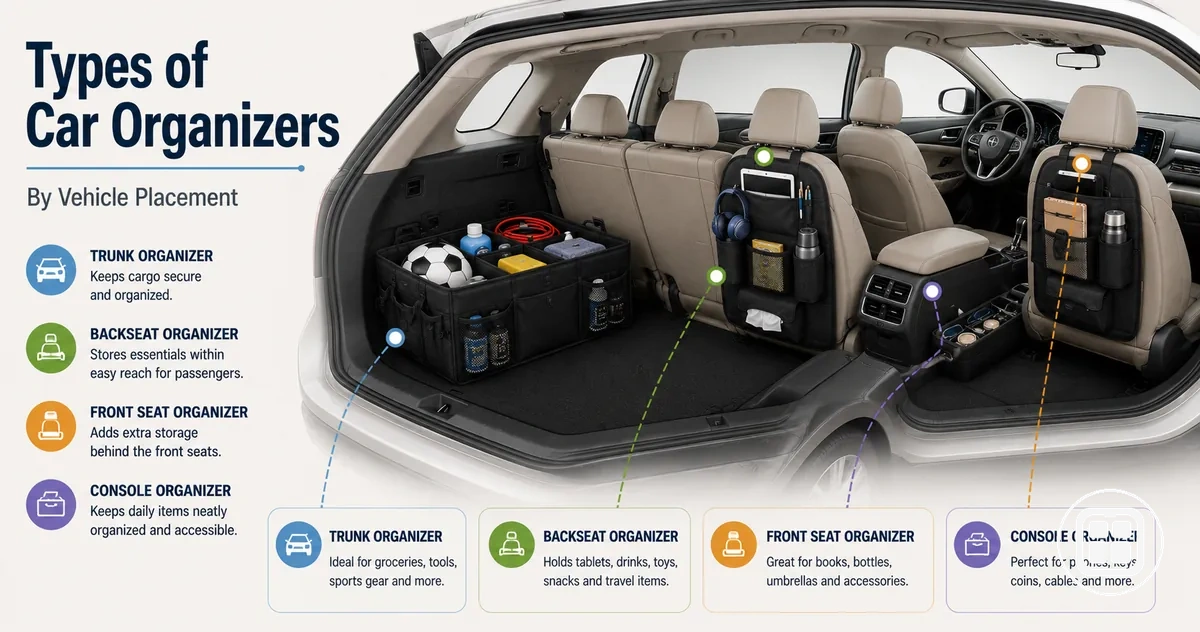
Car organizer types by vehicle placement refers to the classification of car organizers based on where they are positioned inside a vehicle. This includes trunk, backseat, front seat, console, seat gap, visor, and cargo area placements. Each placement changes storage access, capacity, visibility, and movement risk inside the vehicle.
During daily driving, storage needs change depending on whether items are used by the driver, passengers, or kept for later access. A trunk organizer often supports higher capacity storage in the cargo area, while a backseat organizer may support passenger-facing items with quicker reach. A front seat organizer or console organizer typically focuses on quick access within limited cabin space, and a seat gap organizer may support small items within narrow gaps depending on vehicle layout. These differences show how placement influences both storage access, capacity, and cabin space usage under different driving conditions.
Car organizer types by vehicle placement help separate storage solutions into clear zones that match access needs and space conditions. This structure makes it easier to understand how each placement may affect usability depending on item size, vehicle layout, and storage frequency. The next sections build on this classification by examining each placement zone in more detail.
What vehicle placement changes in a car organizer
Vehicle placement is a location-based system that defines how a car organizer stores, protects, and presents items inside a vehicle. It is a car organizer classification where the placement zone directly influences storage outcome, including how items behave within the cabin space. This means vehicle placement is the main factor that changes access, capacity, visibility, stability, and fit conditions depending on the vehicle layout.
The image below shows how vehicle placement changes the storage behavior of a car organizer across different cabin zones. It helps visualize differences in access, capacity, visibility, and stability across trunk, backseat, front seat, console, and seat gap positions.
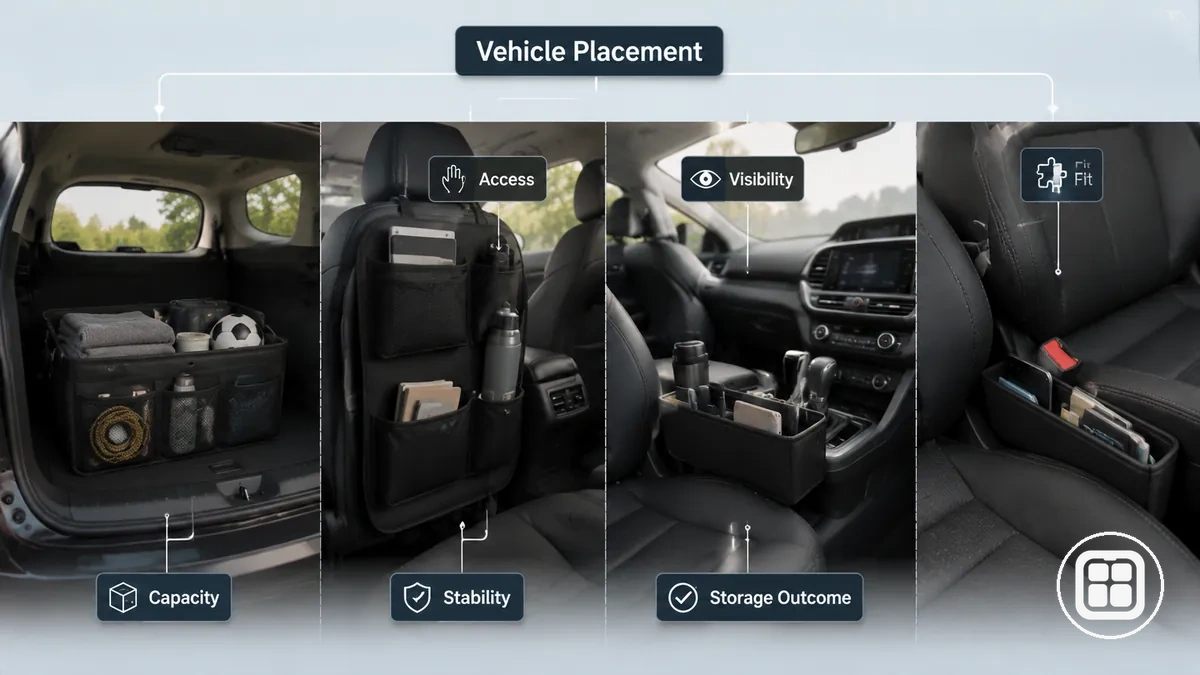
Vehicle placement changes how a car organizer performs because each placement zone interacts differently with cabin space and movement inside the vehicle. A trunk or cargo area placement may prioritize capacity but reduce immediate access, while a front seat or console placement may improve access but limit storage volume. Backseat and seat gap placements can shift visibility and reach depending on passenger use and item size. In this relationship, placement zone → storage attribute → vehicle layout condition → outcome such as convenience, movement control, or reach defines how the organizer behaves in real use.
Vehicle placement is not the same as exact fit or compatibility. Fit depends on dimensions, straps, surface type, and vehicle layout, while placement only defines the storage location and its functional behavior. This boundary is important because the same placement zone can still vary in stability or access depending on the specific vehicle configuration and organizer structure.
Main placement zones for car organizers
Placement zones are the main locations inside a vehicle where a car organizer is positioned, including trunk, cargo area, backseat, seatback, front seat, console, seat gap, visor, and door-pocket areas. These zones define how a car organizer functions within different parts of the cabin by changing storage behavior based on vehicle layout. In this structure, placement zones group organizer types by access level and storage role across the vehicle layout.
In everyday use, each placement zone supports a different type of storage behavior depending on how often items are needed and how much space is available. Bulkier items are often associated with trunk or cargo area zones, while quick-reach storage is more common in console or seat gap zones. Passenger-focused storage often appears in backseat or seatback areas, while lighter items may be placed in visor or door-pocket zones. This separation helps clarify storage outcomes before viewing the table.
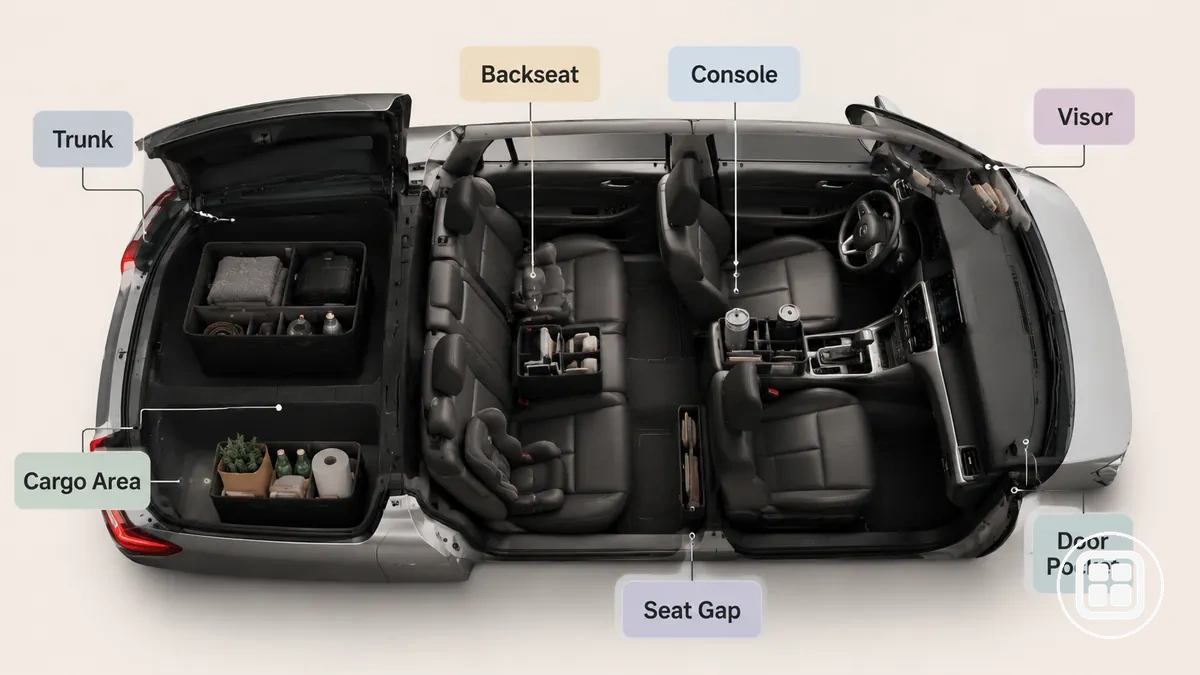
The image below shows how placement zones are distributed across a vehicle interior and how each zone relates to storage positioning. It helps visually separate access level, location, and storage role across the cabin.
A labeled diagram is used to make each placement zone easier to identify inside a real vehicle layout. The visual clarifies how trunk, cabin, and small-access zones are positioned relative to driver and passenger areas.
| Placement zone | Common organizer type | Access level | Typical items | Main limitation |
|---|---|---|---|---|
| Trunk | Trunk organizer | Low | Groceries, tools, bulk storage | Not easily reachable while driving |
| Cargo area | Cargo organizer | Low | Luggage, travel items | Limited immediate access |
| Backseat | Seatback organizer | Medium | Passenger items, accessories | May reduce seat space |
| Front seat | Front seat organizer | High | Daily essentials, documents | Can affect cabin space |
| Console | Console organizer | High | Phones, small items | Limited storage capacity |
| Seat gap | Seat gap organizer | High | Coins, keys, small objects | Very limited space |
| Visor | Small-accessory organizer | High | Cards, sunglasses | Lightweight storage only |
| Door-pocket | Small-accessory organizer | Medium | Drinks, small items | Space varies by vehicle |
Trunk and cargo-area organizers
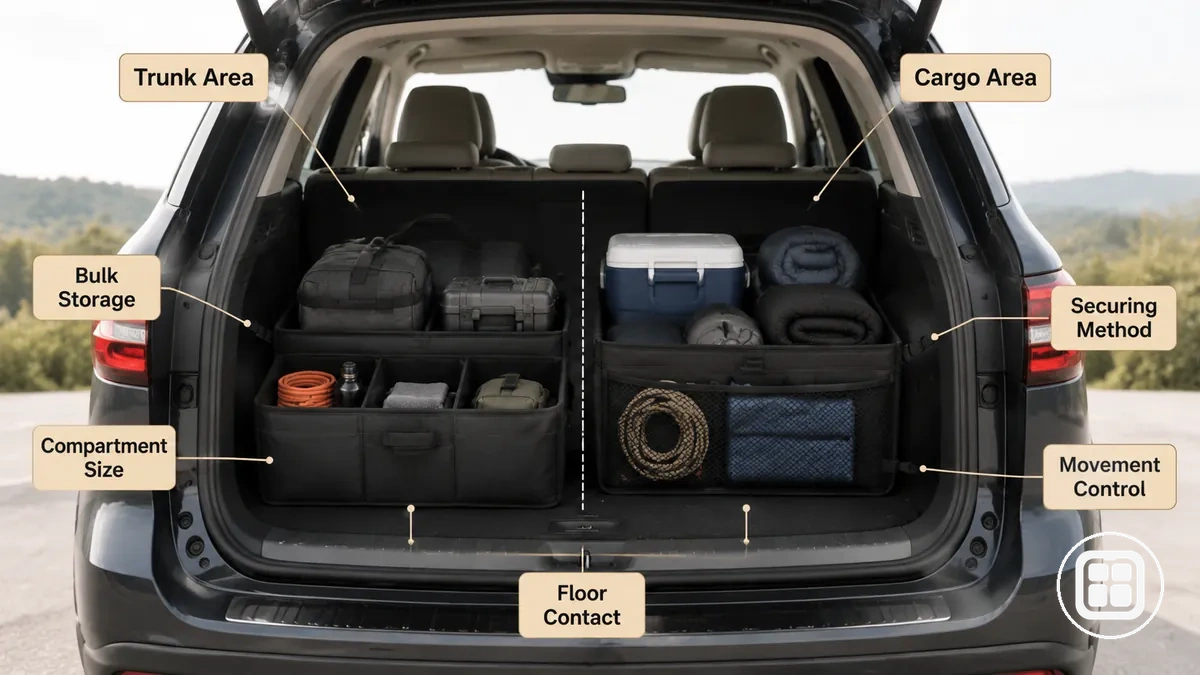
Trunk organizer and cargo-area organizer refer to storage setups designed for larger items placed in the trunk or cargo area of a vehicle. These organizers are used for bulk storage where items do not need constant driver access and are kept in zones with more available space. Their structure is influenced by compartment size, floor contact, and securing method, which together affect how items are held and how much movement control is maintained during driving. This makes trunk and cargo-area organizers primarily suitable for higher capacity storage with reduced immediate access trade-off.
In everyday use, a cargo area or trunk organizer is typically used when items need to stay separated and stable during travel. The performance of these organizers often depends on how they sit on the floor surface, how they are secured, and how the internal compartments distribute weight. In many cases, better securing method and stable floor contact can help reduce shifting, although results may vary based on load type and vehicle layout. This aligns with observed placement behavior in the provided evidence :contentReference[oaicite:0]{index=0}.
The visual below shows how cargo-area placement supports larger storage needs while reducing immediate cabin access. It highlights how compartment size and positioning affect storage control in trunk-based setups.
- Groceries and household bags stored as bulk items in trunk space
- Tools and equipment kept separated in structured compartments
- Emergency items placed for longer-term but accessible storage when needed
- Travel bags arranged based on cargo space and compartment size
- Cleaning supplies stored with limited movement inside secured sections
Backseat and seatback organizers
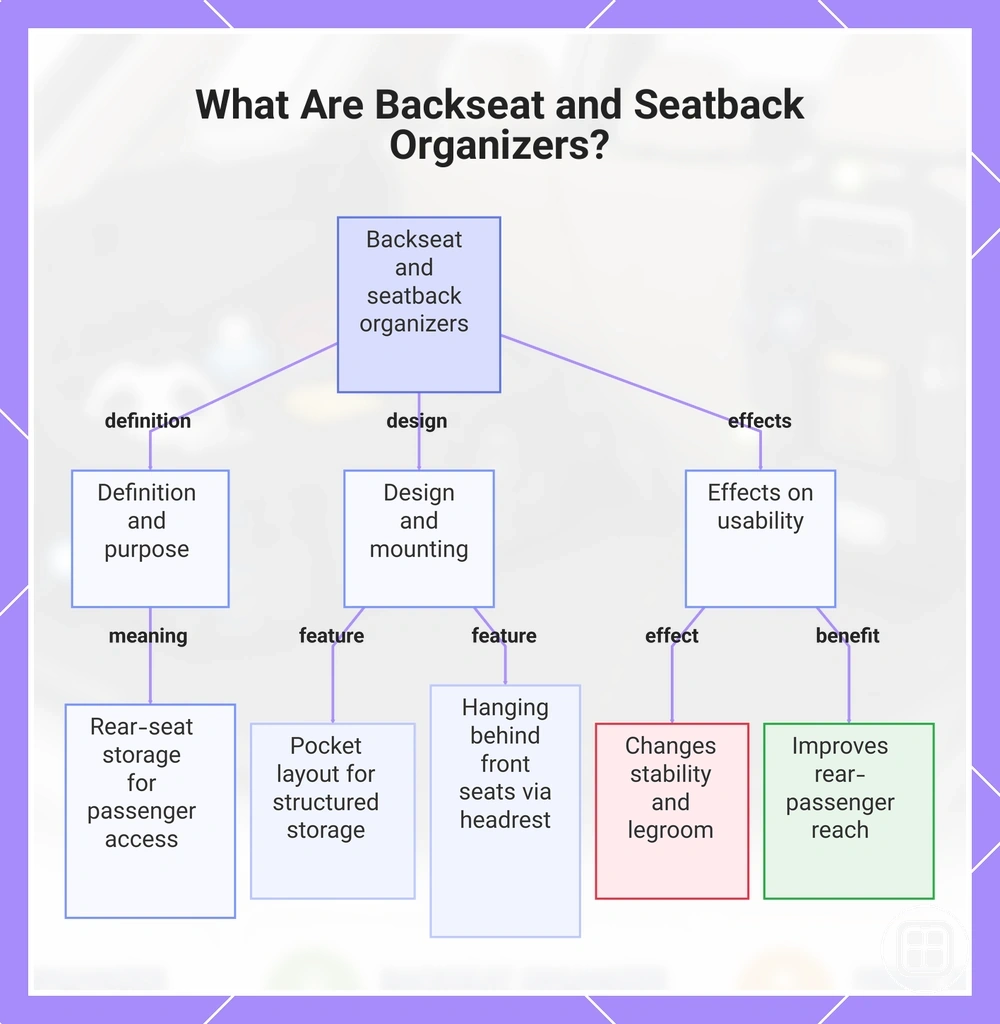
Backseat organizer and seatback organizer refer to rear-seat storage setups designed for passenger access within the backseat area. These organizers hang behind the front seats and use a pocket layout to support passenger access to travel accessories, small items, and rear-seat essentials. Their structure depends on hanging position and headrest attachment, which influence stability and how clearly items remain visible and reachable. This seatback position directly shapes rear-passenger reach and how efficiently stored items can be accessed during travel.
In real use, a backseat organizer helps organize rear cabin storage by keeping items within reach of passengers instead of shifting them toward the front. A seatback organizer typically relies on its pocket layout and hanging position to maintain usability during movement. Depending on load and seat configuration, changes in attachment tightness or storage weight may affect stability and can also influence available legroom in some setups.
- Pocket layout for structured rear-seat storage
- Hanging position behind front seats for passenger access
- Headrest attachment for mounting support
- Rear-passenger reach for in-seat accessibility
- Legroom and stability conditions depending on setup
This chart explains the definition, key design features, and practical effects of backseat and seatback organizers for rear-seat storage.
Front seat, console, and seat gap organizers
Front seat organizer, console organizer, and seat gap organizer are front-cabin high-access storage subtypes designed for items kept within short reach of the driver or front passenger. These organizers differ by reach distance, item size capacity, and surface fit conditions that influence how storage integrates into the cabin layout. A console organizer focuses on central storage on console surfaces, a seat gap organizer uses the narrow space between seats, and a front seat organizer extends storage along seat-side areas. These placements prioritize quick access but can increase interference risk and cabin clutter depending on how space is used and arranged.
In everyday driving scenarios, these organizers are often used for small items such as phones, cards, and cables that require frequent access. The effectiveness of each type depends on how well it matches available surface fit, gap width, and expected movement inside the cabin. Variations in placement can also influence reach distance and how easily items remain accessible without increasing clutter in tight cabin areas.
| Type | Access | Space use | Main caution |
|---|---|---|---|
| Front seat organizer | High reach distance | Seat-side storage area | May increase cabin clutter depending on item size |
| Console organizer | Central quick access | Console surface fit | Interference risk near control area depending on placement |
| Seat gap organizer | Immediate side reach | Narrow gap storage | Fit depends on gap width and can affect stability of stored items |
Visor, door-pocket, and small-accessory organizers
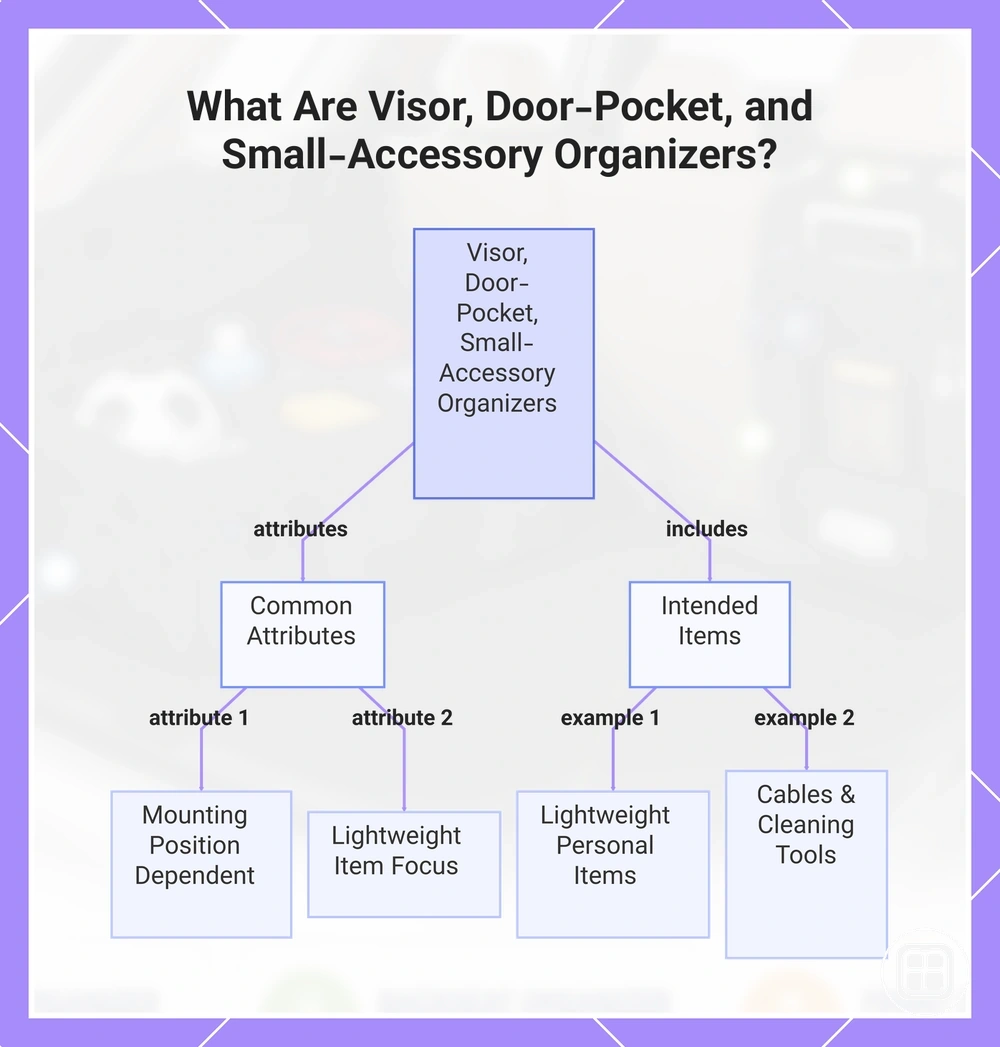
Visor organizer, door-pocket organizer, and small-accessory organizer refer to narrow placement subtypes designed for lightweight items that require quick-reach storage inside the front cabin. These organizers depend on mounting position, item weight, visibility, and reach, which together determine how easily items can be accessed and how much clutter risk they introduce. A visor organizer attaches to the sun visor area, a door-pocket organizer uses side-door storage space, and a small-accessory organizer supports compact storage pockets in accessible cabin zones. These placements are intended as supplemental storage rather than handling heavier or bulk items, and they help manage small items within limited space.
- Cards and ID items
- Sunglasses and compact personal items
- Receipts and paper slips
- Cables and charging accessories
- Wipes and small cleaning items
This chart defines these three cabin organizer subtypes, their key attributes, and the types of lightweight items they are designed to store.
Storage use cases by placement zone
Storage use case is the main factor that connects everyday items to the most suitable placement zone in a vehicle. It defines how item type and access need work together to determine whether something belongs in a front cabin area, rear seating space, or cargo zone. In most cases, the same item group can shift based on how frequently it is accessed and how much movement control is required in the cabin. A clear use case determines placement when item type and access need are clear.
In real driving scenarios, the same item group may shift between trunk, backseat, or front cabin zones depending on who needs access and how often. For example, travel items may stay in the cargo area during long trips but move closer to the front cabin when frequent access is required. Similarly, daily essentials may stay near quick-reach zones, while bulk items remain in rear storage spaces for better space control. The table below organizes these mappings for quick reference.
| Use case | Best placement zone | Suitable items | Main caution |
|---|---|---|---|
| Daily carry | Front seat / console | Phones, cards, small essentials | May increase cabin clutter if overloaded |
| Family items | Backseat | Personal items, shared accessories | Can reduce passenger space if overfilled |
| Groceries | Trunk / cargo area | Food bags, packaged goods | Movement risk if not secured properly |
| Travel items | Cargo area / backseat | Luggage, travel bags | Access may be limited during driving |
| Emergency supplies | Cargo area | First aid kits, safety tools | Delayed access if placed too deep |
| Tools | Trunk | Repair tools, equipment | Heavier load may shift during movement |
| Cleaning supplies | Trunk / cargo area | Wipes, sprays, cloths | Leak or spill risk if not secured |
| Small accessories | Front seat / console / door pockets | Cables, receipts, sunglasses | May create clutter in limited space |
Access, capacity, and cabin-space trade-offs by placement
Access, capacity, and cabin space trade-offs define how each placement zone affects storage outcome in a vehicle. High-access zones improve reach but often reduce available interior organization, while high-capacity zones prioritize volume with lower immediate access. These three factors together shape organizer type behavior across different placement zones.
Placement zones differ in how they balance access need and storage volume across cabin space limits. Front cabin zones such as console or seat-side storage support quicker reach for daily carry items, while trunk or cargo area zones prioritize capacity for bulk storage needs. The comparison between these zones is based on how access and storage outcome interact with interior space constraints. The table below shows how placement zones differ across these trade-off conditions.
| Placement type | Access strength | Capacity strength | Cabin-space effect | Main trade-off |
|---|---|---|---|---|
| High-access cabin placements | Strong | Limited | May reduce usable front cabin space | Faster reach with lower storage volume |
| High-capacity cargo placements | Limited | Strong | Preserves cabin organization | Higher volume with reduced immediate access |
| Balanced rear placements | Moderate | Moderate | Shared passenger space usage | Compromise between reach and volume |
When placement increases passenger interference or reduces visibility, movement risk can change depending on stored item weight and securing method. In some cases, improved organization can reduce obstruction, but outcomes vary based on cabin space structure and usage conditions.
Placement zones differ mainly through trade-offs between access, capacity, and cabin space, so the right choice depends on use condition rather than a universal priority. Evaluating storage outcome based on these constraints helps align organizer type with real driving needs.
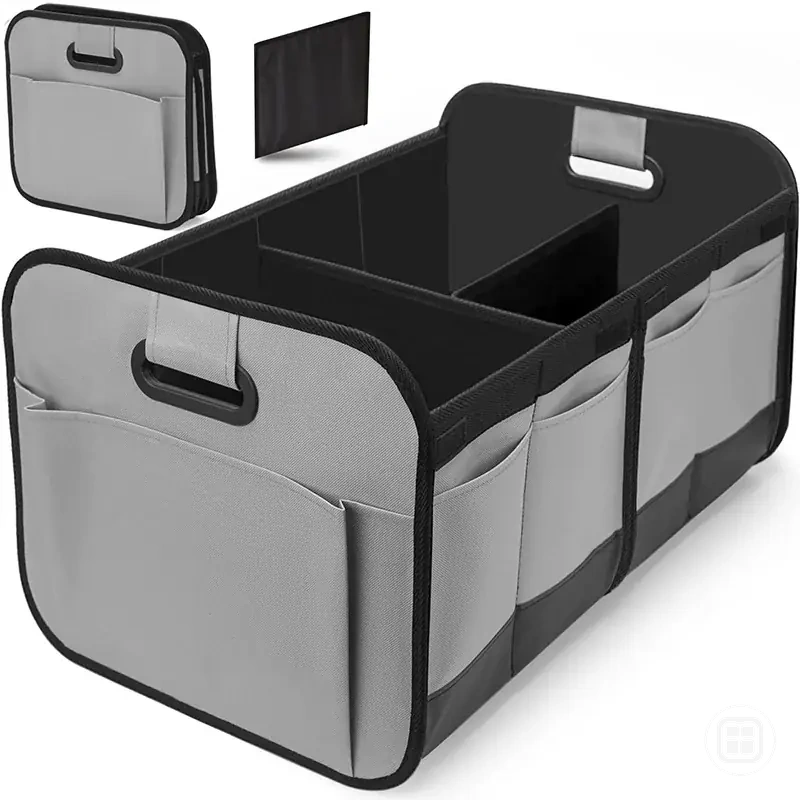
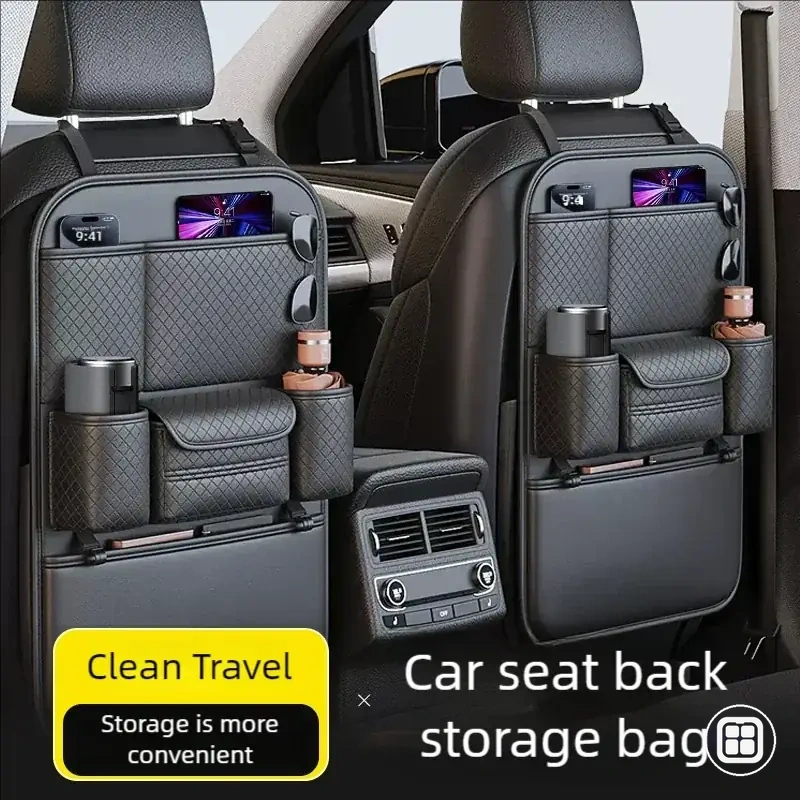
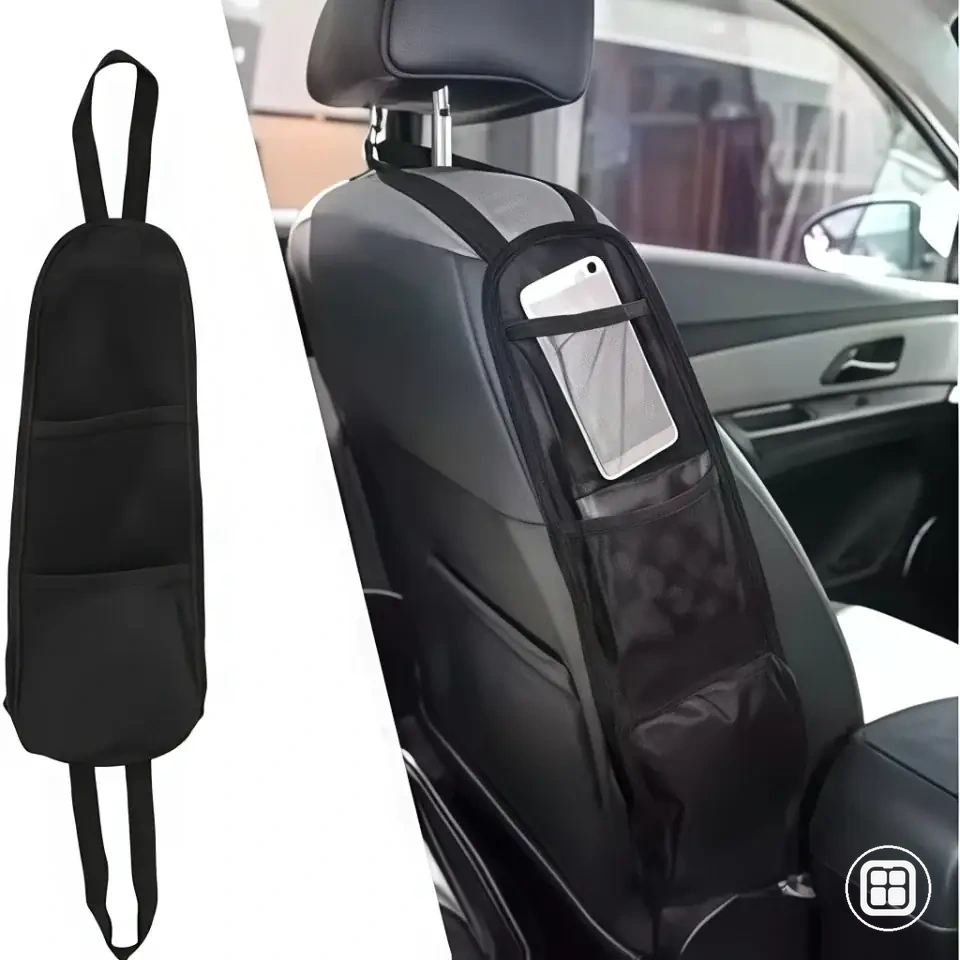
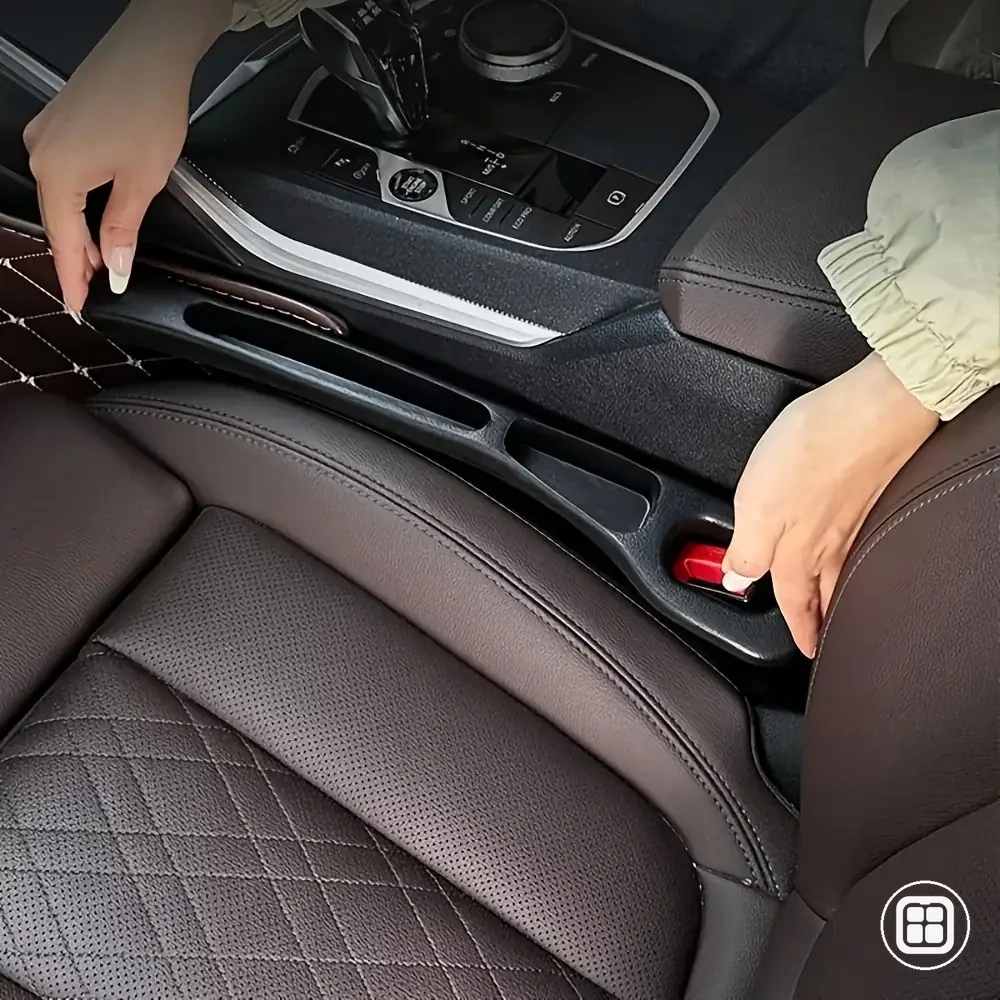
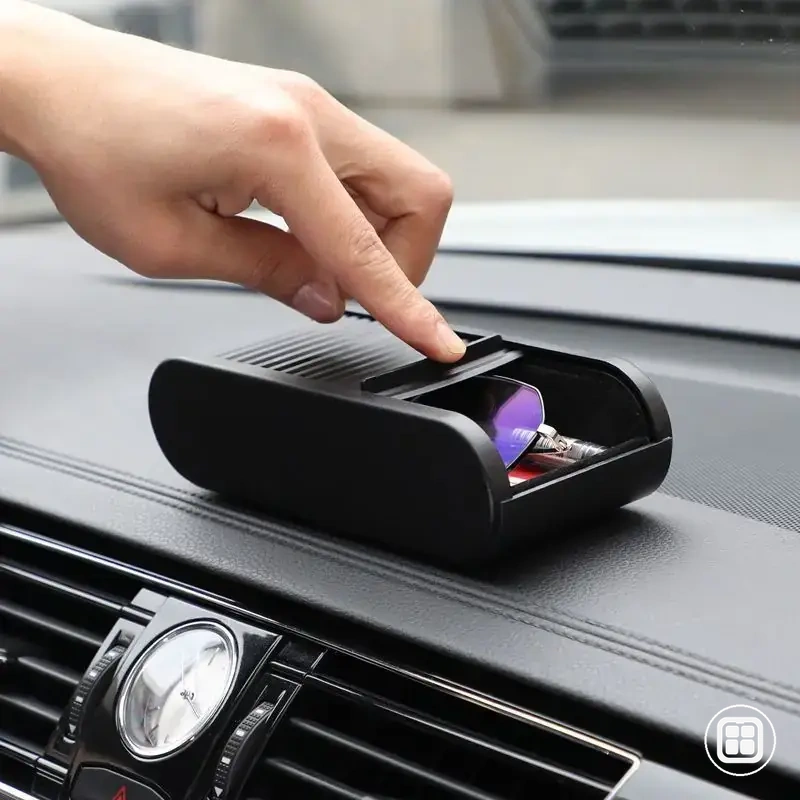
Here are product examples that may make comparison easier. Before buying, always review the compatibility criteria, essential features, and product details.
Fit and securing checks that depend on placement
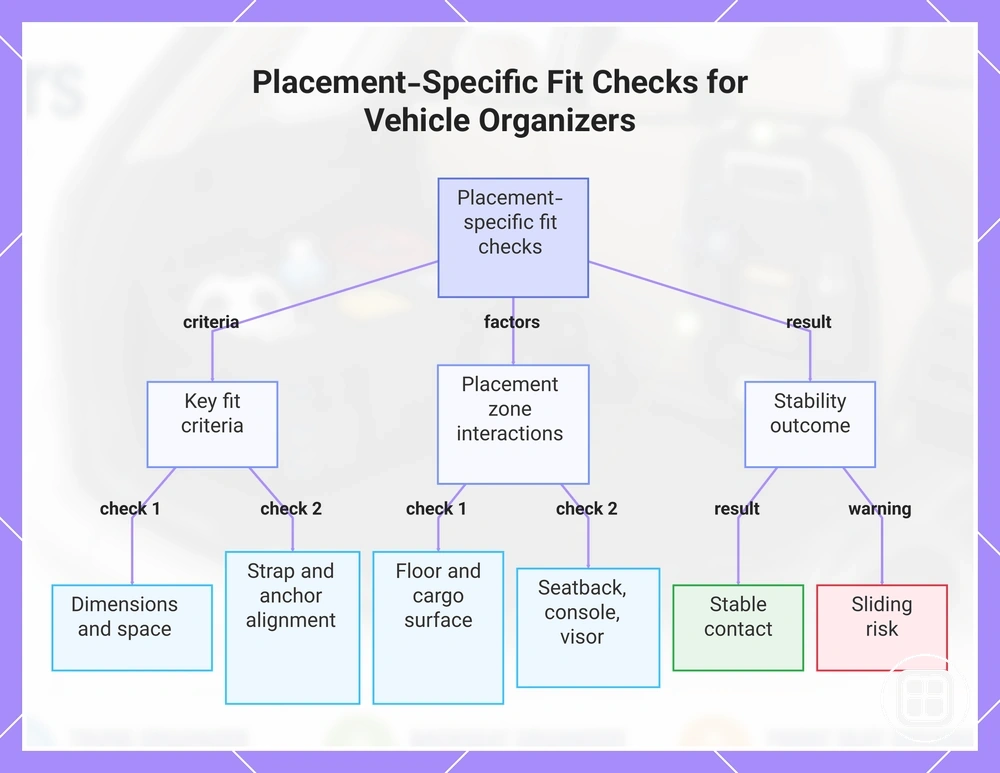
Fit and securing checks depend on placement-specific contact points inside a vehicle. Fit cannot be assumed from placement type alone because each vehicle area interacts differently with an organizer’s structure, dimensions, and load behavior. These checks determine whether the organizer can sit, hang, or rest securely without instability.
When evaluating fit, dimensions, straps, anchor points, and available space must align with the placement zone. Floor contact, seatback shape, console gap width, visor thickness, and cargo-floor surface each influence how the organizer behaves once installed. In some conditions, weak alignment can lead to sliding or obstruction, while proper contact improves stability depending on the vehicle model and organizer design.
Placement-specific securing checks can be summarized through the following criteria:
- Dimensions matched with available space in the placement zone
- Strap points aligned with anchor points
- Stable floor contact or grip on cargo-floor surface
- Seatback shape compatibility for hanging organizers
- Console gap width suitability for insertion-based storage
- Visor thickness support for mounting stability
- Movement risk and sliding tendency under load weight
These placement-level checks separate basic securing behavior from full compatibility evaluation, which depends on full vehicle model conditions and organizer design. More detailed sizing considerations are explained in Fit and compatibility details.
This chart shows the key criteria, placement-specific interactions, and stability outcomes that determine whether an organizer fits securely in a vehicle.
Placement problems that usually come from the wrong organizer type
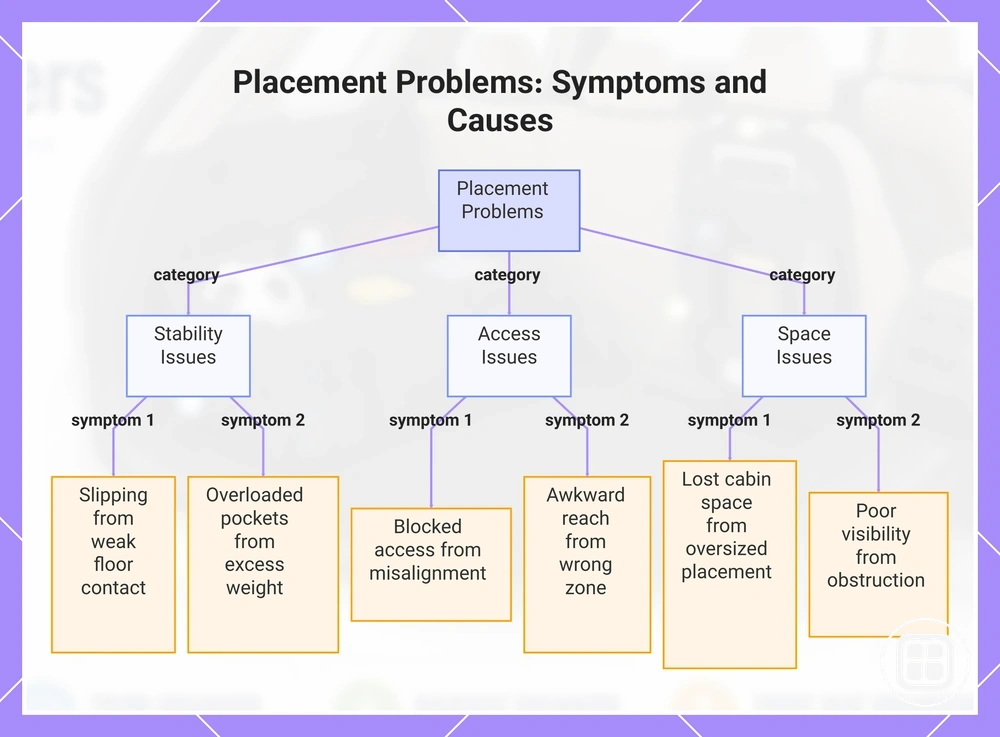
Many placement problems come from a wrong organizer type being used in an unsuitable vehicle area or from a placement mismatch between item weight, attachment surface, and intended use. In many cases, slipping, blocked access, or reduced stability signals that the placement conditions do not support the organizer setup.
Placement problems often appear when dimensions, straps, anchor points, and available space do not align with the selected vehicle zone. Floor contact, seatback shape, console gap width, visor thickness, and cargo-floor surface can each influence performance. Depending on these conditions, issues such as slipping, overloaded pockets, or poor visibility may occur, especially when item weight exceeds what the placement can support.
In some scenarios, the organizer type itself is suitable, but placement conditions still create functional issues. A setup may show awkward reach, blocked access, or lost cabin space depending on where it is installed and how it interacts with the vehicle layout and usage pattern.
- Slipping: often linked to weak floor contact or low-friction attachment surface, where placement mismatch causes movement during driving
- Blocked access: usually caused by console area or seatback placement misalignment, leading to awkward reach to stored items
- Lost cabin space: occurs when oversized placement reduces legroom or passenger space due to improper zone selection
- Overloaded pockets: may appear in backseat organizers when item weight exceeds hanging support capacity
- Poor visibility: can result from visor or front-seat obstruction caused by placement interfering with sightlines
- Awkward reach: typically linked to wrong placement zone relative to driver or passenger access patterns
This chart shows the main categories of placement problems in vehicle organizers and their typical causes based on organizer type and placement conditions.
Choosing the right placement type for a storage need
Choosing placement type depends on matching the storage need with access frequency, item size, passenger role, vehicle space, and securing requirement. These factors define how effectively a placement type supports real usage and establish the main selection criteria for storage fit decisions.
A storage need with high access frequency requires quick-reach placement, while low-frequency storage can remain in rear zones like trunk or cargo areas. Item size directly affects capacity requirement because larger objects often need wider or deeper storage zones, while smaller items fit better in compact cabin placements. Access frequency and item size together shape the core placement decision and reduce placement mismatch when correctly aligned.
Problems arise when passenger role and vehicle space are not considered during choosing the placement type. Front cabin areas may become restricted when cabin-space limit is exceeded, while rear placements can reduce usability when securing requirement is weak under movement. Stability condition also changes depending on item weight and attachment surface, which can influence whether a placement type remains practical in real driving conditions.
A practical decision checklist helps structure the selection of placement type based on storage need:
- Item size and capacity requirement for the selected zone
- Access frequency and how often items must be reached
- Passenger access and who needs priority reach
- Vehicle space and cabin-space limit constraints
- Securing condition and stability requirement during movement
- Visibility or obstruction risk in front cabin areas
Choosing the placement type is ultimately a balance of storage need, access frequency, item size, passenger role, vehicle space, and securing requirement rather than a fixed rule. When these conditions align, placement decision becomes more consistent and reduces placement to avoid scenarios caused by mismatch between storage intent and vehicle layout. Back to hub overview
Here are product examples that may make comparison easier. Before buying, always review the compatibility criteria, essential features, and product details.
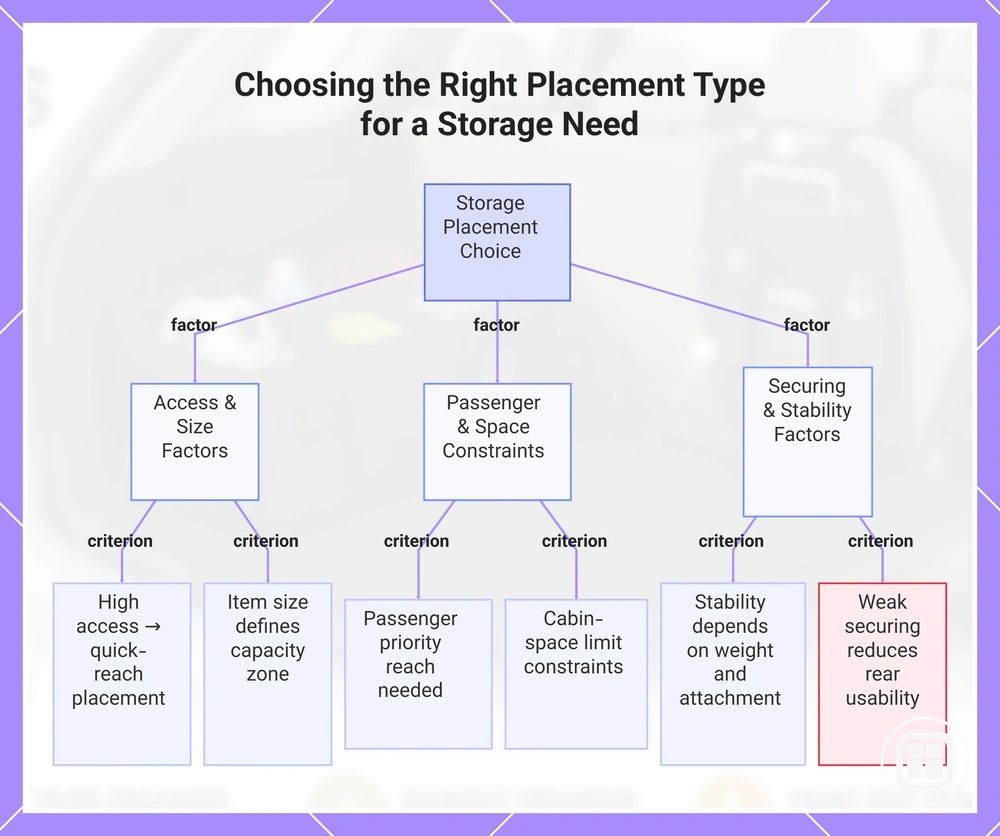
This chart shows the key factors and conditions that determine the optimal placement type for storage in a vehicle, based on access frequency, item size, passenger role, vehicle space, and securing requirements.