
Car organizers overview for vehicle storage, placement, and everyday use
Car organizers are storage accessories that help contain, separate, and keep loose items easier to reach inside a vehicle. They support vehicle storage by giving everyday items a defined place in the trunk, backseat, console, or another placement area.
Loose items can create clutter when bags, tools, travel supplies, or small objects shift between seats, floor space, and cargo areas. A car storage organizer can reduce that mess when its compartments match the storage need and its fit suits the available vehicle space. Secure placement may also depend on the organizer type, straps, surface contact, and how often the stored items need access. This connects clutter, placement, and access as the main reasons people consider car organizers for everyday use.
Car organizers vary by placement and storage layout, so one format should not be treated as suitable for every vehicle or use case. The main decision usually starts with where the organizer will sit, what it needs to hold, and whether the fit allows secure placement. From there, types, fit, compartments, and selection criteria can be compared more clearly.
What car organizers are and when they help
Car organizers are storage accessories used to contain, separate, and stabilize loose items inside a vehicle. They help keep items grouped within a trunk, backseat, console, or another vehicle area. Their primary role is to support the storage function by improving organization and access.
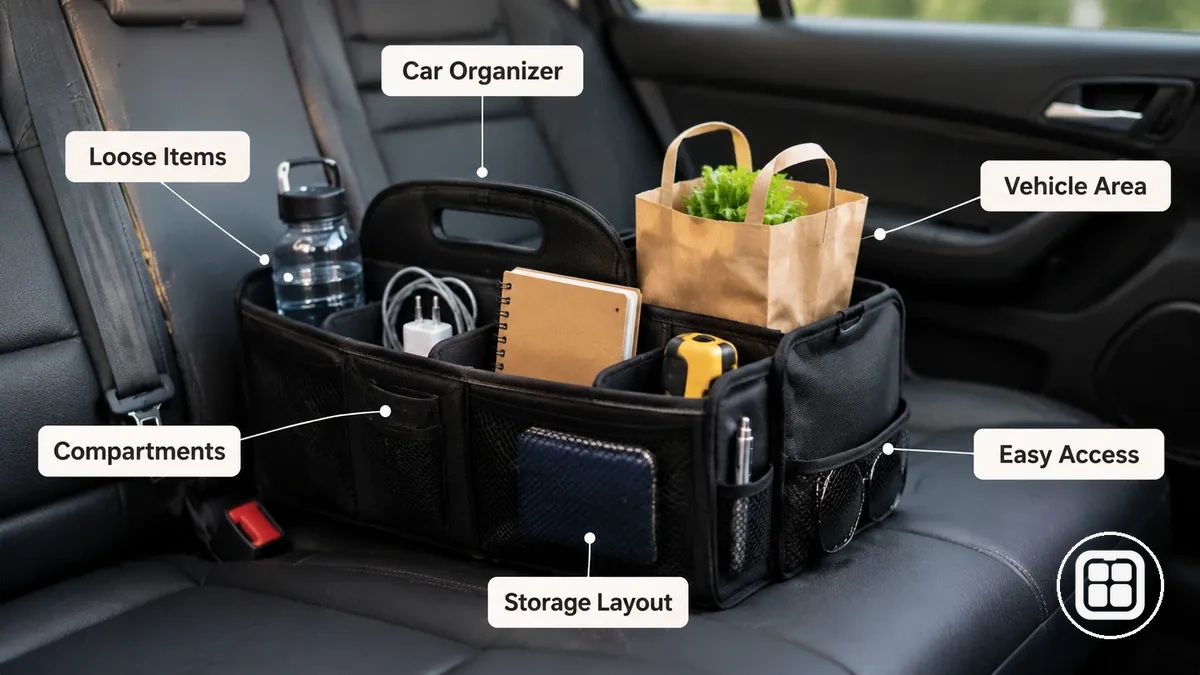
Car organizers help when loose items create clutter or become harder to access during everyday vehicle use. The image above shows a vehicle organizer containing and separating items to illustrate the storage function. Typical items a car storage organizer may hold include:
- Water bottles and travel cups
- Small tools and emergency supplies
- Documents and notebooks
- Charging cables and personal electronics
- Groceries or everyday carry items
Car organizers differ by placement and storage layout, so they should not be treated as a single format. Compartments, access points, and overall arrangement depend on the intended placement and storage layout.
Vehicle storage problems car organizers solve
Clutter becomes a storage problem when loose items collect in different parts of a vehicle and become harder to find or reach. Car organizers can help group scattered items into a defined area, making storage easier to manage during everyday use. This connection between clutter and organization explains why storage aids are often useful.
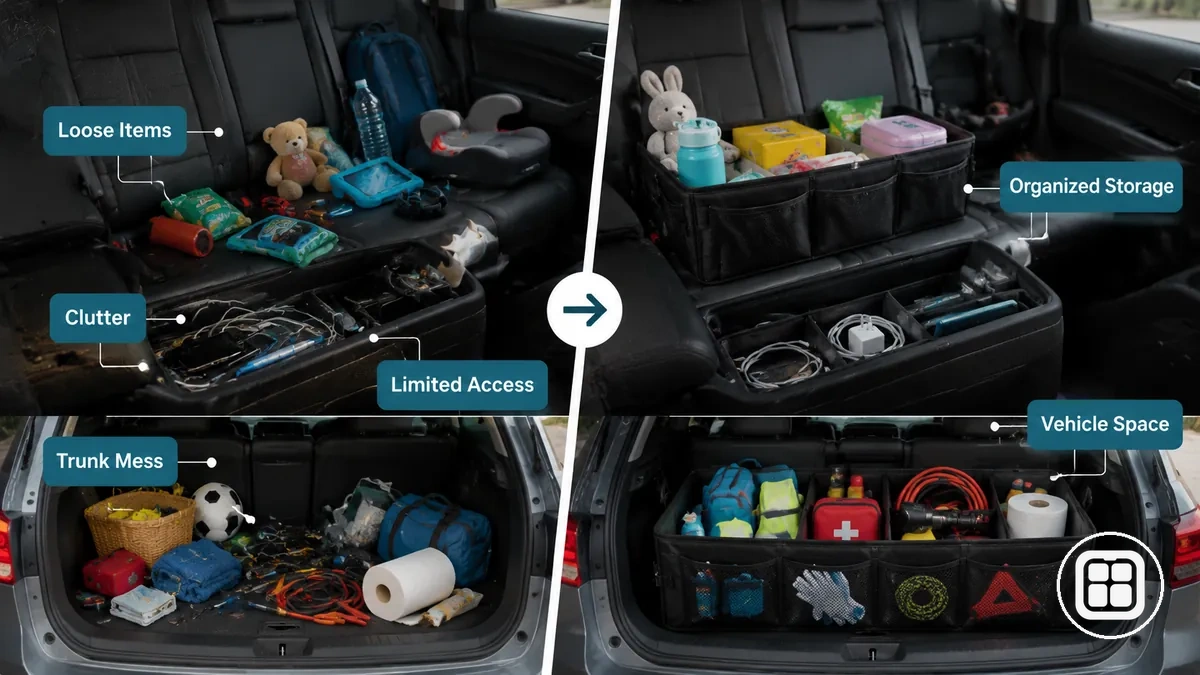
A family vehicle may collect children’s items, snacks, and small accessories in the backseat, while a travel-focused vehicle may accumulate bags, travel supplies, and cables in the cargo area. Trunk mess can make it harder to separate belongings, and emergency items may become difficult to locate when mixed with everyday items. The image above contrasts loose items with organized containment to show how storage problems can change by vehicle context. How much improvement is achieved may depend on vehicle space, item size, and the securing method.
Limited access and unstable storage are common storage problems. When belongings shift, become buried, or spread across different areas, access may become slower and organization more difficult. The following examples separate common problems from their practical effects.
- Clutter — loose items accumulate across seats, pockets, or floor areas — access becomes slower and less predictable.
- Limited access — frequently used items are blocked by other belongings — reaching needed items becomes more difficult.
- Trunk mess — groceries or travel supplies move around the cargo area — item separation becomes harder to maintain.
- Children’s items — toys, snacks, and small accessories collect in the backseat — scattered items can create ongoing mess.
- Emergency items — supplies are mixed with everyday belongings — locating them may take longer when needed.
- Unstable storage — items are not secured within available vehicle space — movement may increase depending on the securing method and driving conditions.
Clutter, loose items, lost objects, and limited access
When clutter builds up and loose items collect in vehicle storage areas, lost objects and limited access often become visible problems. The image below highlights these signals by showing scattered items, blocked access points, and misplaced small items. Together, these conditions form a common local problem pattern that can reduce the storage effect of available space.
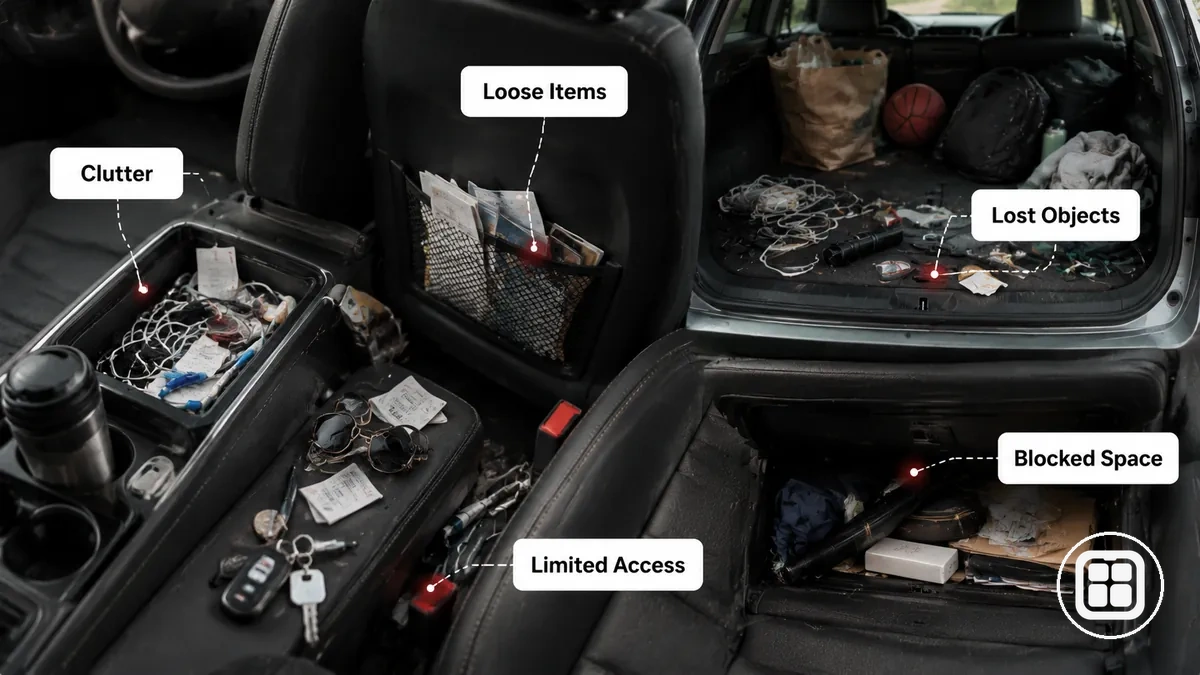
The following examples identify common local problem signals and their practical effects.
- Clutter — items collect across storage areas — finding needed belongings takes longer.
- Loose items — small objects shift between compartments or surfaces — misplaced items become harder to track.
- Lost objects — small items mix with other belongings — access delay may occur when searching.
- Limited access — frequently used items are blocked by other objects — cabin storage becomes less convenient to use.
- Blocked space — scattered items occupy seating or cargo areas — available storage space becomes less effective.
Main car organizer types by vehicle placement
Organizer types are commonly classified by vehicle placement because location influences access, capacity, and stability. A trunk organizer, cargo organizer, backseat organizer, front seat organizer, console organizer, and seat gap organizer each serve a different storage role within a specific vehicle area. This placement-based classification explains why placement changes the organizer role.
The main organizer types are grouped by where they sit or attach inside the vehicle. Access patterns, storage capacity, and fit concerns can vary by placement type, which is why placement serves as the primary overview category. The table below organizes the major placement groups.
| Placement type | Common storage role | Access pattern | Main fit concern |
|---|---|---|---|
| Trunk organizer | Store larger items | Rear cargo access | Available trunk space |
| Cargo organizer | Separate cargo-area items | Cargo area access | Vehicle cargo layout |
| Backseat organizer | Hold smaller items in the passenger area | Passenger-area access | Seat attachment method |
| Front seat organizer | Store frequently used items | Front-seat access | Seat and cabin fit |
| Console organizer | Organize small items | Quick access | Console dimensions |
| Seat gap organizer | Contain loose items in narrow spaces | Side-seat access | Gap size and shape |
When storage needs shift between passenger areas and cargo areas, a different placement type may provide a more suitable balance of access, capacity, or stability. Deeper subtype detail remains subordinate to this overview-level classification. Explore types by vehicle placement.
Trunk, cargo, backseat, front seat, console, and seat gap organizers
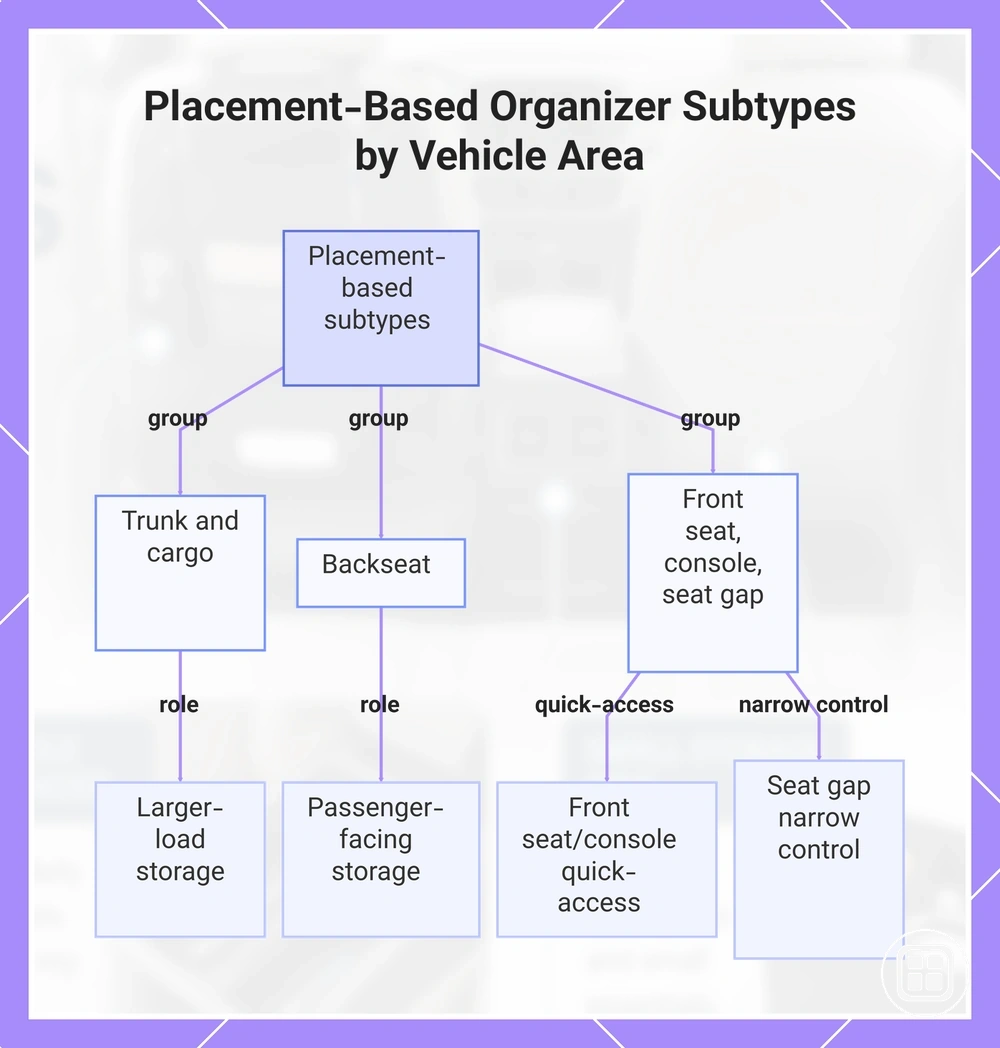
Placement-based organizer subtypes are grouped by the vehicle area where they are used because vehicle area affects organizer function. Trunk and cargo formats are commonly associated with larger-load storage, while backseat formats support passenger-facing storage through seatback pockets and similar compartments. Front seat, console, and seat gap formats emphasize quick-access and narrow-item control roles, grouping the subtypes by storage role.
Vehicle area affects organizer function in different ways, which is why these placement-based subtypes are often compared by role rather than rank.
- Trunk and cargo — larger-load storage that may help contain groceries and other cargo-area items.
- Backseat — passenger-facing storage that may help organize kids’ items and small belongings within reach.
- Front seat and console — quick-access storage for small items used more frequently during travel.
- Seat gap — narrow-item control that may help contain dropped items in a narrow space between seating surfaces.
When larger-load storage is the priority, trunk and cargo formats may provide more capacity for cargo-area items. When access to small items matters more, front seat and console formats typically emphasize quick-access storage.
This chart shows how vehicle area defines the storage role of organizer subtypes, grouped into larger-load, passenger-facing, and quick-access/narrow-control categories.
Storage capacity and compartment layout patterns
Storage capacity and compartment layout influence what a car organizer can hold and how easily stored items can be located. Capacity and access often depend on item size, access frequency, and the need for item separation. A storage layout with suitable compartments, pockets, and dividers can make item access more predictable.
Compartment layout is the internal arrangement of features that affect usable capacity and storage behavior. Compartments and dividers support item separation when different items need dedicated spaces. Pockets may improve visibility and reach for smaller items, while lids, cup holders, and collapsible sections affect containment, organization, and storage flexibility. The table below connects common layout features to storage decisions.
| Feature | Storage condition | Effect on access or capacity | Best-use signal |
|---|---|---|---|
| Compartments | Multiple item categories | Can improve item separation and access | Travel storage or mixed belongings |
| Pockets | Small items used often | May improve reach and visibility | Frequently accessed items |
| Dividers | Items need separation | Can help organize sectioned storage | Tools or emergency supplies |
| Lids | Contained storage preferred | May improve containment and reduce item exposure | Stored supplies or loose items |
| Cup holders | Drink storage needed | Provide a dedicated storage position | Travel use |
| Collapsible sections | Changing storage need | Can adjust usable capacity when space requirements vary | Flexible cargo storage |
When storage needs include kids’ items, tools, emergency supplies, or travel gear, layout features may influence how quickly items can be located and separated. Usable capacity depends on available space as well as how the internal layout supports access frequency and organization. View compartments and storage layout.
Pockets, dividers, lids, cup holders, and foldable sections
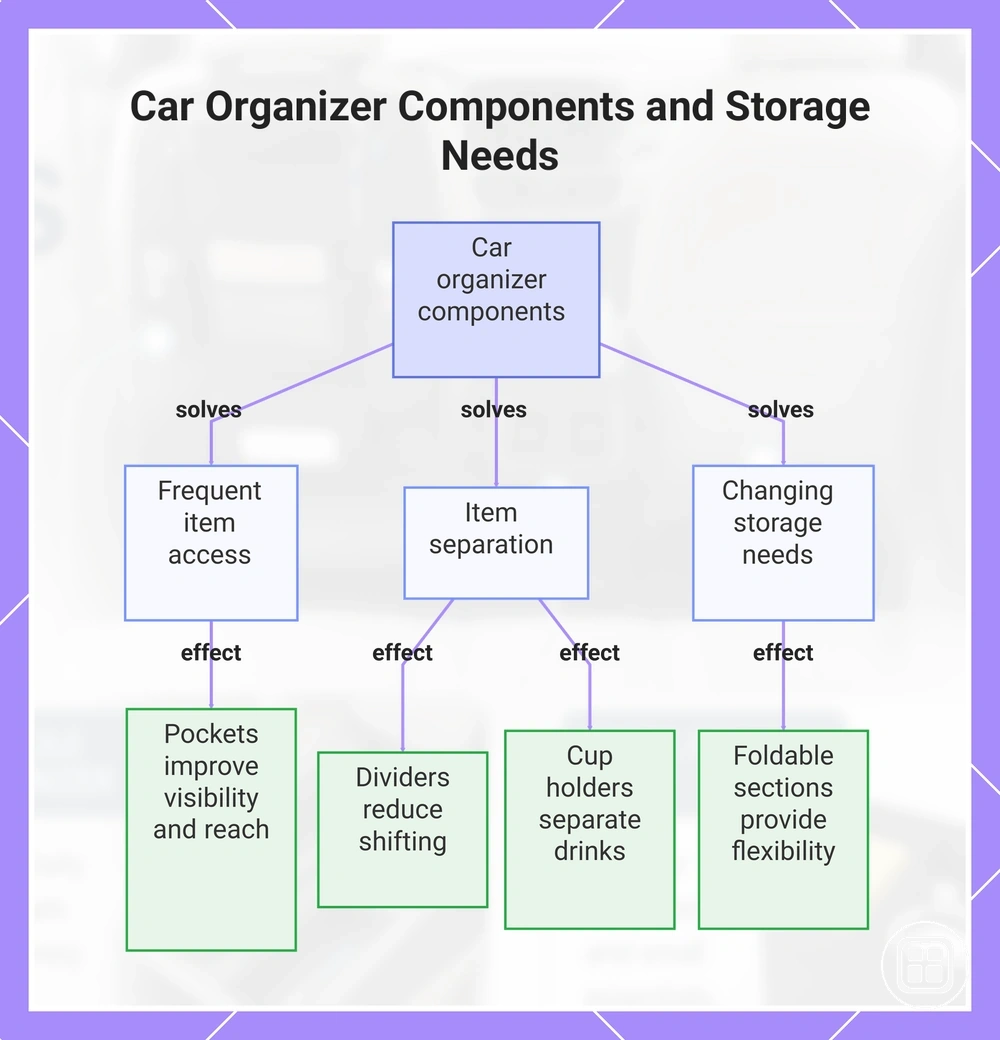
Pockets, dividers, lids, cup holders, and foldable sections are storage-layout components that influence how different item types are organized inside a car organizer. Each component serves a specific use condition and may affect access, visibility, containment, or flexibility. Together, these components connect a storage feature to a distinct storage effect.
- Pockets — when small items need frequent access, pockets may improve visibility and make items easier to reach.
- Dividers — when item separation is needed, dividers can help reduce shifting items and support organized access.
- Lids — when covered storage is preferred, lids may improve containment and keep stored items less exposed.
- Cup holders — when drinks require a dedicated position, cup holders can help separate beverage storage from other item types.
- Foldable sections — when storage needs change, foldable sections may provide flexibility through collapsible sections that adapt to different cargo needs.
When a storage layout combines separators and collapsible sections, organization and flexibility may support different storage situations. For example, foldable sections may adapt to changing cargo needs while dividers continue to support item separation.
This chart shows how different car organizer components address specific storage conditions such as frequent access, separation, and adaptability.
Fit, access, and secure placement factors
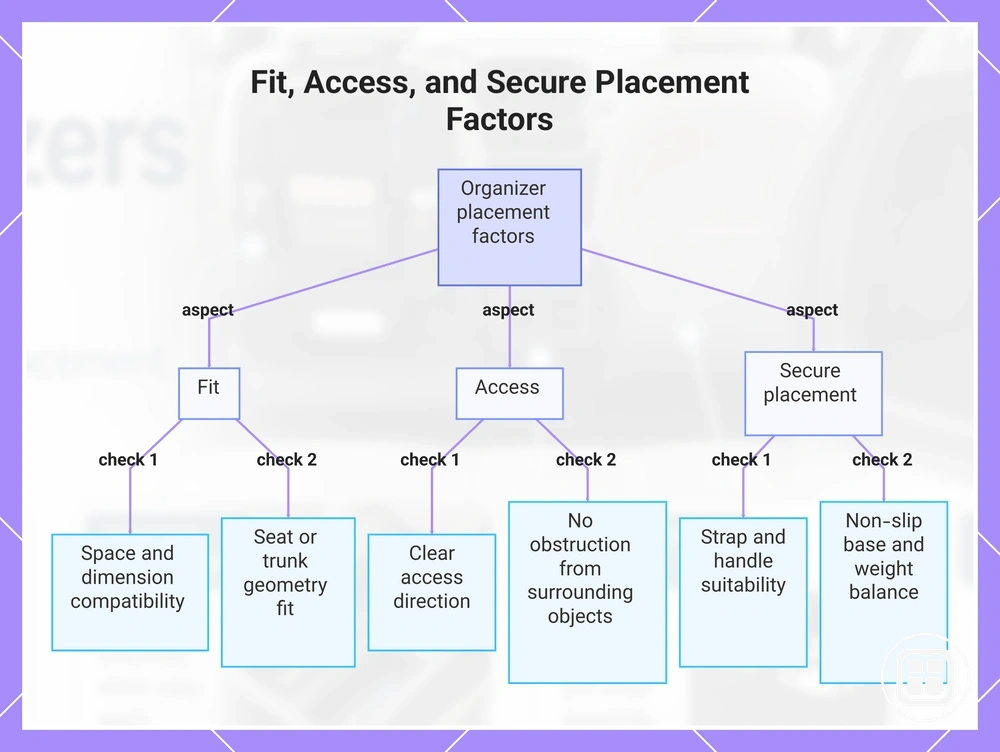
Fit, access, and secure placement depend on available space, organizer size, access direction, and the securing method used in a specific vehicle area. An organizer may suit one vehicle context but perform differently in another when dimensions, seat geometry, or trunk geometry change. Fit depends on the relationship between vehicle space, organizer dimensions, and placement conditions.
Fit is the compatibility between an organizer and the available space where it is placed. Access refers to how easily stored items can be reached based on access direction and nearby obstructions. Secure placement relates to stable placement conditions created by straps, handles, non-slip bases, surface contact, and organizer position. The checklist below helps evaluate fit, access, and secure placement factors.
- Available vehicle space supports organizer dimensions without restricting placement.
- Seat geometry or trunk geometry allows the organizer to sit within the intended vehicle area.
- Straps, when present, suit the securing method required for the placement location.
- Handles do not interfere with access direction or nearby storage areas.
- Non-slip bases have sufficient surface contact to help reduce sliding risk when surface texture allows.
- Stored item weight remains appropriate for the chosen securing method and placement condition.
- Access direction remains clear enough to reduce obstruction risk during normal use.
When an organizer fits within a cargo area, access may still be limited if surrounding objects block the intended access direction. In another vehicle, the same organizer may provide easier access but depend on different straps, handles, or surface contact conditions for stable placement. These conditions explain why similar organizers can behave differently across vehicle types.
Size fit and secure placement should be evaluated separately because suitable dimensions do not automatically create stability, and stable placement does not always improve access. For a deeper compatibility review, Check fit, size, and compatibility.
This chart shows the three main factors affecting organizer placement in vehicles and the key checklist items for each factor.
Vehicle space, organizer dimensions, straps, and non-slip bases
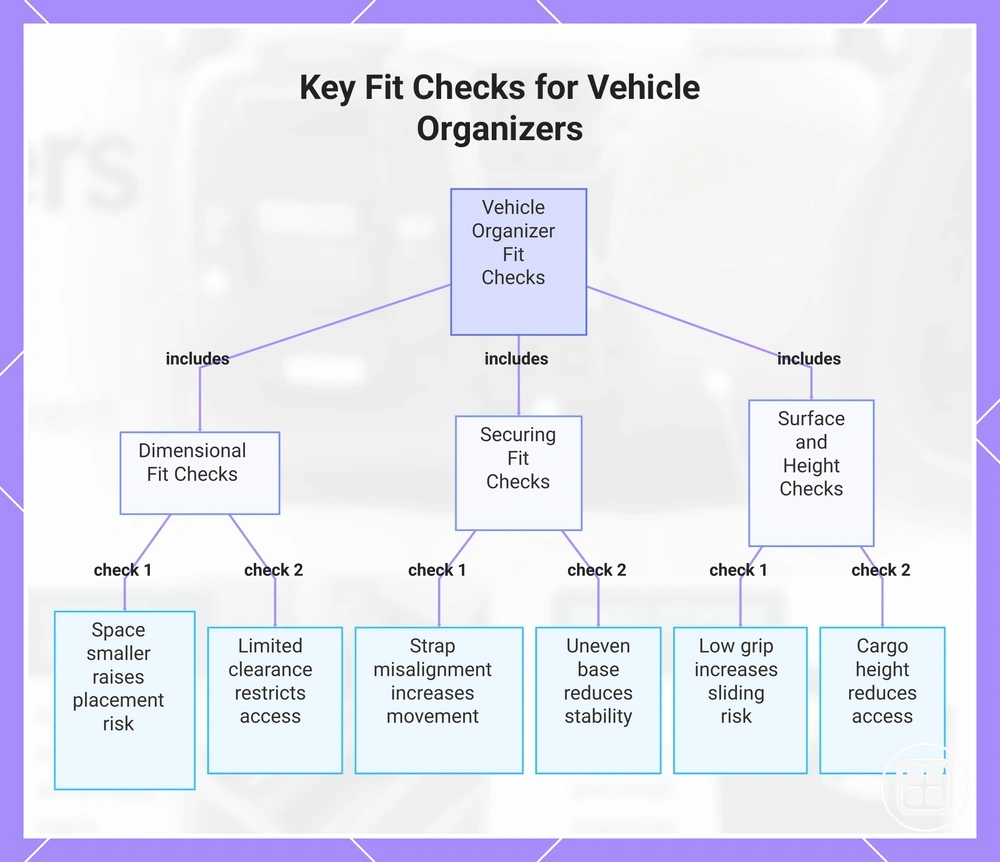
Vehicle space, organizer dimensions, straps, and non-slip bases are key fit checks that help prevent poor placement and unstable storage. These checks help identify whether an organizer suits the intended area and whether movement or access limitations may occur. The most relevant local fit checks involve vehicle space, organizer dimensions, strap points, surface texture, cargo height, and non-slip base contact.
- Available vehicle space is smaller than organizer dimensions — placement risk may increase because the organizer may not sit within the intended area.
- Organizer dimensions leave limited clearance around surrounding surfaces — access may become more restricted when space is tight.
- Strap points are unavailable or poorly aligned with the securing method — movement may increase during normal use.
- Surface texture provides limited grip — sliding risk may increase when non-slip base contact is reduced.
- Cargo height limits overhead clearance — access or visibility may become more difficult when stored items occupy more vertical space.
- Non-slip base contact is uneven across the placement surface — stability may vary depending on surface conditions and item weight.
When one of these fit checks is overlooked, placement behavior may become less predictable. Matching vehicle space, organizer dimensions, strap points, surface texture, cargo height, and non-slip base contact conditions can help reduce placement risk and support more stable storage outcomes.
This chart shows the six key fit checks for vehicle organizers, their specific conditions, and the potential placement risks if overlooked.
Materials and build features that affect durability
Materials and build features influence durability, cleaning, and everyday handling because construction details affect how an organizer responds to regular use. Fabric or synthetic surfaces, reinforced panels, stitching, handles, and surface protection features each contribute differently under handling stress. Durability depends on material choice, reinforcement, surface protection, and build conditions.
Build features are construction elements that help an organizer manage wear, carrying stress, spills, and repeated handling. Reinforced panels may support shape retention when loads are present, while stitching and handles are often exposed to carrying stress during movement. Water resistance and washable surfaces address different conditions, since water resistance relates to surface protection from spills while washable surfaces relate to cleaning and maintenance. The table below connects common build features to practical durability and usability signals.
| Build feature | Condition it helps with | Possible limitation | Practical signal |
|---|---|---|---|
| Fabric or synthetic surface | Everyday handling and surface contact | Wear may vary by usage conditions | General-purpose construction |
| Reinforced panels | Shape retention under load | Durability may still depend on use conditions | Added structural support |
| Stitching | Carrying stress and repeated handling | Wear may increase with frequent stress | Connection between panels and components |
| Handles | Moving or carrying the organizer | Handling stress may vary by load and use | Improved portability |
| Water resistance | Spills and surface protection | Does not imply waterproof performance | Protective surface treatment |
| Washable surfaces | Cleaning and maintenance | Cleaning convenience does not indicate durability level | Easier routine upkeep |
| Non-slip construction | Reducing movement on contact surfaces | Effect may vary by surface conditions | Improved placement stability |
When an organizer experiences repeated carrying stress, reinforced panels, stitching quality, and handle construction may influence how well the structure maintains its form. Water-resistant wording, washable surfaces, reinforced construction, and heavy-duty wording describe different attributes and should not be treated as equivalent durability claims. Durability may vary depending on load, handling stress, cleaning practices, and usage conditions.
Material descriptions are most useful when interpreted as build-quality indicators rather than fixed promises about lifespan or strength. Water resistance, washable surfaces, reinforced panels, and non-slip construction each address different conditions and require qualification before durability conclusions are made. For additional context on these attributes, Understand build quality and materials.
Water resistance, reinforced panels, handles, and washable surfaces
Water resistance, reinforced panels, handles, washable surfaces, and non-slip bases are build features that help describe how an organizer may respond to everyday use. Each feature addresses a different condition rather than providing a fixed durability outcome. These attributes connect material and construction choices to spills, shape retention, carrying, cleaning, and everyday use.
The following build features are commonly inspected before choosing an organizer:
- Water resistance — a water-resistant surface may help with minor spills through surface protection, but it should not be interpreted as fully waterproof protection.
- Reinforced panels — reinforced panels may support shape retention when a storage load is present, although the effect can vary with load weight and usage conditions.
- Handles — handles support carrying and vehicle-to-home movement, but carrying stress may increase as load weight increases.
- Washable surfaces — washable surfaces may make cleaning easier during everyday use, though results can depend on the material and care method.
- Non-slip bases — non-slip bases may help reduce movement on suitable surfaces, but performance can vary with surface texture and placement conditions.
When an organizer is exposed to spills, repeated carrying, or frequent cleaning, these build features may influence usability in different ways. Their practical effect often depends on conditions such as load weight, surface texture, and care method.
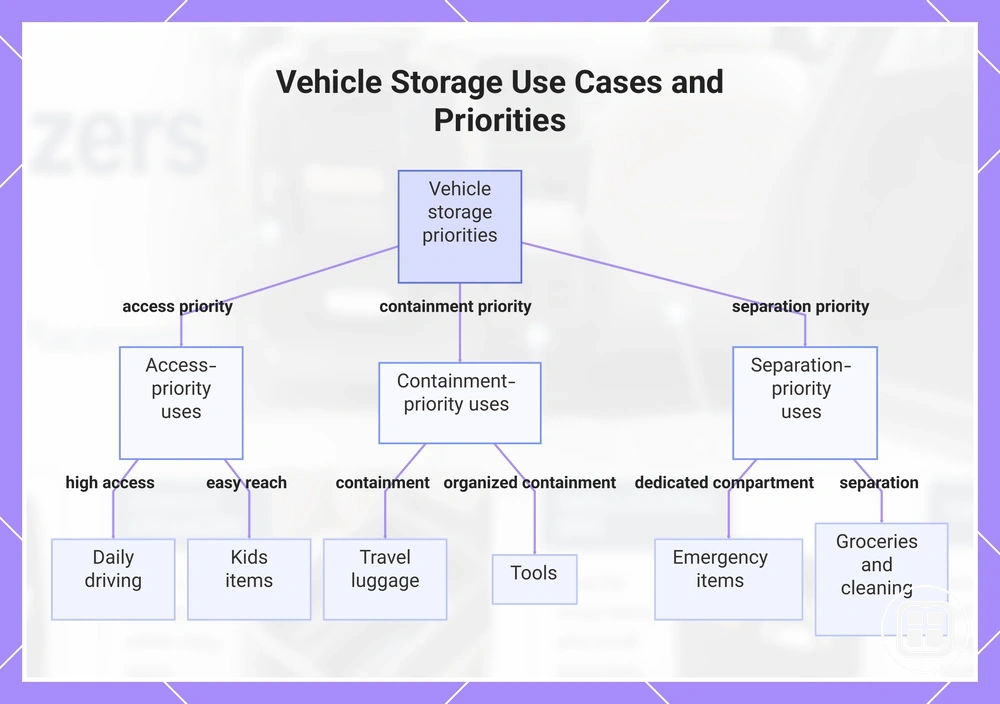
Common storage uses for daily driving, travel, kids, tools, and emergency items
Daily driving, travel, family activities, and cargo-related tasks create different storage needs inside a vehicle. The items being stored often influence access frequency, containment requirements, and suitable placement areas. Because these priorities vary by situation, use case is often the main driver of placement and layout.
Different storage situations may benefit from different placement and layout priorities:
- Daily driving — small items with high access frequency may suit placement near seating areas, with layouts that support quick access and item separation.
- Travel — luggage and road-trip supplies often emphasize containment, with placement tending toward trunk storage and layouts that help organize larger groups of items.
- Kids’ items — family items such as toys, snacks, or small accessories may benefit from easy reach, with placement often leaning toward backseat areas and pocket-based layouts.
- Tools — tools may require organized containment and stability, with placement commonly associated with cargo areas and layouts that include compartments or dividers.
- Groceries and cleaning supplies — cargo supplies may benefit from separation and containment, with placement often centered in trunk areas and layouts that help reduce item mixing.
- Emergency items — emergency items may require predictable access, with placement often favoring dedicated compartments that separate them from everyday belongings.
When items become difficult to locate or contain, the storage need often shifts toward easier organization and access. Matching the use case to the placement area and layout can help create a more suitable storage arrangement. For example, travel supplies may fit a divided trunk-storage layout, while kids’ items may be easier to organize in backseat pockets within reach.
This chart groups common vehicle storage situations into three priority categories—access, containment, and separation—with specific examples based on the source text.
How to choose a car organizer by storage need and vehicle context
Choosing a car organizer depends on matching the storage need to the vehicle context rather than selecting a single format for every situation. Vehicle area, fit risk, compartments, material, and securing method can influence whether an organizer supports the intended use. The most useful decision criteria connect storage need, placement, fit, layout, and stability.
| Need or context | Placement signal | Feature to check | Trade-off to qualify |
|---|---|---|---|
| Frequent-access daily items | Front seat, console, or seat gap area | Multi-compartment layout | More compartments may reduce space for larger items |
| Travel supplies or luggage | Trunk or cargo area | Foldable design and containment capacity | Additional capacity may require more vehicle space |
| Tools or emergency items | Cargo area or dedicated storage zone | Compartments and securing method | Added organization may create a more structured layout |
| Spill-prone or cleaning-sensitive items | Depends on storage location | Waterproof-style or water-resistant material | Material descriptions may not indicate overall durability |
| Mixed item categories | Depends on access pattern | Multi-compartment organization | Greater separation may reduce open storage space |
When items need to be stored in different vehicle areas, fit risk often becomes the next decision factor. Vehicle space, organizer dimensions, and secure placement conditions may affect whether a suitable format works in the intended location. This decision chain connects storage need, placement, and fit before evaluating additional features.
Travel supplies may benefit from a foldable trunk format when containment is the priority, while daily-use items may suit a multi-compartment layout that supports easier access. Tools, emergency items, and cleaning-sensitive items may place greater emphasis on material choice, compartments, and securing method. Material and compartment decisions are most useful when matched to the intended use case.
Choose by evaluating storage need, placement, fit risk, compartments, material, and securing method together rather than treating any single feature as decisive. A suitable format depends on vehicle context, item type, access requirements, and practical trade-offs. For broader decision support, see Selection and buying guidance.
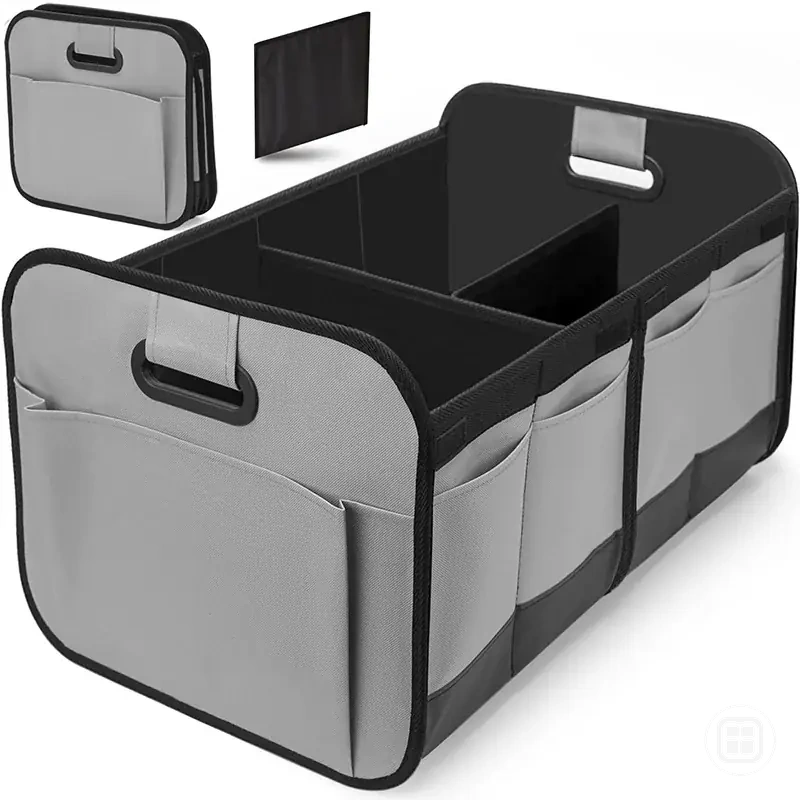
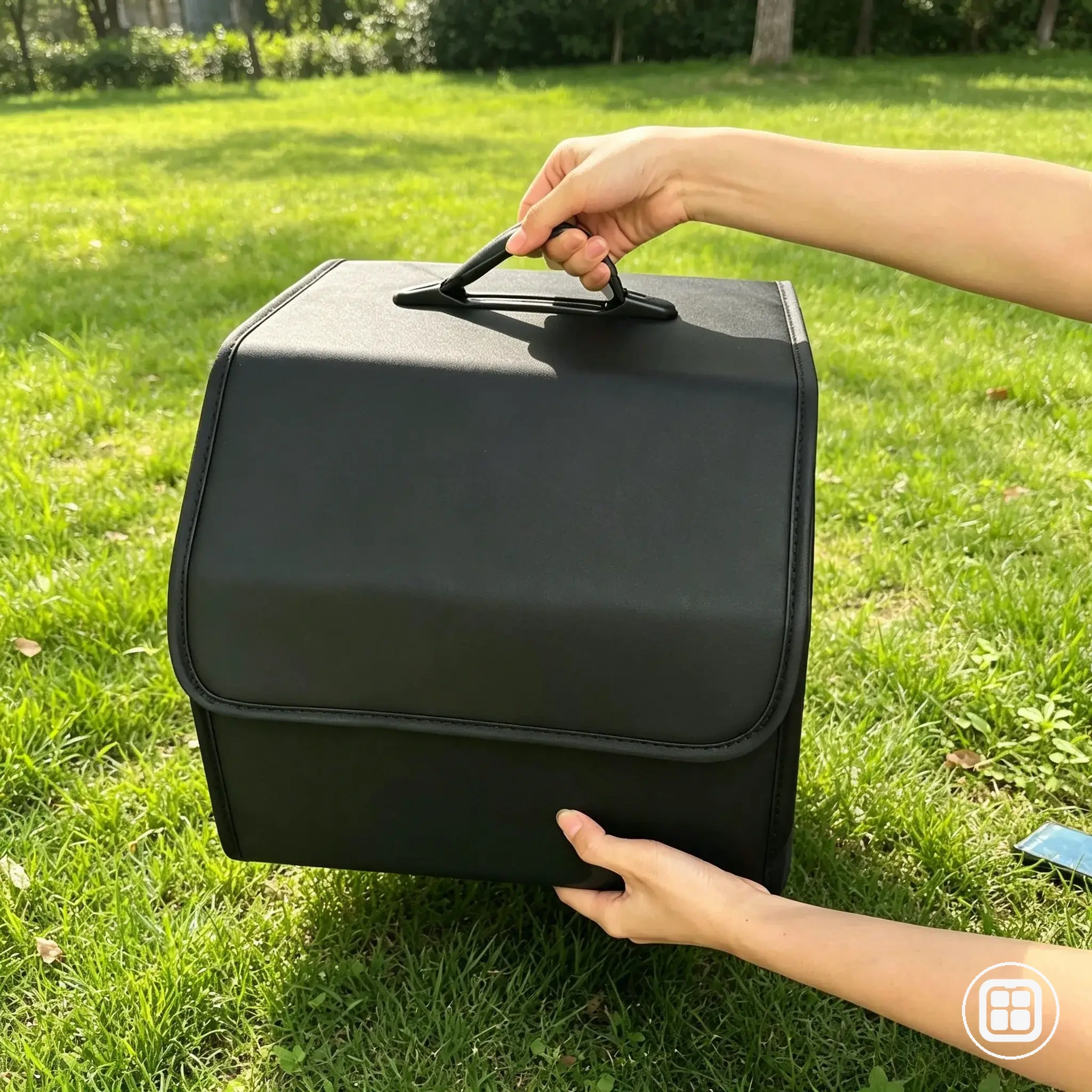
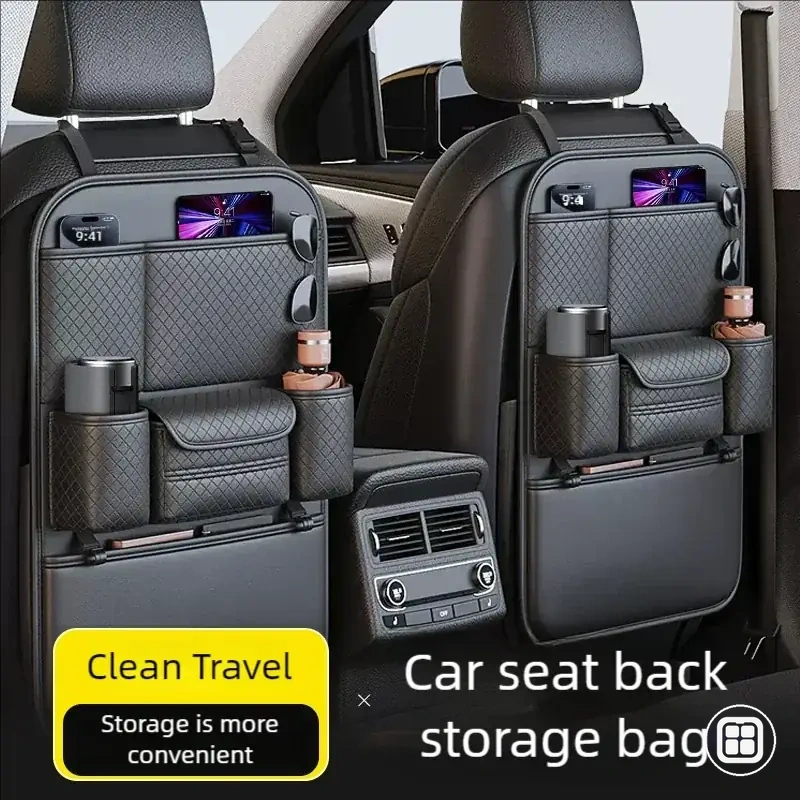
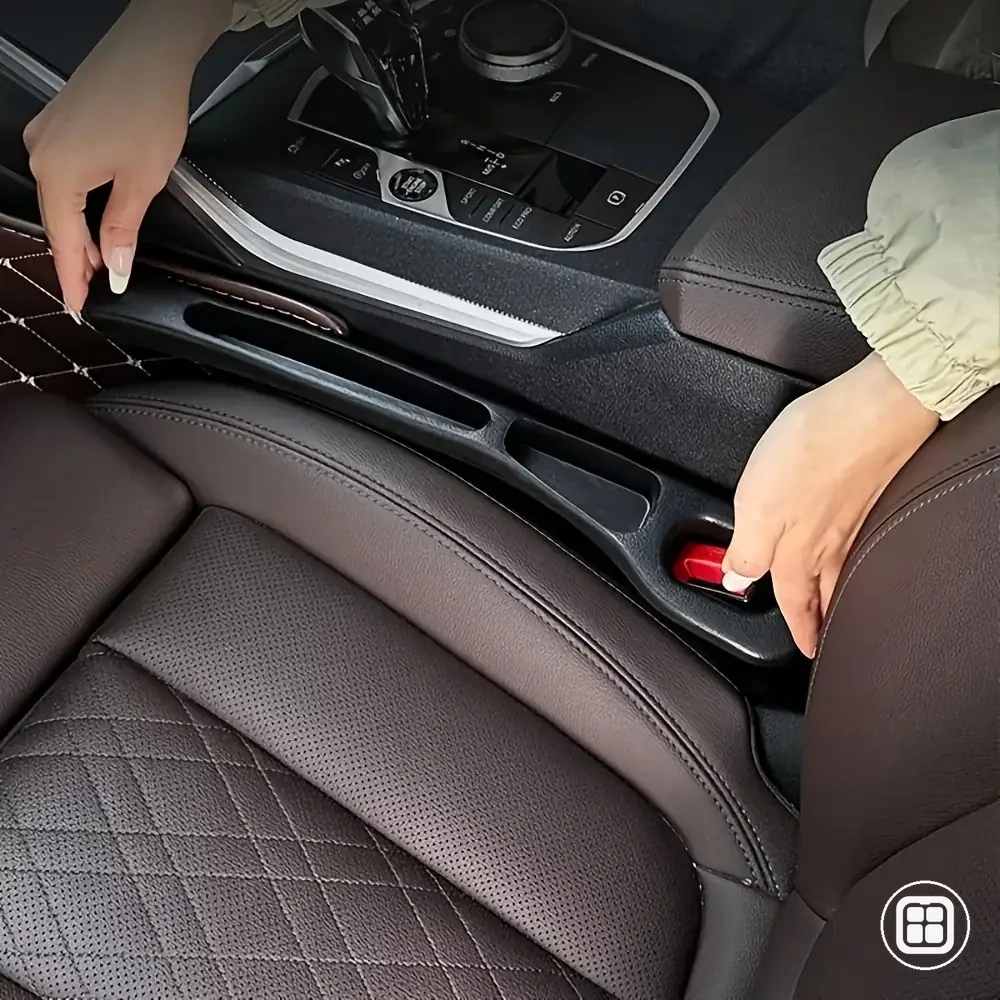
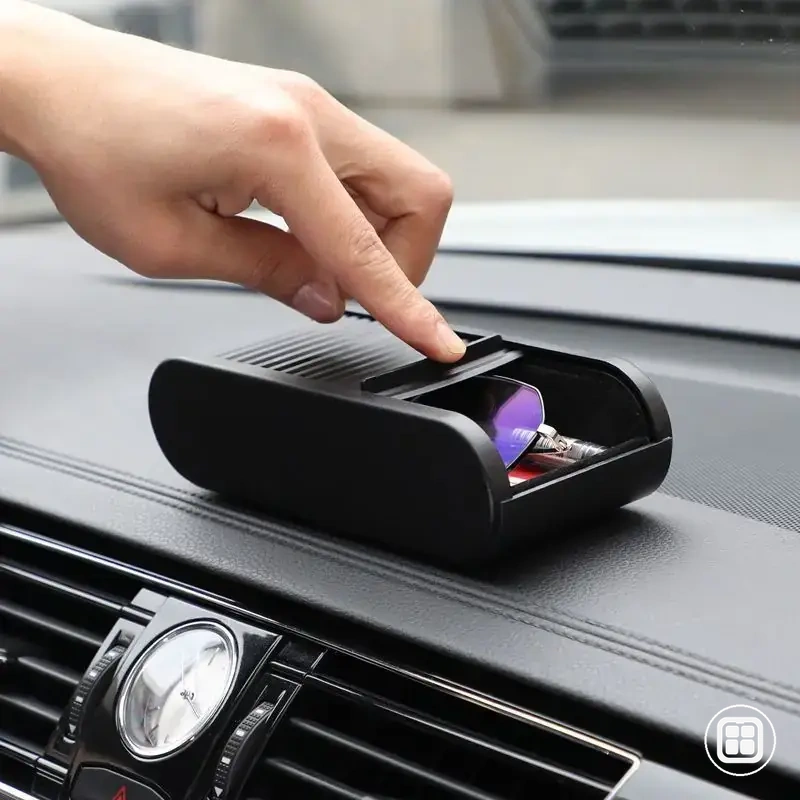
Here are product examples that may make comparison easier. Before buying, always review the compatibility criteria, essential features, and product details.
Common car organizer issues and safe-use checks
When slipping, sliding, collapsing, overloading, or blocked access occurs, the cause is often related to poor fit, weak securing, surface mismatch, or layout mismatch. These common issues can reduce organizer usefulness and make stored items harder to access or contain. The main failure sources are poor fit, weak securing, overload conditions, surface mismatch, and storage-layout mismatch.
Problems are usually easier to evaluate when symptoms are matched to likely conditions and safer checks. Instead of assuming a single cause, stability checks and fit problems should be reviewed in relation to vehicle space, item placement, and storage load. The diagnostic checklist below focuses on symptom recognition and safe-use checks rather than repair instructions.
| Symptom | Likely condition | Safer check |
|---|---|---|
| Slipping | Surface mismatch or limited non-slip base contact | Check whether the contact surface supports stability in the intended placement area |
| Sliding | Weak securing or uneven loading | Check whether the securing method supports stable placement for the stored items |
| Collapsing | Overloading or limited structural support | Check whether stored items may exceed intended storage conditions |
| Blocked access | Item placement or layout mismatch | Check whether frequently used items remain visible and reachable |
| Poor fit | Dimensions may not suit available vehicle space | Check the relationship between organizer size and placement area |
| Reduced stability | Weak securing combined with load imbalance | Check whether item weight is distributed appropriately for the storage area |
When sliding, blocked access, or collapsing appears during normal use, the condition may indicate a mismatch between the organizer and the intended vehicle context. Safe-use checks are most useful when they focus on stability, visibility, access, and fit before continued use. Serious fit problems, overloading, or secure-placement concerns may require a more appropriate organizer choice and secure placement rather than improvised overloading.
Sliding, collapsing, overloading, and poor fit signals
When sliding, collapsing, or blocked access appears, the condition may indicate instability, weak support, or poor fit rather than normal storage behavior. Visible signals are most useful when paired with a likely condition and a simple check. Common signals include sliding, collapsing, overloading, poor fit, strap movement, and an unstable base, each pointing to a different likely condition.
- Sliding may indicate a vehicle surface mismatch or limited non-slip base contact — check whether the organizer remains stable on the intended vehicle surface.
- Collapsing may indicate overloaded compartments or weak support under item weight — check whether stored items create more load than the organizer can reasonably manage.
- Overloading may appear when compartments bulge or lose separation — check whether item weight and storage volume remain balanced across compartments.
- Blocked access may indicate dimensions or item placement that reduce reach and visibility — check whether frequently used items remain accessible without blocked space.
- Strap movement may indicate a weak fit between the securing point and organizer position — check whether the securing point supports stable placement.
- An unstable base may indicate uneven contact with the vehicle surface — check whether the organizer sits evenly without shifting during normal use.