
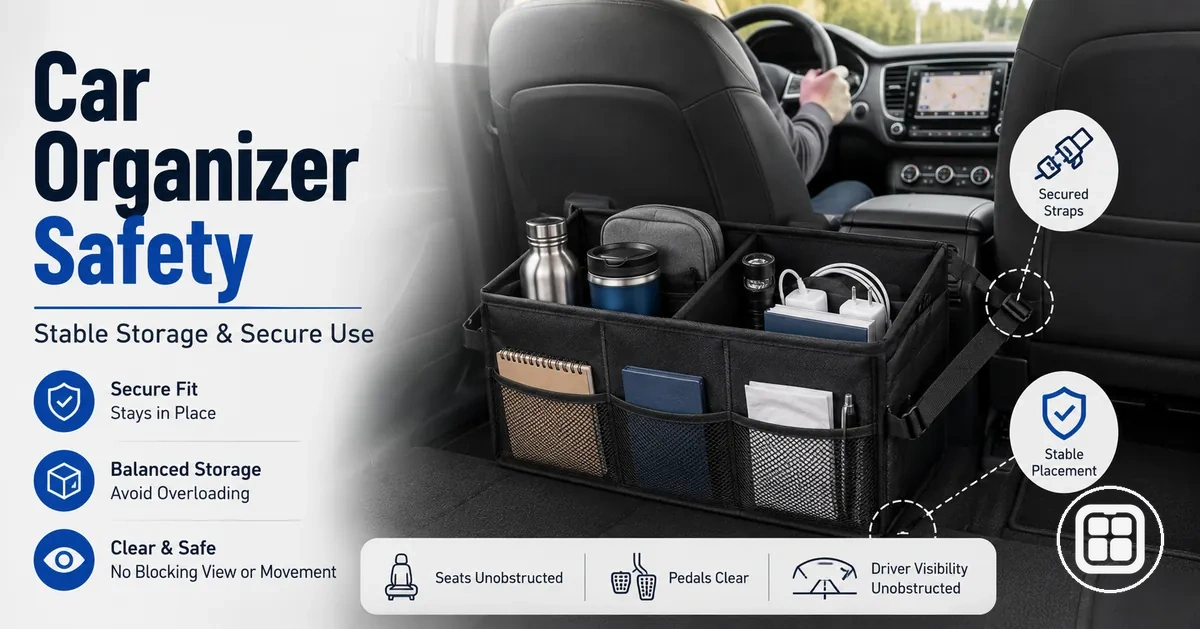
Car organizer safety guide for secure in-vehicle storage
Car organizer safety means using a car storage organizer for secure storage, stable placement, and clear item containment inside a vehicle. The safety frame is not the organizer alone. It is the way the organizer fits the vehicle area, holds loose items, and supports safe use while the vehicle is moving.
Loose items can create movement risk during a sudden stop, turn, or rough road condition. Unstable storage may also increase driver distraction when items slide, fall, or become hard to reach. Containment matters because everyday objects can behave differently based on load weight, position, lid use, and attachment method. A car organizer may support safer storage when the vehicle area, organizer design, road conditions, and user behavior work together.
Stable placement starts with the right vehicle area and enough clearance around visibility, pedal space, passengers, and access points. Securement features such as straps, a non-slip base, a lid, and compartments can help only when they match the surface, load, and attachment method. Safe use also depends on loading habits, quick checks before driving, routine maintenance, and knowing when to reposition or replace an organizer.
This page covers secure use and safe storage for car organizers. It does not replace full installation guidance, fit troubleshooting, or product ranking. The goal is to frame car organizer safety through placement, containment, movement control, and practical inspection cues without treating the topic like a product catalog.
Safety frame: a car organizer should support stable storage without blocking driver control, encouraging unsafe reaching, or making loose items harder to contain.
What safe car organizer use means inside a vehicle
Safe car organizer use inside a vehicle is controlled storage that keeps contained items organized and unlikely to interfere with vehicle operation. It focuses on how items are stored, accessed, and managed within an in-vehicle storage space. The safety purpose is to support organized storage while reducing unnecessary movement and access-related concerns.
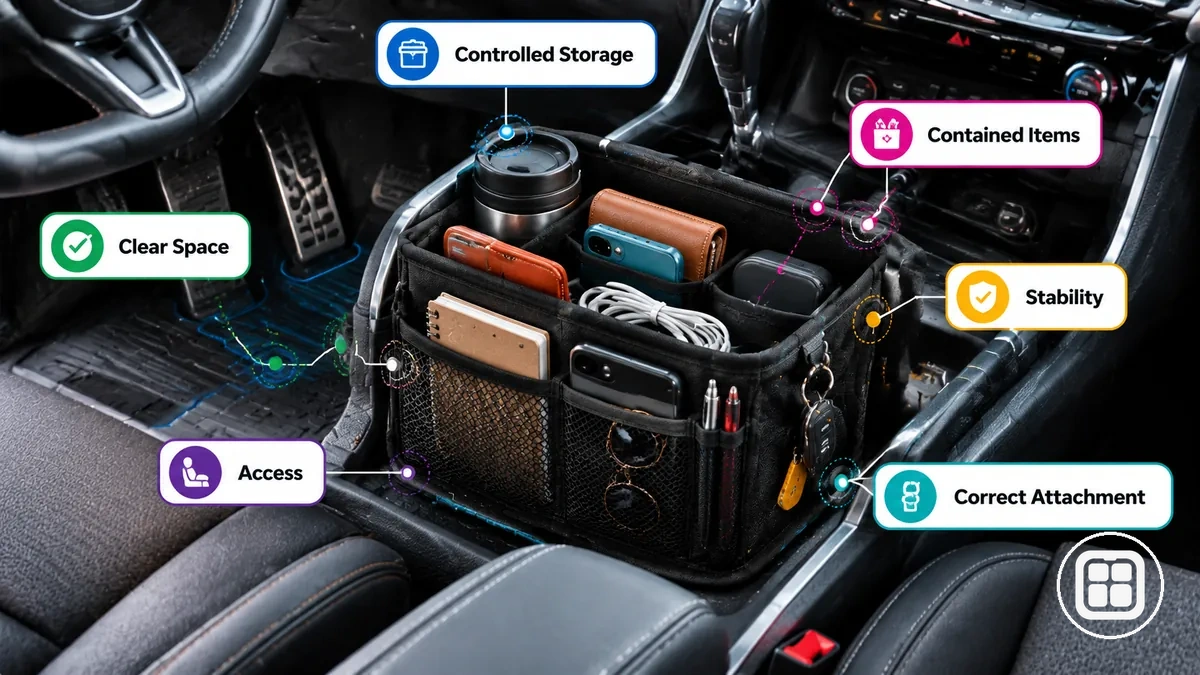
What safe car organizer use means inside a vehicle can be understood through placement, containment, stability, and access. Placement influences how the organizer fits within a vehicle area and whether adequate clearance remains around controls and occupant space. Contained items are less likely to shift when load behavior remains appropriate for the storage location. Stability and access matter because stored items should remain easy to reach before driving without encouraging unsafe interaction during vehicle operation.
Safe car organizer use depends on more than the organizer alone. The outcome may vary based on vehicle area, load behavior, movement during travel, and correct attachment. An organizer can support controlled storage, but safe use depends on how the organizer, contained items, and surrounding vehicle environment work together.
For broader context, Back to hub overview connects to the parent topic, while this section remains focused on the meaning and scope of safe car organizer use rather than installation, product comparison, or fit evaluation.
Safety risks from loose items and unstable organizers
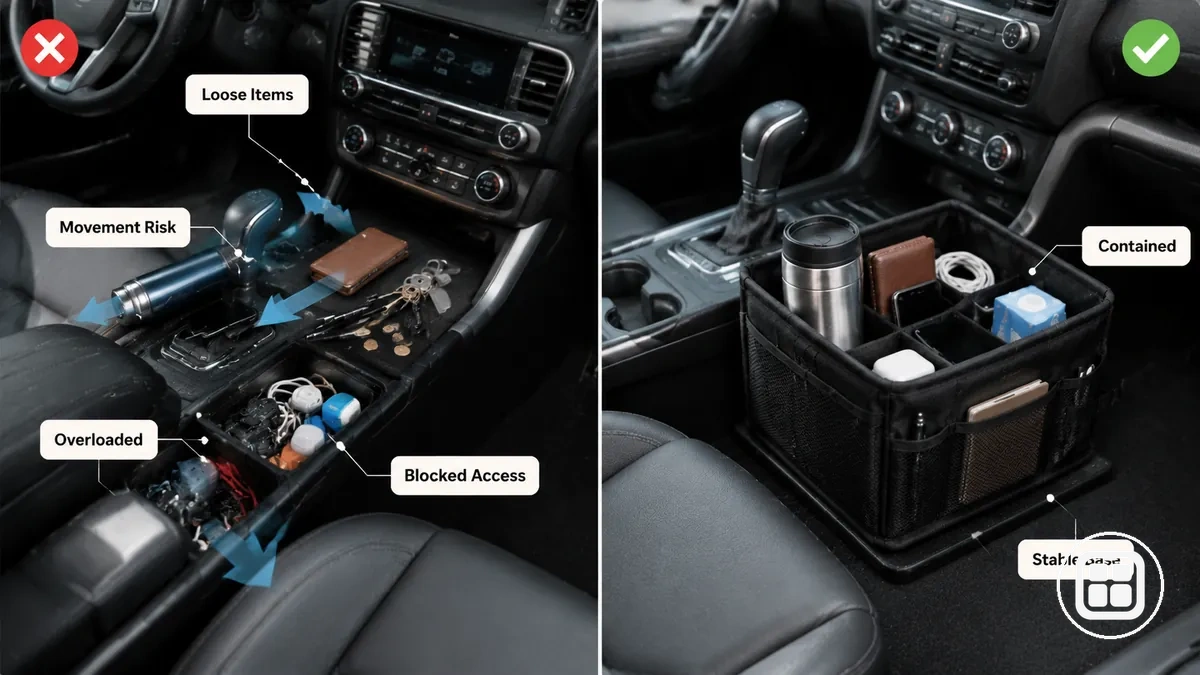
Loose items and unstable organizers can increase movement risk inside a vehicle when storage conditions do not support containment or stability. Risks often develop from loose cargo, overloaded compartments, blocked access, unstable bases, or poorly contained items that may shift during normal driving conditions. The main risk categories are loose items, shifting compartments, overloaded storage, blocked access, unstable base conditions, and poor containment.
Safety risks from loose items and unstable organizers can be grouped by risk source, the condition that raises risk, and the possible driving effect. The table below provides a compact risk map that connects each condition to a safer control.
| Risk source | Condition that raises risk | Possible driving effect | Safer control |
|---|---|---|---|
| Loose cargo | Items are not contained during travel | Higher movement risk during sudden stops | Use organized containment |
| Shifting compartments | Storage sections move or lose stability | Items may change position unexpectedly | Maintain stable compartment support |
| Overloaded storage | Overloaded compartments reduce storage stability | Greater chance of shifting storage | Distribute items more evenly |
| Blocked access | Poor placement limits clearance or reach | Driver distraction or awkward access | Maintain clear access paths |
| Unstable base | Sliding organizer lacks stable support | Organizer movement during cornering or braking | Use a more secure base position |
| Poor containment | Poorly contained items can shift inside storage areas | Greater item movement within the cabin | Improve item containment |
The table shows that movement risk usually begins with a storage condition rather than the organizer alone. A driving effect may become more likely when containment, stability, clearance, or load behavior are not well managed. Safer controls can reduce risk conditions, but outcomes still depend on vehicle area, organizer placement, and everyday driving situations.
Projectile risk during sudden stops or crashes
Projectile risk during sudden stops or crashes can increase when unsecured items or organizers move during sudden braking, cornering, or impact conditions. Projectile risk is influenced by item weight, item position, containment, and organizer anchoring rather than by the item alone. Projectile risk may increase when loose-object movement is not well controlled during sudden vehicle motion.
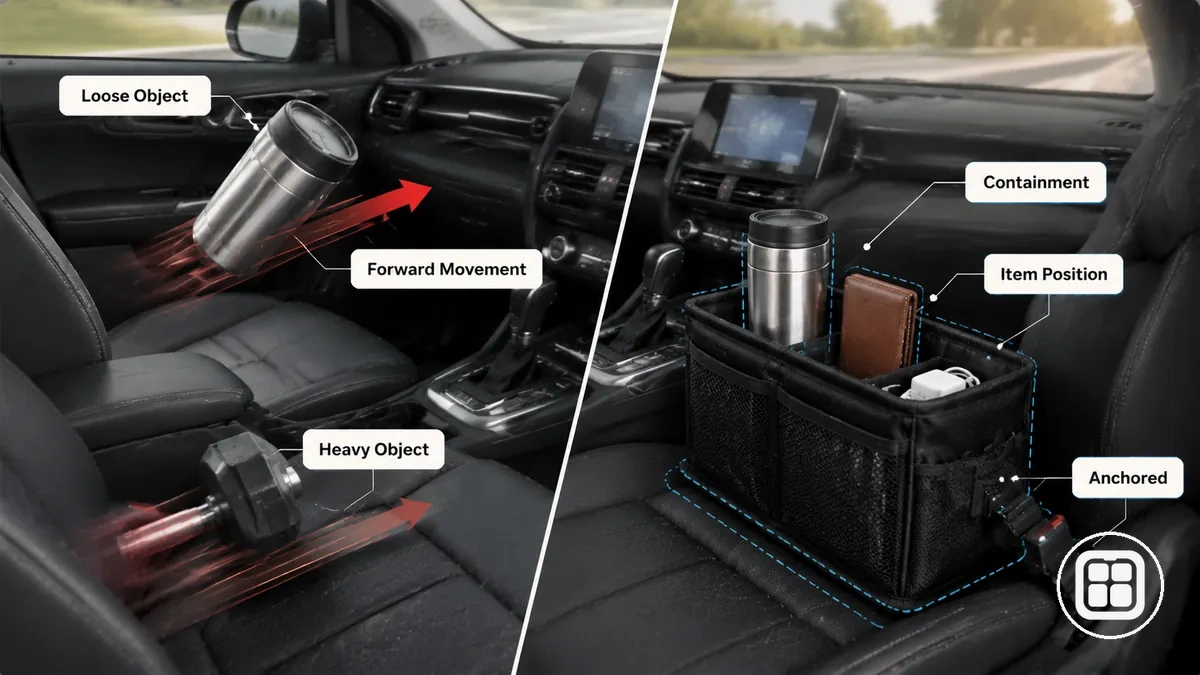
- Higher item weight can increase forward movement when containment is limited.
- Item position can affect how objects shift during cornering or sudden braking.
- Containment can help limit loose-object movement inside storage areas.
- A lid or cover can help keep items contained when properly secured.
- Organizer anchoring may reduce sideways movement when the organizer remains stable.
A light soft item may create less movement than a heavy loose object under similar vehicle motion. Movement outcomes still depend on item position, containment, and organizer anchoring.
Driver distraction from shifting or hard-to-reach items
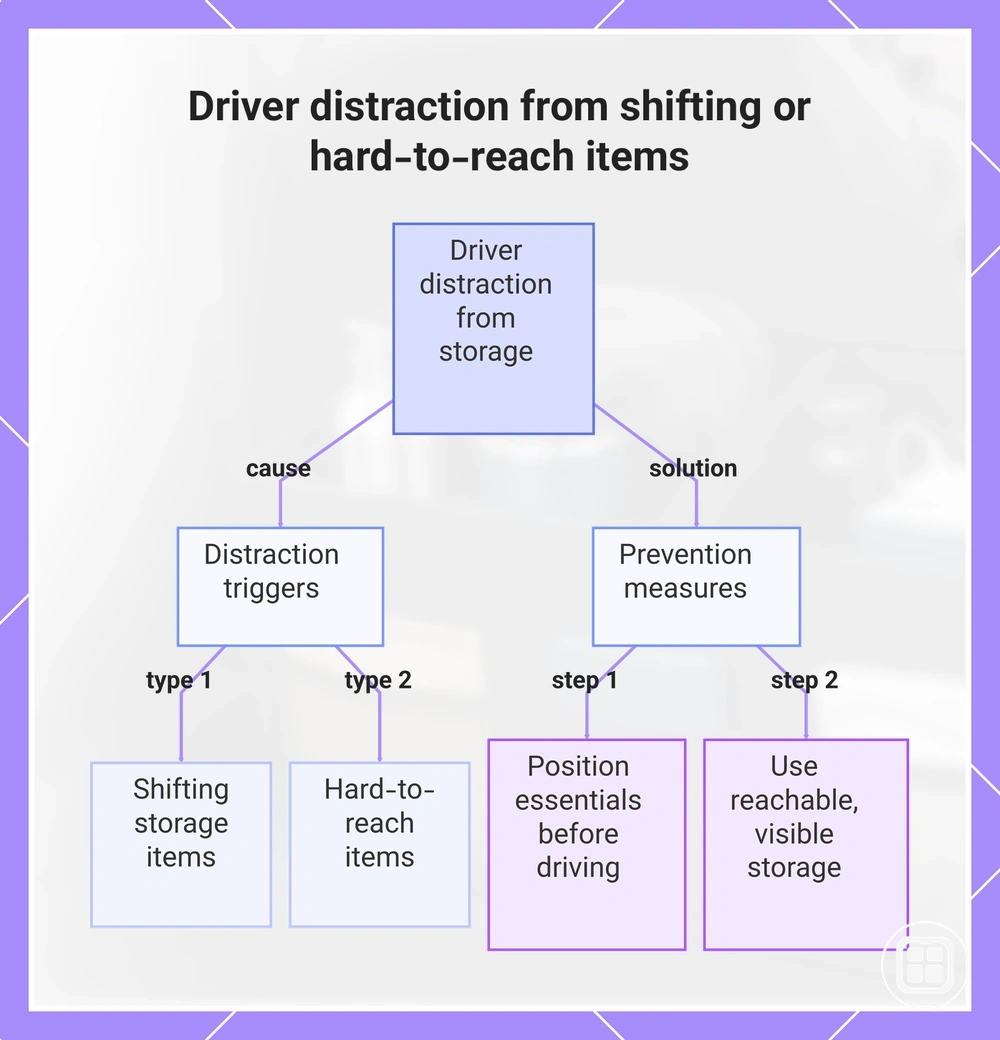
Driver distraction from shifting storage and hard-to-reach items can occur when an item moves unexpectedly or cannot be accessed easily from its storage position. During a trip, organizer movement, limited item visibility, or excessive reach distance may draw attention away from driving. Positioning essential items before driving supports a safer access principle because access while driving can increase distraction risk.
A phone cable or parking card stored in reachable storage with clear item visibility is usually easier to access than an item placed behind a seat or beyond comfortable reach distance. Hard-to-reach items may encourage unsafe reaching, while appropriate cabin placement can reduce the need to access storage while driving.
This chart shows how shifting storage and hard-to-reach items cause driver distraction and how to prevent it.
Visibility, pedal space, and cabin clearance risks
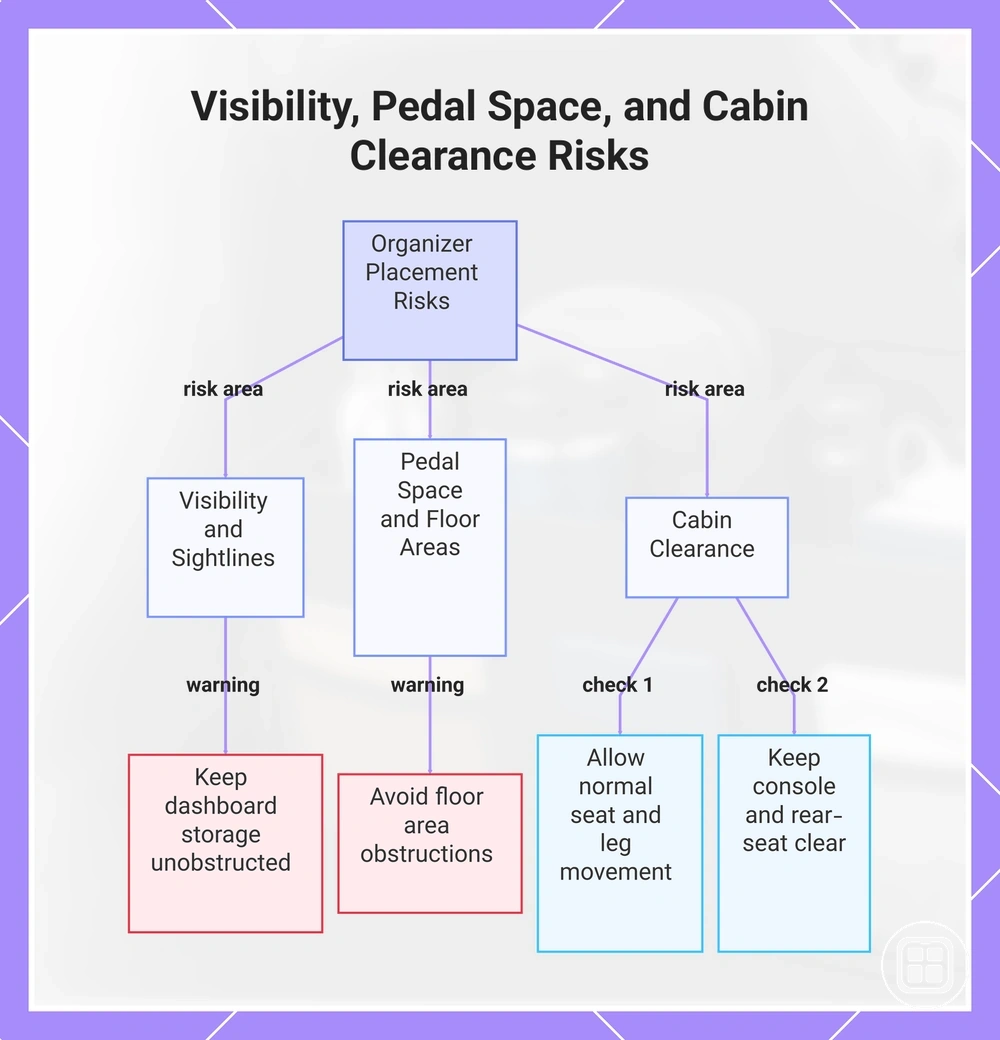
Visibility, pedal space, and cabin clearance risks can increase when organizer placement affects sightlines, control access, or movement within the cabin. Floor areas, pedal space, sightlines, leg movement zones, seat adjustment paths, and console gaps should remain unobstructed to maintain appropriate cabin clearance.
Clearance needs may vary by vehicle layout and storage location. Fit diagnosis belongs elsewhere unless organizer placement directly affects visibility, driver clearance, or control access.
- Visibility and sightlines: Dashboard-adjacent storage should not block sightlines when clear forward visibility depends on unobstructed space.
- Pedal space: Items placed in floor areas may create an obstruction when they interfere with pedal space or control access.
- Seat movement: Organizer placement should allow normal leg movement and seat adjustment when cabin space is limited.
- Console access: Storage near console gaps should not restrict access to nearby controls or commonly used cabin areas.
- Passenger clearance: Front passenger spaces may require unobstructed space for normal seating and movement.
- Rear-seat hanging area: Rear-seat hanging organizers should be positioned so they do not unnecessarily reduce cabin clearance around seating areas.
This chart shows the main risk areas when placing organizers in a vehicle cabin, including visibility, pedal space, and cabin clearance considerations.
Safe placement by vehicle area
Safe placement depends on the vehicle area, the available stability, and whether clearance and containment remain appropriate during travel. A placement area may provide a safer outcome when it offers a stable surface, adequate clearance, and controlled item movement. The area-based decision frame is to match the vehicle area to stability, clearance, and containment requirements.
The table below organizes common placement areas by condition, movement risk, and placement cue. Area suitability can vary by vehicle layout and the way items are stored.
| Vehicle area | Main safety condition | Risk to check | Safer placement cue |
|---|---|---|---|
| Trunk | Stable surface with item containment | Movement of stored items | Use when contained items remain stable |
| Cargo area | Containment and controlled load position | Shifting heavy items | Use when containment supports load stability |
| Seatback | Secure attachment point | Organizer movement | Use when the attachment point remains stable |
| Backseat | Passenger clearance and stable placement | Item movement into seating space | Maintain passenger clearance around stored items |
| Front seat | Driver clearance and item control | Interference with driving space | Use when driver clearance remains unobstructed |
| Console | Stable position with item containment | Restricted control access | Maintain access to nearby controls and storage areas |
| Floor-area | Secure location away from control paths | Obstruction of pedal or foot space | Use when pedal access and foot space remain clear |
No vehicle area is automatically safe or unsafe because placement depends on condition, clearance, and movement risk. A secure location with a stable surface, reliable containment, and adequate clearance is usually a stronger placement choice than an area that lacks those conditions.
Trunk and cargo-area placement safety
Trunk placement and cargo-area organizer positioning should keep storage on a flat surface, away from cabin controls, and supported against avoidable movement. A cargo-area organizer may work better when heavy-item placement, straps, covers, and compartment containment match the vehicle layout. In SUVs or hatchbacks, cargo may sit closer to passengers, so stable cargo-area logic should also consider passenger proximity and movement risk.
Use this mini-checklist to keep cargo-area stability focused on position, load, and containment:
- Place the organizer on a flat surface where the base can remain stable.
- Use rear-wall positioning when it helps limit forward movement during travel.
- Keep heavier items lower and within supported compartments.
- Check straps when the organizer design and vehicle area provide usable attachment points.
- Use covers when they help limit loose-item movement without blocking access.
- Maintain compartment containment so stored items do not shift freely inside the cargo area.
Seatback and backseat attachment safety
A seatback organizer or backseat attachment should remain secure without reducing passenger clearance, affecting seat function, or weakening containment. Stability may depend on headrest straps, buckles, lower ties, pocket load, and attachment condition. If a backseat item is frequently pulled, kicked, or overloaded, the seatback organizer should be checked for attachment stability, containment, kick space, and adequate passenger clearance.
Use this checklist to review attachment and passenger-clearance conditions:
- Check headrest straps for stable attachment and proper positioning.
- Confirm buckles remain closed and aligned during normal use.
- Use lower ties when they help reduce swinging or shifting movement.
- Keep pocket load appropriate for the organizer condition and attachment stability.
- Maintain passenger clearance and kick space around the backseat attachment area.
- Review bottle containment, tablet containment, and child access when stored items could be moved, pulled, or displaced during use.
Front seat, console, and floor-area safety limits
Front seat organizer, console organizer, and floor-area storage placement should maintain cabin clearance and unobstructed driver control access. A convenient storage location may become unsafe when it changes driving posture, limits gear selector access, or creates pedal interference. Safety limits are reached when front cabin storage affects control access, seat movement, or driver clearance.
Use these checks to identify unsafe placement cues near controls and movement areas:
- Check for pedal interference whenever floor-area storage is positioned near foot-operated controls.
- Confirm seat movement remains unrestricted through the normal adjustment range.
- Maintain clear gear selector access when a console organizer is placed near center console storage.
- Avoid cupholder overload when stored items may reduce stability, reach, or nearby control access.
- Keep console reach comfortable so frequently used controls remain accessible without changing driving posture.
- Review floor sliding risk and reposition storage if movement could affect driver clearance or control access.
Securement features that reduce organizer movement
Securement features are organizer attributes that can support movement control or item containment when they match the vehicle area, attachment method, surface condition, and load. These securing features help under specific conditions rather than on their own because stability depends on how the organizer interacts with its environment. The most useful evaluation method is a feature-condition-effect approach.
The table below connects stabilizing features and containment features to the conditions they depend on, the safety function they may support, and the limitations that should be checked.
| Feature | Condition it depends on | Safety function | Limitation to check |
|---|---|---|---|
| Straps | Suitable attachment location and load condition | Supports movement control through attachment | Attachment quality and load distribution |
| Buckles | Proper closure and alignment | Helps maintain attachment stability | Closure condition during use |
| Hooks | Compatible attachment location | Provides additional attachment support | Connection stability and hook position |
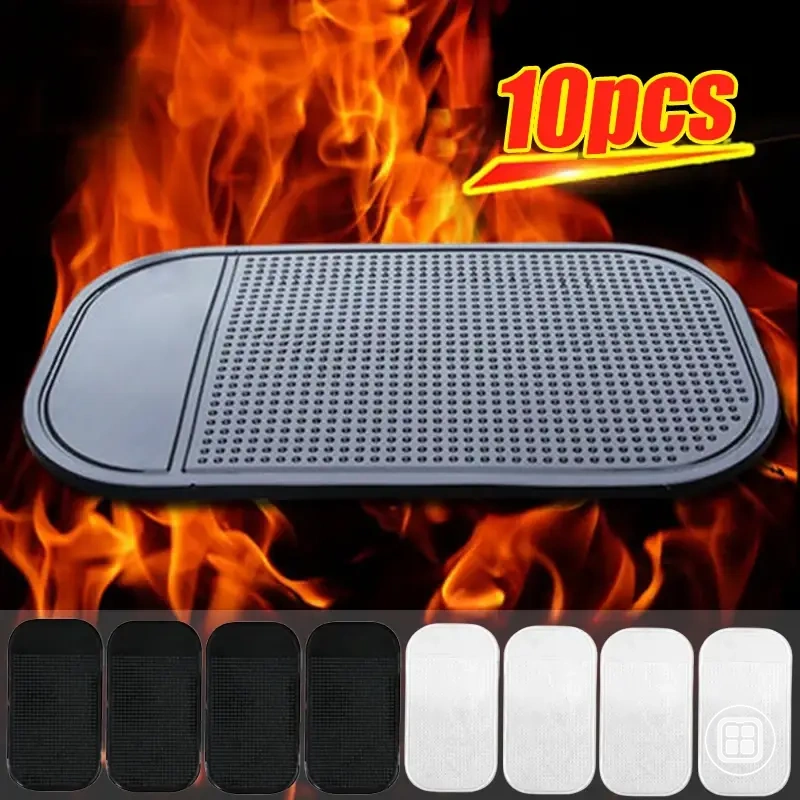
| Non-slip bases | Surface condition and organizer weight | May help reduce sliding movement | Smooth surfaces or shifting loads |
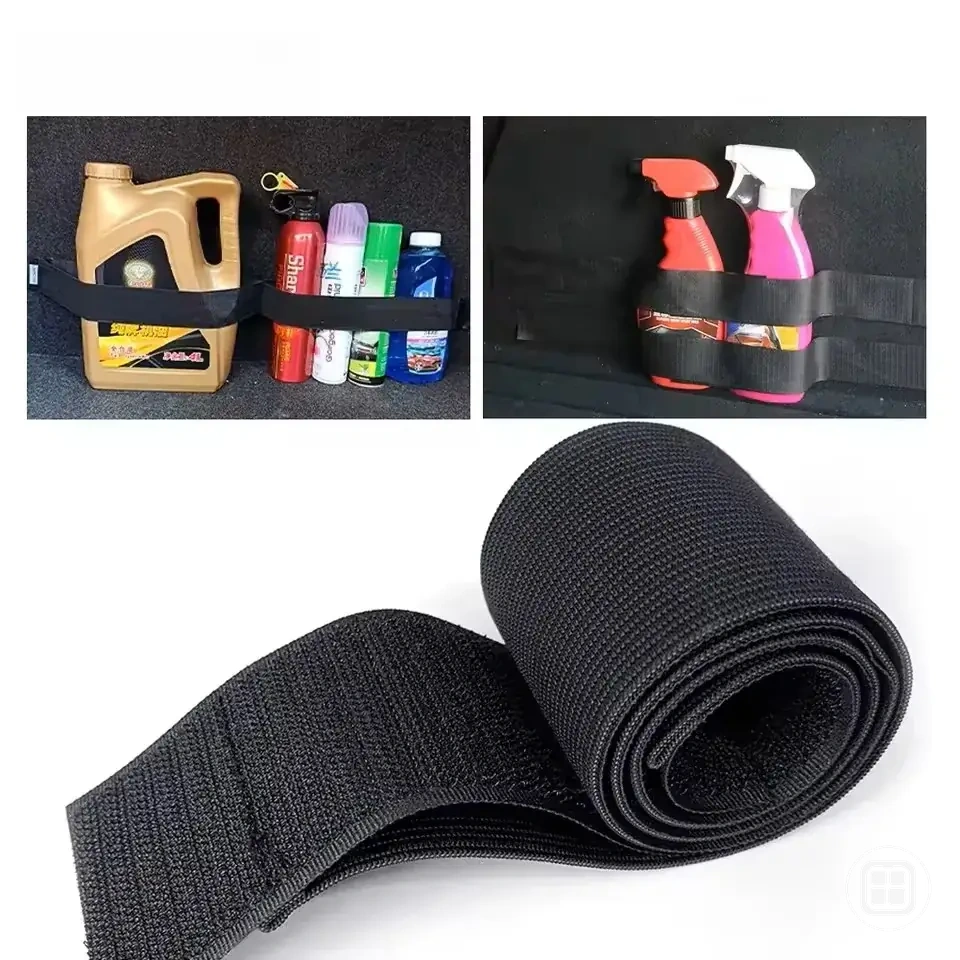
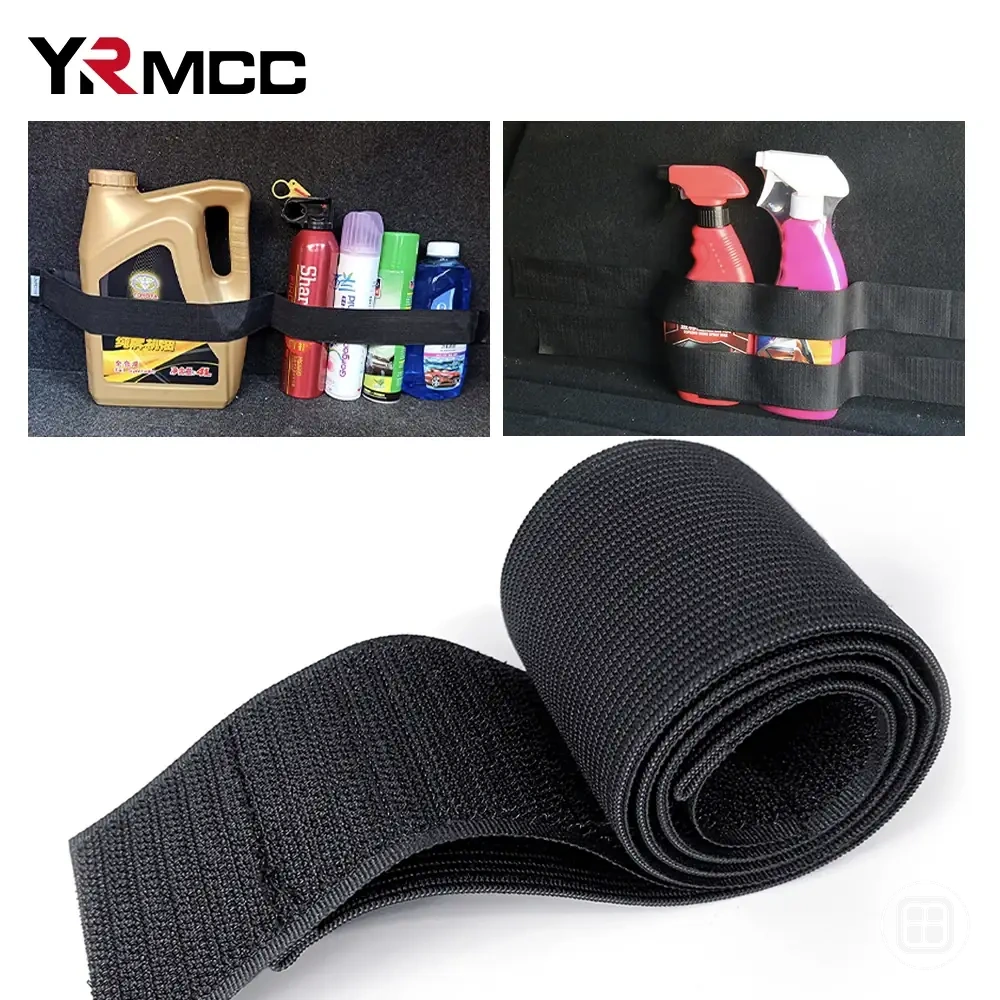
| Velcro panels | Compatible mounting surface | Can help limit organizer movement | Surface compatibility and contact area |
| Lids | Proper closure during travel | Supports item containment | Open or unsecured lid position |
| Covers | Correct coverage of stored items | Helps reduce item movement within storage areas | Coverage gaps or overloaded storage |
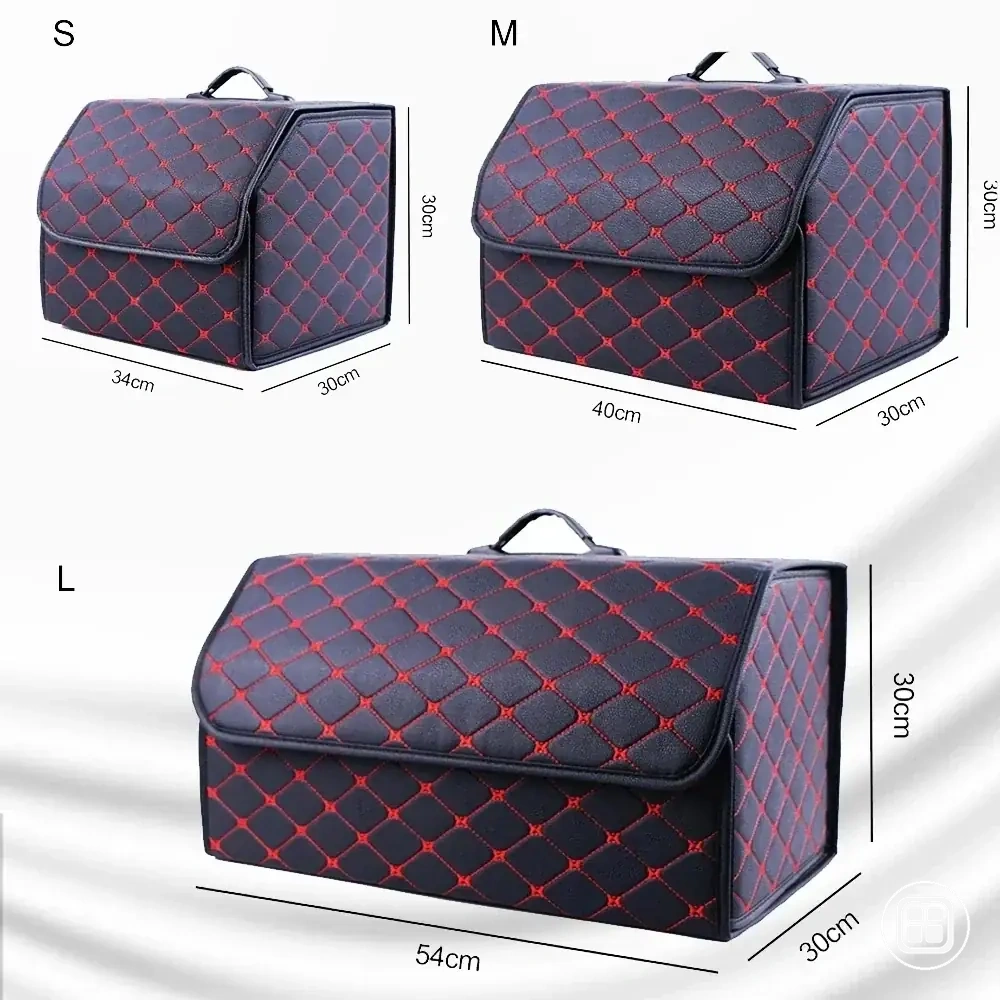
| Compartments | Appropriate item distribution | Improves item containment and organization | Overfilled or unevenly loaded sections |
| Reinforced sides | Load weight and organizer structure | May support stability and shape retention | Excessive load weight |
| Anchor points | Available attachment location | Supports movement control through secure positioning | Attachment method and anchor availability |
Movement control and item containment are related but not identical. Movement control focuses on limiting organizer movement, while item containment focuses on keeping stored items managed within the organizer. A securement feature may support one function more strongly than the other depending on attachment, surface condition, load weight, and organizer design.
Straps, buckles, hooks, and anchor points
Straps, buckles, hooks, and anchor points are attachment components that can support movement control by helping an organizer remain connected to a vehicle attachment location. Their effectiveness depends on attachment condition, organizer design, and the vehicle attachment point rather than the component alone. Attachment reliability may vary when strap tension, buckle closure, anchor compatibility, or load distribution changes after items are placed inside the organizer.
- Check strap tension to confirm securing straps remain positioned without excessive slack.
- Review buckle closure to ensure buckle straps remain properly closed and aligned during normal use.
- Inspect anchor compatibility between hooks, anchor points, and the available vehicle attachment point.
- Check headrest attachment areas for stability when the organizer relies on upper-seat attachment points.
- Review trunk tie-down connections when attachment depends on cargo-area securing locations.
- Look for looseness after loading because added weight or item movement may change attachment stability.
Non-slip bases, Velcro panels, and grippy materials
Non-slip bases, Velcro panels, and grippy materials can help reduce sliding when they are used on compatible surfaces and under suitable load conditions. Grip behavior depends on surface texture, carpet compatibility, base material, and driving movement rather than on the feature alone. Their effectiveness may change when surface conditions, load weight, or attachment quality vary, making grip dependent on surface and condition.
Check these conditions when evaluating surface-dependent grip:
- Review surface texture because grip performance may vary between carpeted, textured, and smooth surfaces.
- Check carpet compatibility when a Velcro panel or hook-and-loop panel relies on contact with fabric surfaces.
- Inspect for dust because dust can reduce contact between the grip surface and the vehicle surface.
- Consider moisture exposure since moisture may weaken grip consistency in some conditions.
- Evaluate load weight because heavier loads can increase sliding forces during driving movement.
- Match the base material to the contact surface because different material combinations may provide different grip behavior.
An edge case can occur when a non-slip base or Velcro panel is used on smooth plastic, dirty fabric, or with an overloaded organizer, where grip may become less reliable than on a clean compatible surface.
Lids, covers, compartments, and item containment
Lids, covers, compartments, and item containment features help manage spilling, rolling, and loose-item behavior by keeping items more controlled within an organizer. Item containment depends on factors such as lid closure, compartment fit, item type, and driving movement rather than on storage alone. Item containment focuses on controlling item movement, while simply hiding clutter focuses on appearance rather than containment behavior.
- Small items: Compartments and compartment dividers can help reduce rolling and mixing between stored items.
- Heavy items and tools: Contained storage may help limit shifting when compartment fit and organizer stability are appropriate.
- Bottles and groceries: Lids, covers, or dedicated compartments can help reduce movement and spilling risk during normal driving conditions.
- Emergency supplies: Compartments can help keep emergency supplies organized and easier to access when needed.
- Sharp or rigid objects: Covered storage and contained storage may help reduce loose-item behavior when items fit securely within the storage area.
Containing items is not the same as hiding clutter. Visual tidiness alone may not reduce spilling, rolling, or loose-item behavior if item containment is inadequate.
Safe loading habits for everyday organizer use
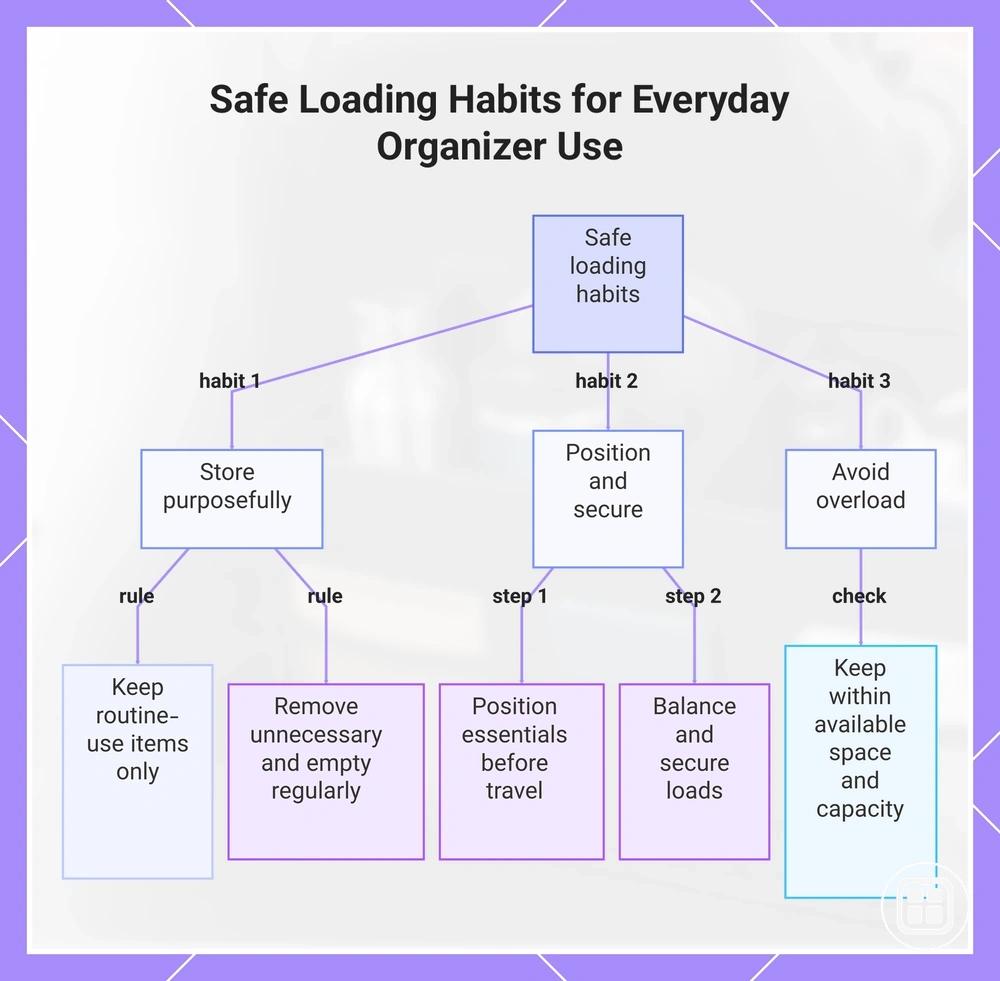
Safe loading habits for everyday organizer use can help reduce distraction, shifting, and overload risk by keeping stored items aligned with their purpose and storage location. Daily loading choices influence how easily items can be accessed and how stable they remain during travel. The everyday loading principle is to store only what is needed, keep essential items organized, and avoid unnecessary load buildup.
The following routine-use habits can help maintain useful storage without increasing clutter, shifting, or unsafe reaching during a trip:
- Store items that support routine use, such as commuting essentials, groceries, emergency supplies, or tools when they are appropriate for the trip purpose.
- Consider what not to store by removing unnecessary, rarely used, or loose items that add clutter and increase overload risk.
- Empty the organizer regularly so unused items do not accumulate and increase load weight.
- Position essentials before driving so frequently used items remain reachable without creating distraction or unsafe reaching.
- Balance item placement when possible so heavier items do not concentrate in one area and reduce stability.
- Close covers or contained storage areas when available to help reduce shifting during normal vehicle movement.
- Avoid overload by keeping stored items within the organizer's available space and intended storage condition.
Appropriate storage habits may vary by vehicle use, item type, trip purpose, and organizer capacity. For example, groceries, children's items, tools, or emergency supplies may require different loading decisions when their movement could increase distraction, shifting, or access difficulties.
This chart shows the key habits to follow when loading an organizer to reduce distraction, shifting, and overload.
Weight distribution and heavy-item positioning
Weight distribution and heavy-item positioning influence organizer stability by affecting load balance and loose-item movement during travel. Heavy objects are usually more stable when placed in a low placement position, supported by compartment balance, and arranged to reduce unnecessary movement. For example, a heavy tool or supply item may be better placed lower in trunk storage and away from driver controls when the vehicle area and organizer design support that placement.
- Place heavy objects low when compartment support and load balance allow stable loading.
- Maintain compartment balance so weight is distributed more evenly within the organizer.
- Separate hard items from softer items when contact between them could increase loose-item movement.
- Avoid top-heavy loading because elevated weight may reduce organizer stability during vehicle movement.
- Choose trunk storage or cabin storage based on item type, available support, and proximity to driver controls.
- Check that a heavy load remains supported by the organizer and storage area without creating uneven balance.
Essential access without unsafe reaching
Essential access without unsafe reaching starts with deciding which items should be arranged before driving and which items can wait until parked. Reachable essentials support pre-drive access when their placement does not encourage unsafe reaching or reduce attention, clearance, or control stability. Convenience should not override attention, available clearance, or control stability during travel.
- Position documents, tissues, water bottles, and similar reachable essentials before driving when they may be needed during the trip.
- Use pre-drive access decisions for phone alternatives and other commonly referenced items instead of relying on access changes during vehicle movement.
- Place emergency items where they remain organized and accessible without requiring unnecessary handling while driving.
- Arrange children’s needs according to passenger assistance, planned access, or a stopped-vehicle condition when appropriate.
- Keep closed containers, stored supplies, or nonessential items secured when they are not needed during the trip.
- Items that require searching, repositioning, or extended handling should wait until parked.
Pre-drive checks for a secure car organizer
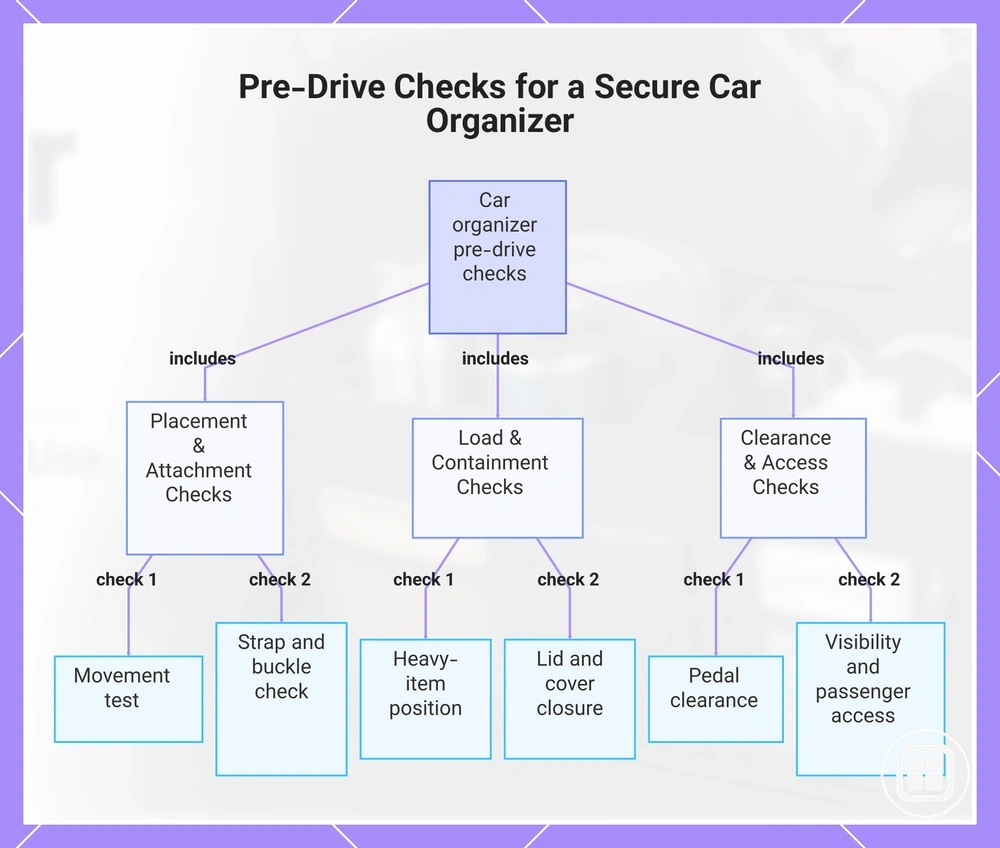
Pre-drive checks for a secure car organizer help verify placement, attachment, load, and clearance conditions before travel. A quick review can identify issues that may need adjustment before leaving. The purpose of pre-drive checks is to confirm current organizer conditions before driving.
This safety checklist organizes pre-drive checks for a secure car organizer into placement, attachment, load, and clearance verification points. Use the checklist to confirm current conditions after loading or repositioning the organizer.
- Perform a movement test and adjust the organizer if stable placement is not maintained.
- Complete a strap check to confirm the attachment method remains properly connected and shows no obvious looseness.
- Perform a buckle check and verify closures remain fastened and aligned.
- Check lid closure or cover closure so containment matches the current load.
- Review heavy-item position and confirm heavier items remain supported within the organizer.
- Verify pedal clearance so storage does not interfere with foot-operated controls.
- Confirm visibility clearance from the normal driving position.
- Check passenger access and seating clearance when the organizer is positioned near occupied areas.
If a checklist item does not pass, review the related placement, attachment method, load condition, or vehicle area before driving. A failed check may indicate that the current setup needs adjustment for safe use under present conditions.
Adjust the organizer before leaving when the movement test shows shifting, when a strap check or buckle check reveals looseness, or when heavy-item position affects load balance. Repositioning may also be appropriate if pedal clearance, visibility clearance, or passenger access becomes restricted.
Complete the before-driving check after loading and before starting the trip so the secure car organizer can be reviewed according to the current load, attachment condition, and vehicle area.
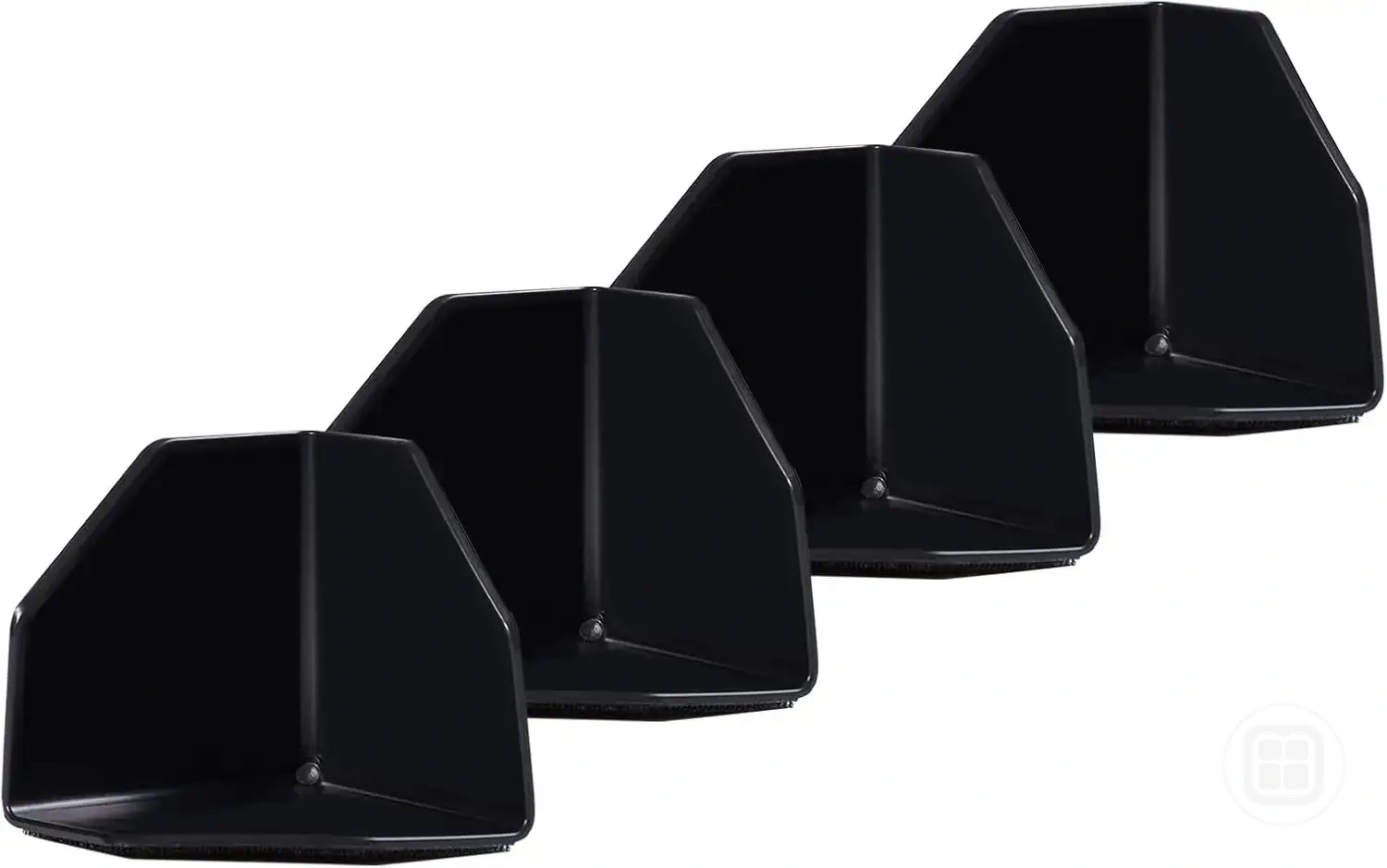
Here are product examples that may make comparison easier. Before buying, always review the compatibility criteria, essential features, and product details.
This chart organizes the pre-drive verification points for a car organizer, grouped into placement and attachment, load and containment, and clearance and access checks.
Maintenance checks that keep organizers safe over time
Maintenance checks help identify wear and cleanliness issues before they affect attachment reliability, containment, or secure storage. Regular use can contribute to wear in organizer materials and securing features, especially when load conditions, item types, or usage frequency change. Routine inspection connects wear and cleanliness to ongoing secure use.
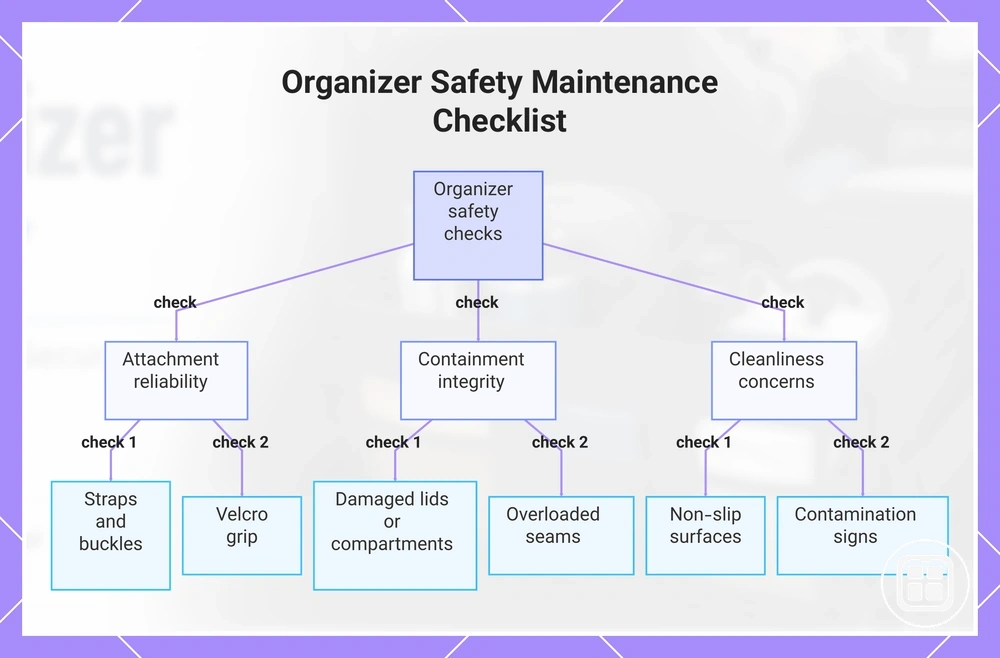
Wear and cleanliness can influence how organizer components perform over time. Use this short inspection checklist to review condition changes that may affect attachment, grip, containment, or storage stability.
- Inspect worn straps for fraying, stretching, or visible wear that may reduce attachment reliability during movement.
- Check loose buckles and confirm closures remain connected and properly aligned.
- Review weakened Velcro for reduced grip when attachment depends on repeated fastening and removal.
- Inspect dirty non-slip surfaces and remove residue or debris when buildup may contribute to sliding.
- Check damaged lids for closure issues that may affect containment of stored items.
- Inspect torn compartments for openings that could allow loose items to shift within the organizer.
- Review overloaded seams for signs of stress or separation that may affect secure storage.
- Check for odor, residue, or contamination when groceries, tools, pets, or children’s items contribute to cleanliness concerns.
Wear changes secure use when attachment, grip, containment, or storage support no longer matches current conditions. If a wear check identifies condition changes that affect secure storage, adjustment or repair may be appropriate based on material condition, load, and usage requirements.
This chart shows the main inspection categories and specific checks to keep organizers safe over time by identifying wear and cleanliness issues.
When an organizer should be repositioned, emptied, or replaced
When an organizer is no longer stable, no longer contains items effectively, or no longer preserves driver clearance, it should be repositioned, emptied, repaired, or replaced depending on the problem. Minor issues may respond to cleaning, tightening, emptying, or placement adjustment. Repair or replacement becomes more relevant when the adjust-or-replace condition remains unresolved.
The decision depends on movement, damage, load, and placement. Use this decision checklist to choose the least excessive correction before considering replacement.
| Problem noticed | First check | Lower-intensity fix | Replace only if |
|---|---|---|---|
| Persistent slipping | Check placement, surface condition, and attachment points | Repositioned, tightened, or cleaned | Persistent slipping continues after repeated adjustment |
| Broken straps | Inspect attachment reliability and load condition | Repaired when appropriate | Attachment can no longer be maintained |
| Failed buckles | Check closure alignment and connection condition | Adjusted or repaired when possible | Failed buckles prevent reliable attachment |
| Torn compartments | Inspect whether the organizer still contains items | Emptied, repaired, or used with reduced load | Containment remains ineffective and loose-item risk continues |
| Sagging panels | Check load distribution and organizer condition | Emptied or load reduced | Structure no longer supports normal storage |
| Blocked controls | Review driver clearance and placement | Repositioned immediately | Driver clearance cannot be maintained in the current location |
| Repeated overloading | Check stored-item volume and weight distribution | Emptied, reorganized, or load reduced | Wear or damage continues after load correction |
Choose the least excessive correction that addresses the specific symptom. Repositioning, emptying, tightening, or repair may be sufficient when the organizer remains functional. Replacement is usually a proportionate choice when damage, failed containment, attachment failure, or driver-clearance problems continue after reasonable corrective steps.