
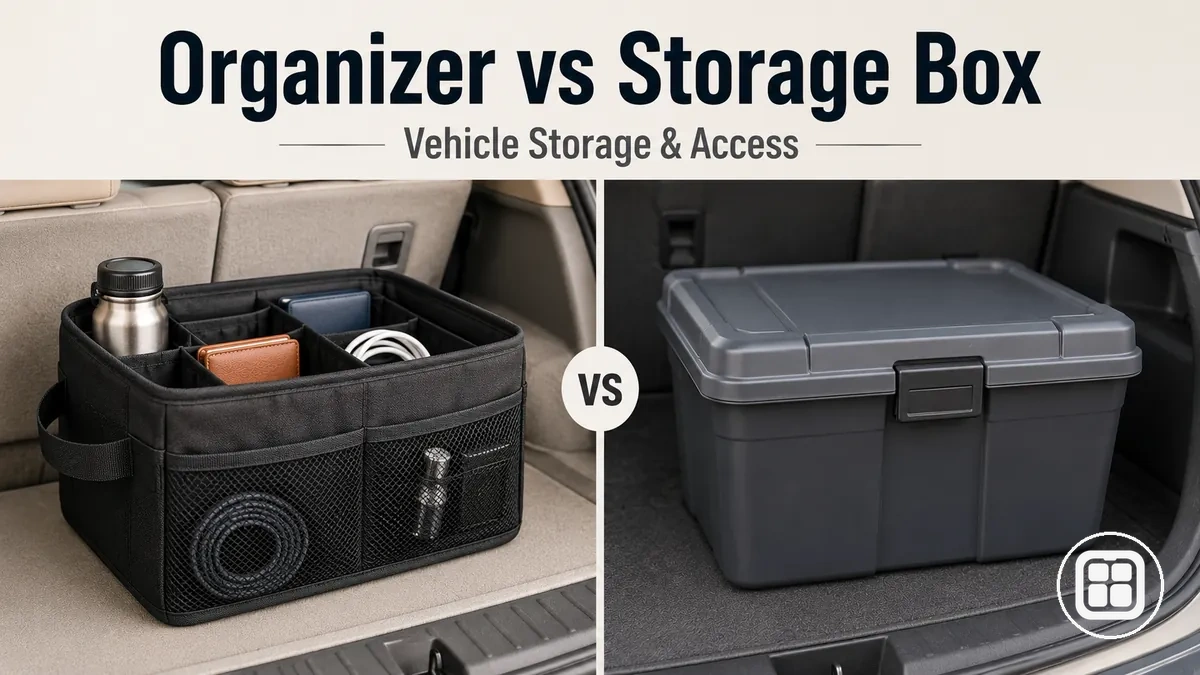
Car Organizer vs Storage Box: Structured Comparison of Storage Systems for Vehicle Organization and Cargo Management
A car organizer and a storage box are vehicle storage systems used to arrange items, reduce loose cargo, and support cleaner cargo management. The shared function is organization, but the systems differ in structure: a car organizer usually supports flexible compartment-based access, while a storage box uses greater rigidity to create a more fixed enclosure. This structural contrast affects how each system handles portability, space efficiency, and protection inside a vehicle.
The better fit depends on what the driver needs the storage system to do. A car organizer may suit frequent access, mixed item sorting, and flexible placement when portability matters. A storage box may suit contained storage, firmer separation, or items that benefit from a more rigid boundary. The decision should compare usability trade-offs before moving into the core differences between flexible organizers and rigid boxes.
Core Differences Between Flexible Car Organizers and Rigid Storage Boxes in Vehicle Storage Design and Function
A flexible car organizer is a compartment-based vehicle storage system with a softer enclosure type, while a rigid storage box is a firmer container with a more fixed enclosure. The main difference is rigidity: a collapsible organizer can adjust its shape more easily, while a storage box keeps a more defined form. This structure type affects flexibility level, accessibility, protection, and handling.
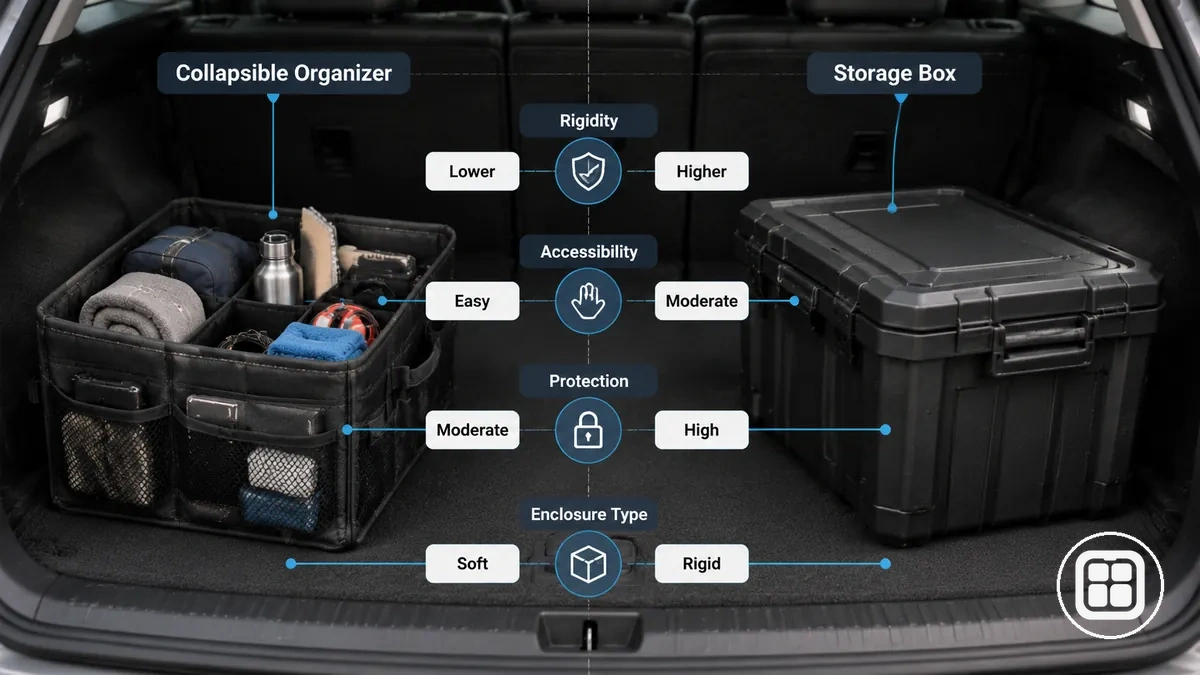
A collapsible organizer may be confused with a storage box when both sit in a trunk or cargo area, but the storage behavior is different. The organizer structure usually supports quicker access through separated compartments, while the box structure may support stronger enclosure when items need firmer boundaries. Protection depends on material, closure, load type, and movement inside the vehicle, so rigidity alone does not decide the outcome. This section defines the structural difference only; later sections can compare capacity, fit, durability, and use-case suitability.
Types and Structural Formats: Soft-Sided Organizers vs Hard Storage Boxes and Their Functional Implications
Soft-sided organizers and hard storage boxes represent two structural formats used in vehicle storage systems. A soft-sided organizer is built around flexible materials and compartment-based organization, while a hard box relies on greater rigidity and a more fixed enclosure. The attribute framework centers on material behavior, structural format, and enclosure design. These attributes influence collapsibility, portability, packing behavior, and how stored items are separated within the storage system.
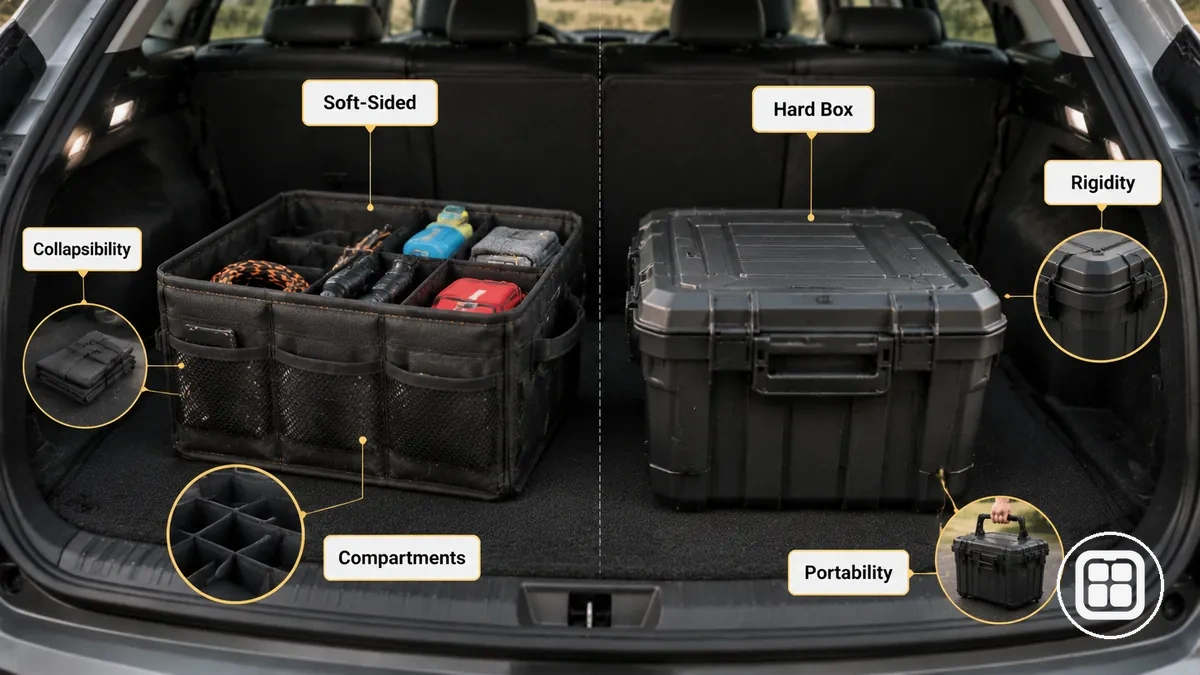
Material rigidity is the primary structural distinction because it affects how the storage system responds to loading, movement, and repositioning. Soft-sided formats may fold or compress when not fully loaded, while a hard box generally maintains its shape. Compartment structure also differs, as organizers often use multiple compartments to separate items, whereas a hard box may use a deeper enclosed space. Enclosure depth influences packing behavior by affecting how items are grouped and accessed. Durability and portability can vary by material construction, so structural attributes influence behavior rather than determine a fixed outcome.
Key structural attributes include:
- Rigidity: Influences how consistently the structure maintains its form.
- Collapsibility: Affects how easily the storage system can fold or compress.
- Compartments: Influence item separation and internal organization.
- Enclosure Depth: Shapes packing behavior and item containment.
Storage Capacity, Compartment Design, and How Organization Efficiency Differs Between Systems
Organization efficiency differs primarily through compartment design and storage logic. A compartment-based organizer separates items into designated sections, which can improve access speed and sorting efficiency when items are used frequently. A storage box typically relies on open volume, allowing items to share a larger storage space without fixed separation. Storage efficiency therefore depends on whether organization is driven by structured placement or by flexible use of available volume. The outcome may vary based on item variety, loading patterns, and usage frequency.
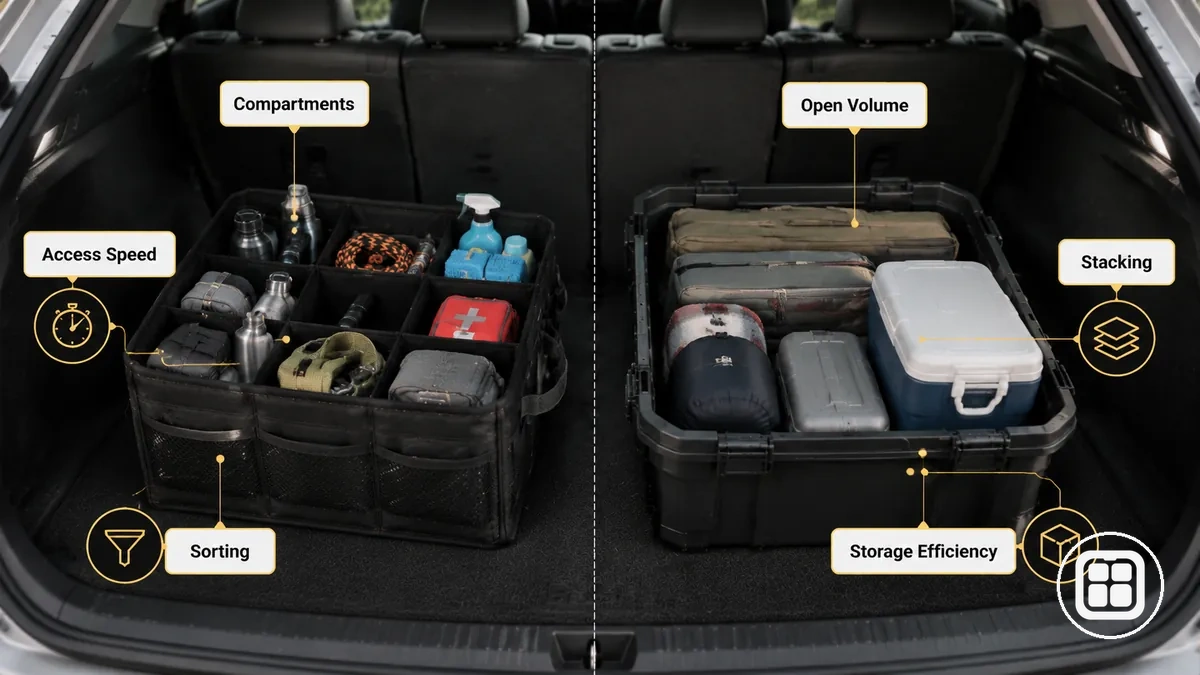
Compartment design creates predefined locations that can make item identification and retrieval more direct. Open volume storage emphasizes unrestricted space, which may support stacking more effectively when stored items differ in size or shape. Access speed is often influenced by how well items remain separated during transport, while stacking efficiency depends on how available space is arranged. A compartment-based system focuses on sorting efficiency and organization logic, whereas an open volume system focuses on flexible item placement. Overall organization outcomes depend on the relationship between stored items, loading frequency, and storage requirements.
Vehicle Fit and Space Utilization Across Sedans, SUVs, and Compact Car Layouts
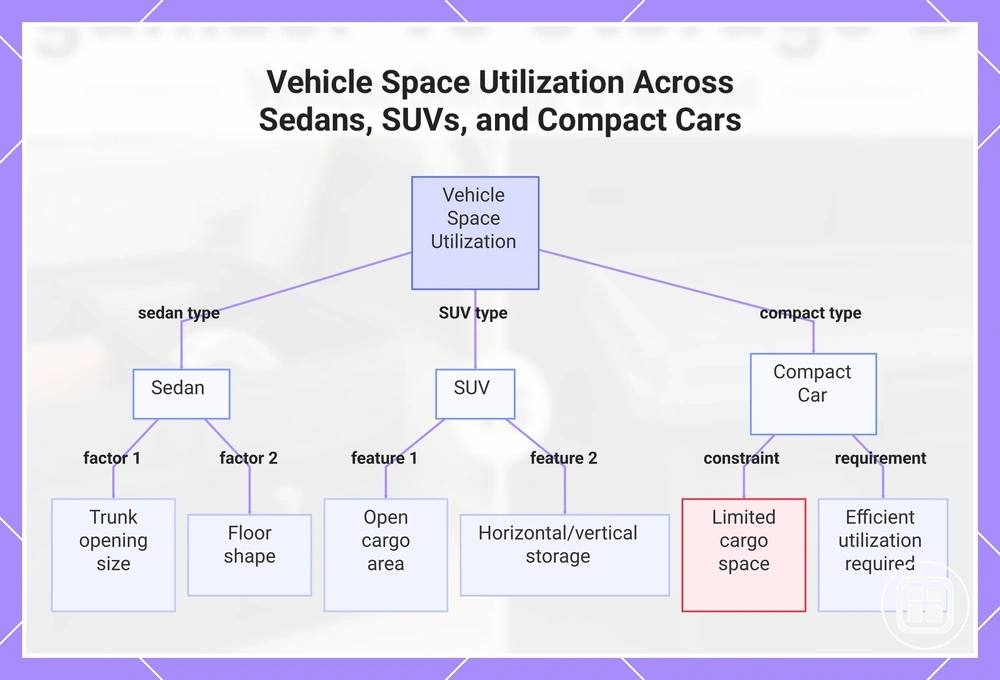
Storage system fit depends on cargo space dimensions, trunk geometry, and how effectively available space can be utilized within a specific vehicle type. A sedan, SUV, or compact car may support different storage arrangements because cargo layouts vary between vehicle categories. Fit is influenced by the relationship between storage dimensions and usable cargo area rather than vehicle size alone. Storage utilization therefore depends on how well the storage system matches available space and loading requirements.
Vehicle-specific space considerations include:
- Sedan: Cargo space is often contained within a separate trunk, so fit may depend on trunk opening size, floor shape, and available depth.
- SUV: Cargo space is typically more open, which may support broader utilization of horizontal and vertical storage areas depending on the vehicle layout.
- Compact Car: Cargo space is usually more limited, making efficient utilization important when balancing storage needs with available vehicle space.
Storage matching should be evaluated according to vehicle type, cargo space configuration, and fit constraints. A storage system that utilizes space efficiently in one vehicle category may perform differently in another because cargo area geometry can vary. Compatibility is therefore based on available space and utilization requirements rather than a universal fit outcome.
This chart shows how storage system fit and space utilization vary by vehicle type, based on cargo space dimensions and geometry for sedans, SUVs, and compact cars.
Durability, Material Behavior, and Load Handling Under Movement and Long-Term Use
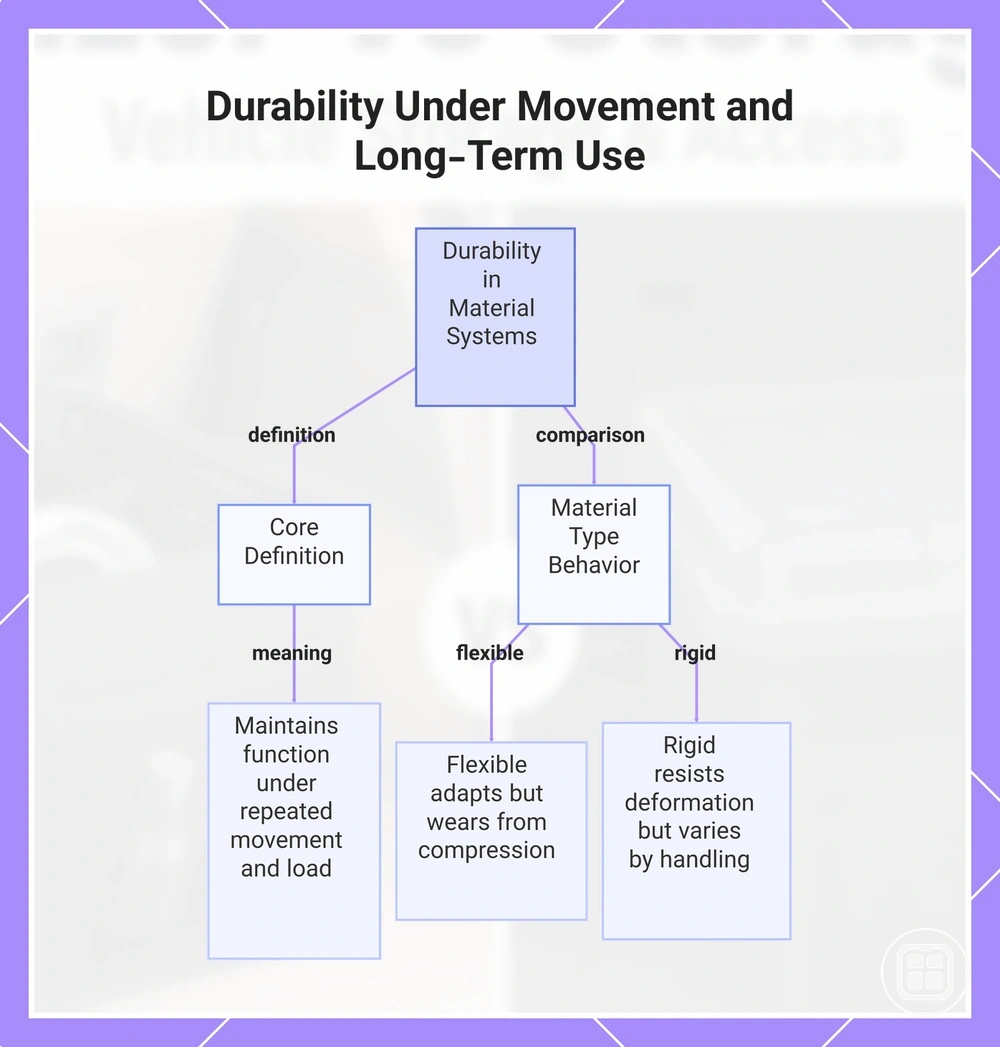
Durability is the ability of a material system to maintain its intended function under repeated movement, loading, and long-term use. Material behavior influences how a storage system responds to pressure, deformation, and ongoing wear over time. Load handling depends on how effectively the material resists shape changes while supporting stored items. Durability outcomes therefore depend on material type, load intensity, movement conditions, and usage frequency.
Material systems differ in how they respond to deformation, wear, and load-related stress during extended use. Flexible organizers may adapt to changing loads, but repeated compression, folding, or frequent relocation can influence long-term material behavior. Rigid storage boxes generally offer greater resistance to deformation under load, although wear patterns can still vary according to handling conditions and cargo movement. Heavy loads and repeated repositioning may affect resistance behavior differently across material types. Durability should therefore be assessed through the relationship between material construction, load handling requirements, and expected long-term operating conditions rather than through assumptions of universal superiority.
This chart explains the definition of durability and compares how flexible and rigid materials behave under movement and long-term use.
Stability, Safety, and Common Issues Such as Sliding, Collapsing, and Load Shifting
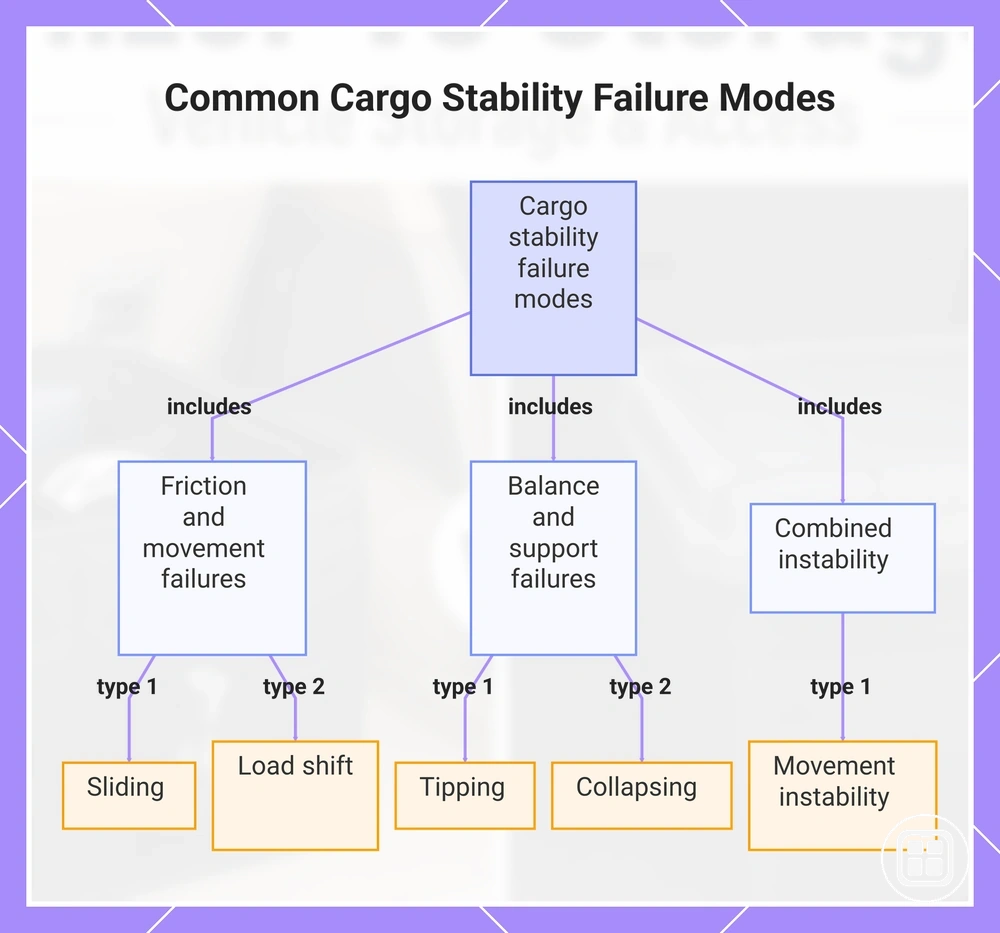
When sliding occurs during vehicle movement, reduced stability is often associated with limited friction, uneven weight distribution, or changing driving conditions. Stability behavior can vary during braking, turning, or rapid directional changes when stored items move within the cargo area. Load shift may alter weight balance, which can increase movement and affect safety behavior. These issues depend on cargo placement, base contact with the vehicle surface, and movement dynamics during normal driving.
Common stability-related failure modes include:
- Sliding: May occur when friction between the storage system and the cargo surface is insufficient during braking or acceleration.
- Load Shift: Can develop when stored items move internally, changing weight distribution during vehicle movement.
- Tipping: May happen when weight becomes concentrated on one side, particularly during turning or abrupt directional changes.
- Collapsing: Can occur when cargo placement does not adequately support the applied load or when movement repeatedly changes load balance.
- Movement Instability: May increase when braking forces, turning forces, and uneven cargo distribution combine to reduce overall stability.
These failure modes are influenced by the relationship between base design, friction level, and cargo distribution under real driving conditions. The severity of sliding, tipping, or load shift may vary according to braking intensity, turning forces, and overall vehicle movement dynamics. Stability performance should therefore be evaluated through observed movement behavior and load balance rather than through assumptions of consistent performance across all conditions.
This chart categorizes the main types of cargo stability failure modes into three groups: friction and movement failures, balance and support failures, and combined instability.
Selection Criteria for Choosing Between a Car Organizer and a Storage Box Based on Use-Case Needs
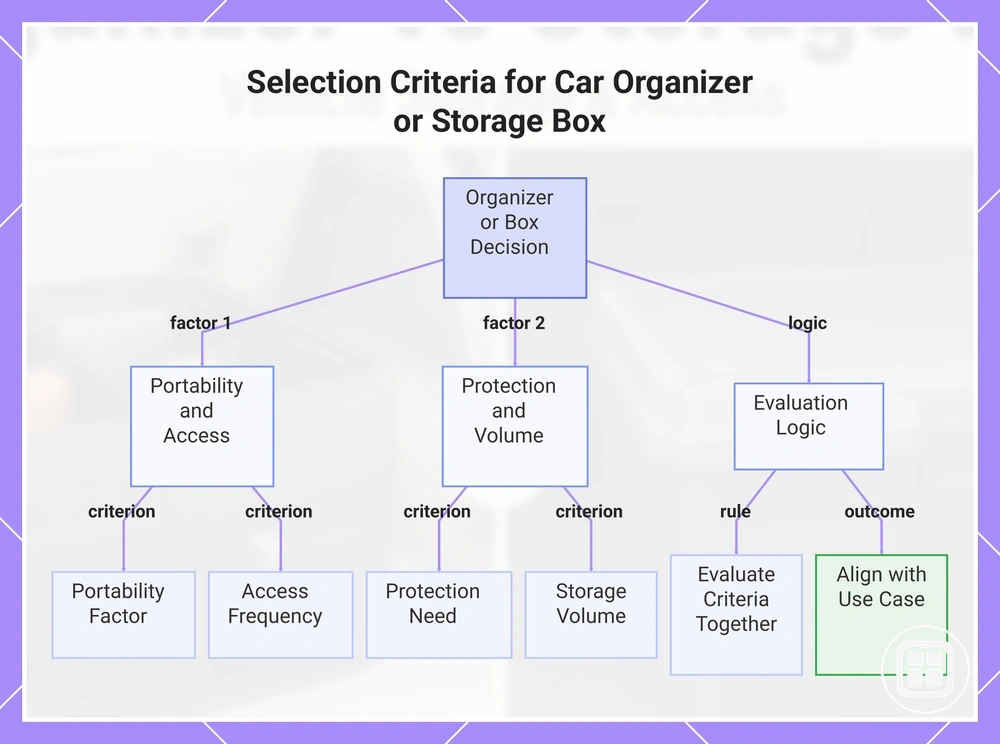
The selection decision depends on portability, protection requirements, storage volume needs, and access frequency. A car organizer may be more suitable when organized access and frequent item retrieval are priorities, while a storage box may be more suitable when contained storage and item protection are higher priorities. The appropriate choice depends on the storage behavior required for the intended use case rather than on a universally preferred option. Applying clear decision criteria helps align storage needs with the most suitable system type.
Use the following checklist to evaluate decision criteria and trade-offs:
- Portability: If the storage system is moved regularly, portability may become a primary selection factor.
- Protection: If stored items require greater containment, protection needs may influence system suitability.
- Storage Volume: If larger or changing item quantities are expected, storage volume requirements may affect the selection decision.
- Access Frequency: If items need to be reached often, access frequency may favor a storage behavior that supports quicker retrieval and organization.
Decision criteria should be evaluated together because each requirement can influence the overall trade-off. A use case that prioritizes portability may evaluate storage volume differently from a use case focused on protection. Access frequency can also change how storage behavior is assessed during daily use. The most suitable choice therefore depends on how user requirements, storage behavior, and evaluation logic align within a specific use case.
This chart shows the key decision criteria and evaluation logic for choosing between a car organizer and a storage box.
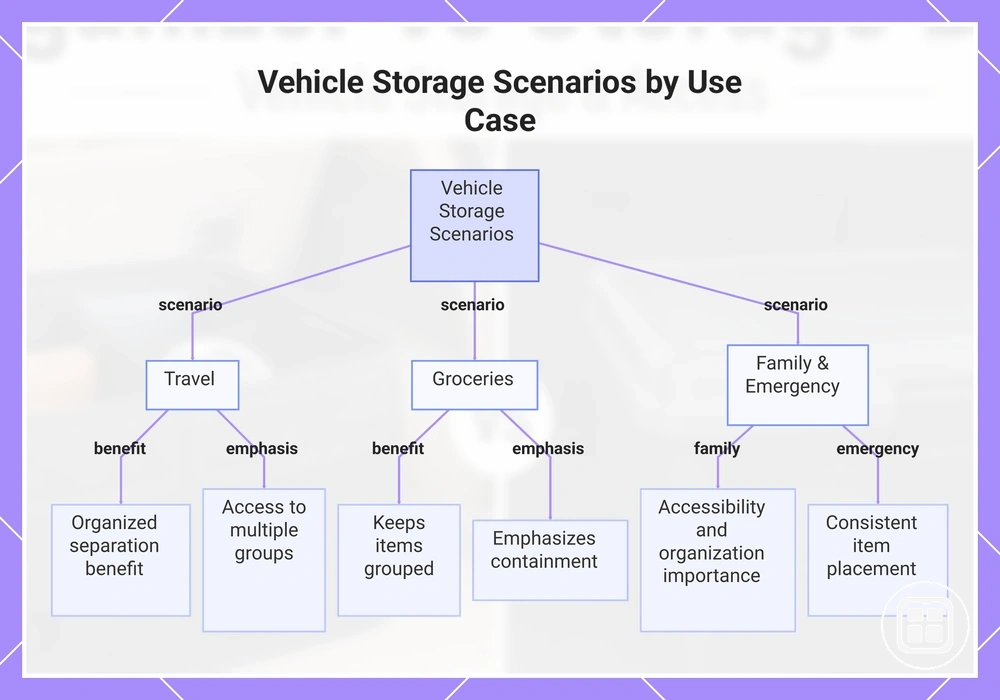
Practical Usage Scenarios and Decision Patterns for Travel, Groceries, Family Use, and Emergency Storage
Travel, groceries, family use, and emergency storage create different storage requirements that can influence how a vehicle storage system is used. Real-world usage patterns often determine whether item separation, containment, or accessibility becomes the primary requirement. The outcome may vary according to the type of items carried and how frequently they need to be accessed. Scenario mapping helps illustrate how different storage behaviors align with different vehicle-use contexts.
Common usage scenarios can be viewed through the following examples:
- Travel: Travel-related items may benefit from organized separation when multiple categories of belongings need to remain accessible during a journey.
- Groceries: Grocery transport may benefit from storage behavior that helps keep items grouped during vehicle movement.
- Family Use: Family use often involves carrying different item types at the same time, which may increase the importance of accessibility and organization.
- Emergency Storage: Emergency storage may benefit from keeping essential items grouped and easier to locate when needed.
Applied behavior can differ by scenario rather than by a single preferred storage approach. Travel scenarios may emphasize access to multiple item groups, while groceries may emphasize containment during transport. Family use can involve changing storage requirements from trip to trip, and emergency storage may place greater importance on consistent item placement. Vehicle layout can also influence how storage systems function in practice; for broader placement considerations, Explore types by vehicle placement. These examples illustrate how scenario-specific storage requirements can influence outcomes in everyday vehicle use.
This chart maps the primary storage behaviors emphasized by travel, groceries, and family/emergency use scenarios.
Small Car vs SUV Optimization Strategies and Space-Constrained Organization Decisions
A small car often presents a greater space constraint, which may increase the need for flexible storage arrangements and efficient use of limited cargo space. An SUV typically offers more cargo area, allowing storage systems to be positioned with fewer layout restrictions. Vehicle size can therefore influence how storage space is organized and adjusted to changing cargo needs. The relationship between available space and flexibility requirements often shapes organization decisions in each vehicle type.
- Small Car: Limited cargo space may favor storage systems that adapt more easily to changing item quantities and available space.
- SUV: Larger cargo areas may allow broader placement flexibility and less constrained organization patterns.
- Space Constraint Impact: As available cargo space becomes more limited, flexibility requirements may play a larger role in storage system suitability.
Family Travel and Daily Commuting Storage Behavior Comparison
Family travel and commuting often create different storage behavior patterns because passenger count can influence item diversity and organization demand. Family travel may involve carrying a broader mix of belongings, which can increase the need to keep items grouped and easier to locate during a trip. Commuting often centers on a smaller and more predictable set of items, which may reduce organization demands. Storage behavior therefore tends to change as passenger needs and carried-item diversity change.
- Family Travel: Higher passenger counts may increase item diversity, creating greater demand for organized placement and item separation.
- Commuting: Daily commuting often involves fewer item categories, which may support simpler storage behavior and faster retrieval patterns.
- Usage Pattern Impact: As item diversity increases, organization demand may also increase, influencing overall storage behavior during travel.
Heavy Load Trunk Use Cases Including Emergency Kits and Bulk Storage Handling
Heavy load trunk storage scenarios often require greater stability because increasing load weight can influence how items move during vehicle operation. An emergency kit may remain compact, but access can become more difficult when surrounding cargo shifts or changes position. Tools and bulk cargo can create concentrated load conditions that place higher demands on trunk storage organization. Storage behavior in these edge cases depends on the relationship between load weight, stability requirements, and cargo movement.
- Emergency Kit: An emergency kit may be easier to access when trunk storage conditions keep essential items consistently positioned.
- Tools and Heavy Equipment: Concentrated load weight can increase movement risk when items are not adequately stabilized during braking or turning.
- Bulk Cargo: Larger cargo groups may create changing load conditions that can influence stability and storage behavior within the trunk area.