
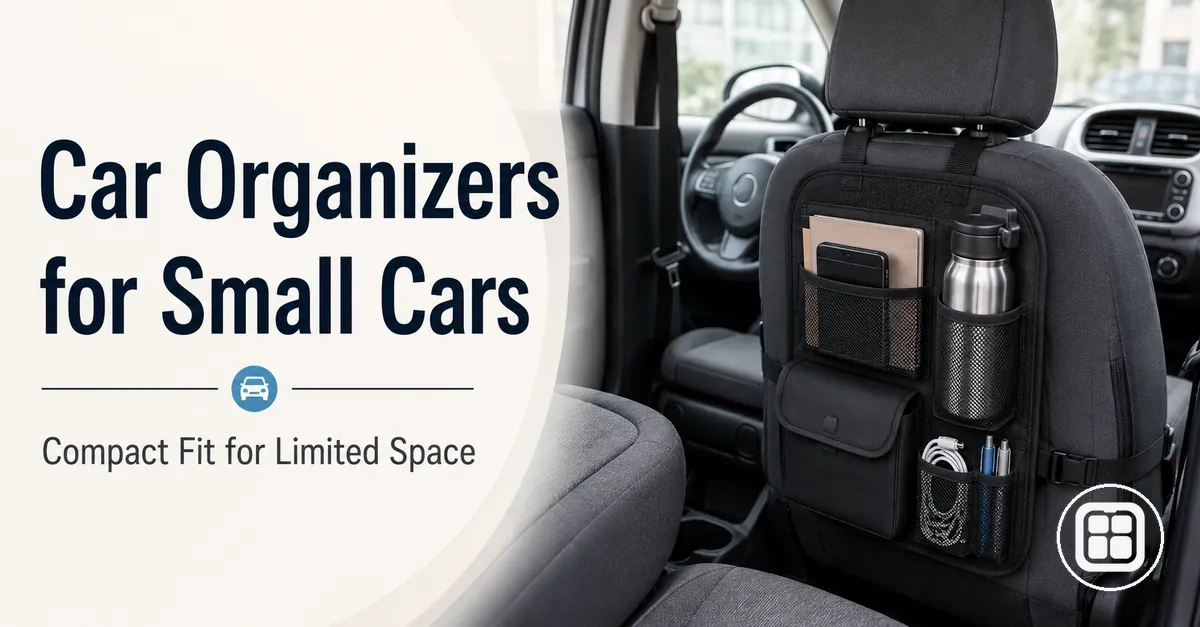
Car Organizers for Small Cars and Compact Storage Compatibility
A car organizer for small cars depends on available cabin or trunk space, access needs, and stable fit. A compact organizer may be suitable when it can hold the intended items without blocking controls, reducing passenger comfort, or moving around in the chosen placement area.
Small-car storage is limited, so the organizer should solve a clear storage problem before style or product options matter. Daily-use items may need reachable cabin storage, while groceries, tools, or occasional cargo may fit better in a trunk or hatchback area if the floor space and access path allow it.
Fit can vary by console layout, seat gap, door clearance, trunk shape, and how the organizer is secured. A foldable, low-profile, or compact format can help in tight spaces, but the right choice still depends on where the organizer sits, how often items need to be reached, and whether the placement remains stable during normal use.
The main decision is not whether a small car can use an organizer, but whether the organizer’s size, placement, storage layout, and securing method match the vehicle’s usable space. From that compatibility frame, the next step is to identify the storage problem the organizer must solve before narrowing the choice by zone or format.
What a car organizer needs to solve in a small car
The main storage problem in a small car is limited usable space for keeping everyday items organized, accessible, and secure. Narrow gaps, smaller compartments, and reduced cargo areas can make organizer compatibility more important because an organizer must fit the available space while still allowing convenient access and stable placement.
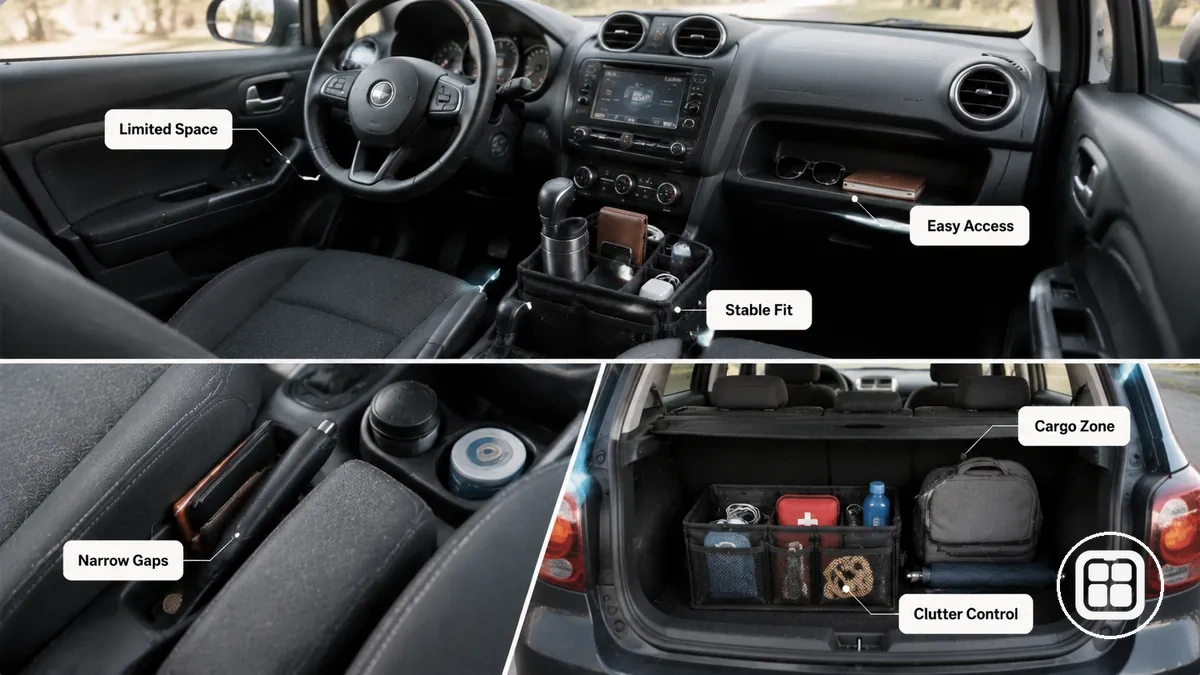
Available space in the cabin or cargo zone often determines how useful an organizer can be. When storage areas are already compact, an organizer may help control loose items only if its size and layout match the intended location without creating unnecessary obstruction.
Access can affect daily usability as much as storage capacity. An organizer may become less practical when stored items are harder to reach, especially in tight interiors where seats, consoles, or existing compartments limit movement around the storage area.
Stability and clutter control are connected challenges in small cars. An organizer that suits the placement surface is more likely to keep items separated and reduce movement, while an unsuitable shape or position may make storage less effective.
This section focuses on why small-car storage conditions affect organizer suitability rather than covering every organizer type. For broader context, see Back to hub overview.
Small-car storage zones that can fit an organizer
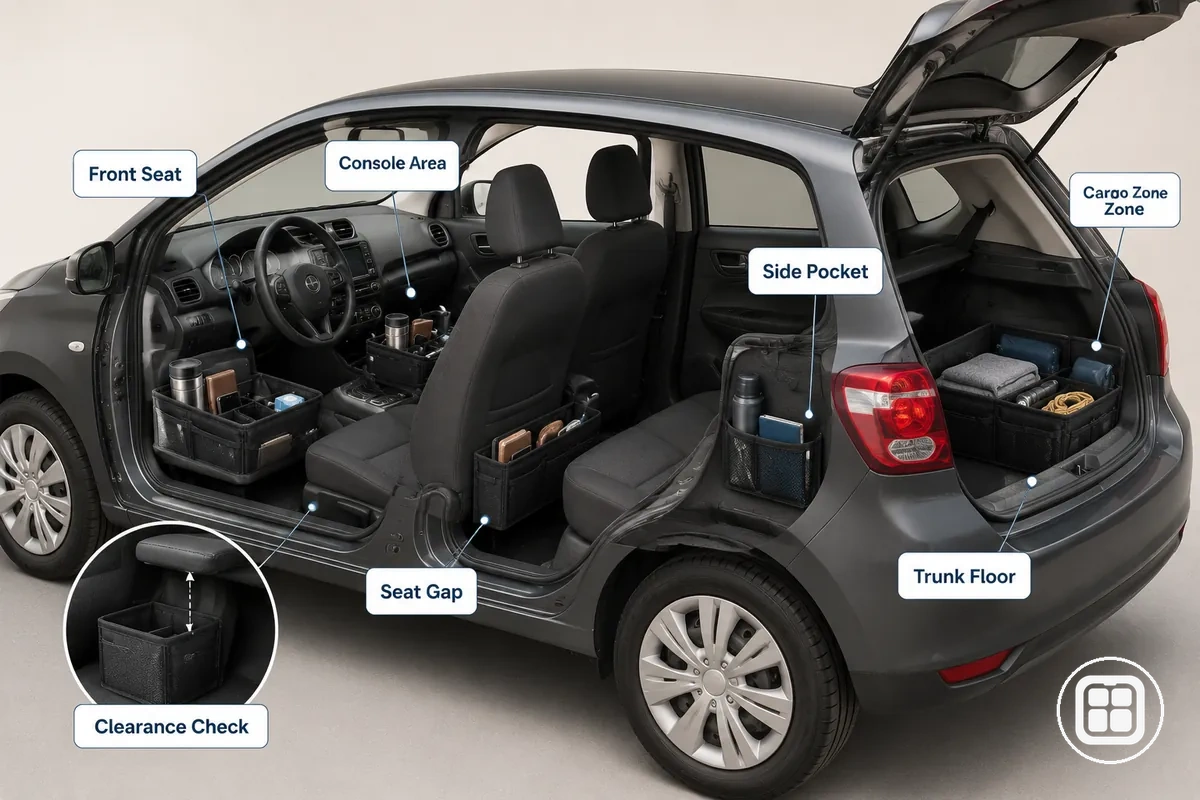
Organizer placement depends on clearance, access, and obstruction risk rather than available space alone. A storage zone may appear suitable, but it can become unsuitable when an organizer limits seating comfort, blocks access, or reduces practical cargo use.
| Storage zone | Organizer style | Fit condition | Main caution |
|---|---|---|---|
| Front seat space | Compact floor organizer | May suit unused floor space when legroom remains clear | Can reduce passenger comfort if clearance is limited |
| Console areas | Slim organizer | May fit when controls and storage access remain unobstructed | Blocked access can reduce usability |
| Seat gaps | Narrow gap organizer | May fit when the gap remains accessible and stable | Fit varies by seat and console layout |
| Side pockets | Pocket organizer | May suit lightweight items when pocket space remains usable | Overfilling can make items harder to access |
| Trunk floors | Foldable cargo organizer | May fit when the organizer does not limit normal cargo use | An oversized organizer can reduce loading flexibility |
| Hatchback cargo zones | Low-profile cargo organizer | May suit open cargo areas with a stable placement surface | Access to stored cargo should remain clear |
Clearance and obstruction checks are essential in every storage zone. A suitable organizer should support storage needs while preserving access, seating function, and usable cargo space.
Front seat and console storage areas
Front seat and console storage areas depend on clearance, reachability, and unobstructed access when used for a quick-access organizer. A small organizer may suit these locations when it keeps frequently used items within reach without interfering with normal use of the console, passenger area, cup holders, or vehicle controls.
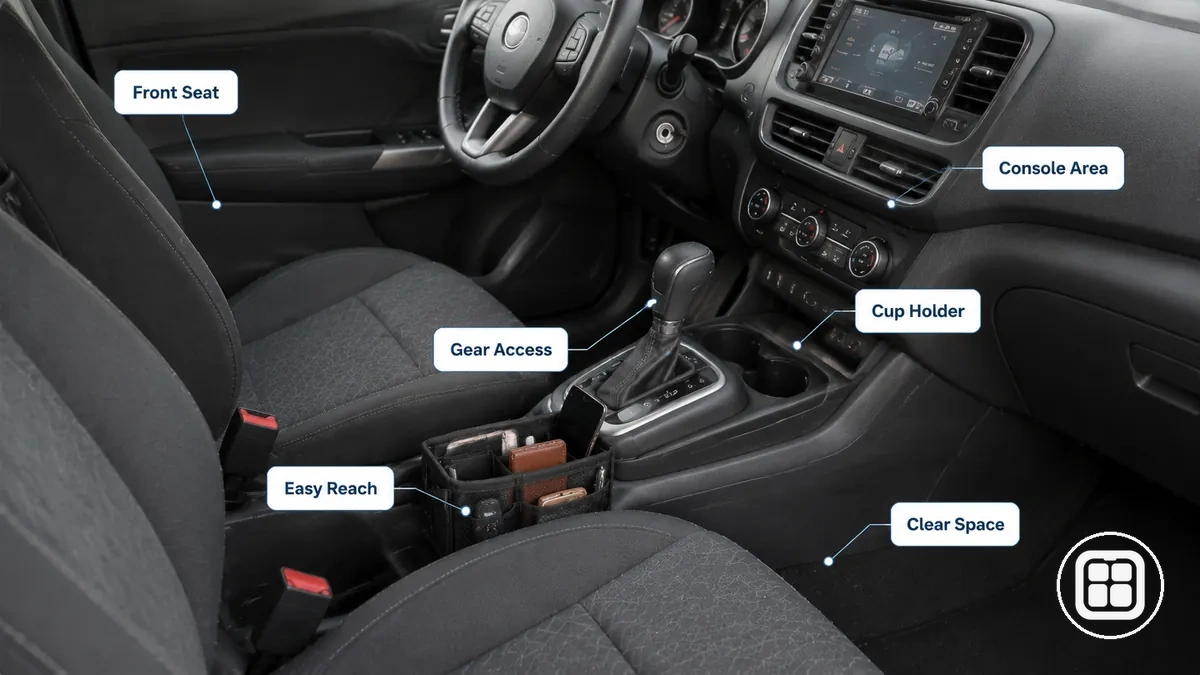
Console width can affect compatibility because a larger organizer may limit access to nearby compartments or controls. Fit depends on whether cup holders, storage spaces, and adjacent surfaces remain accessible after placement.
Passenger-seat space may support quick-access storage when legroom and seating comfort remain clear. An organizer that extends into the seating area can reduce available space or make access less convenient for passengers.
Gear area clearance must remain unobstructed. A quick-access organizer may fit near the console when stored items remain easy to reach and placement does not interfere with normal access to the gear area or nearby controls.
Seat gap and side-pocket clearance
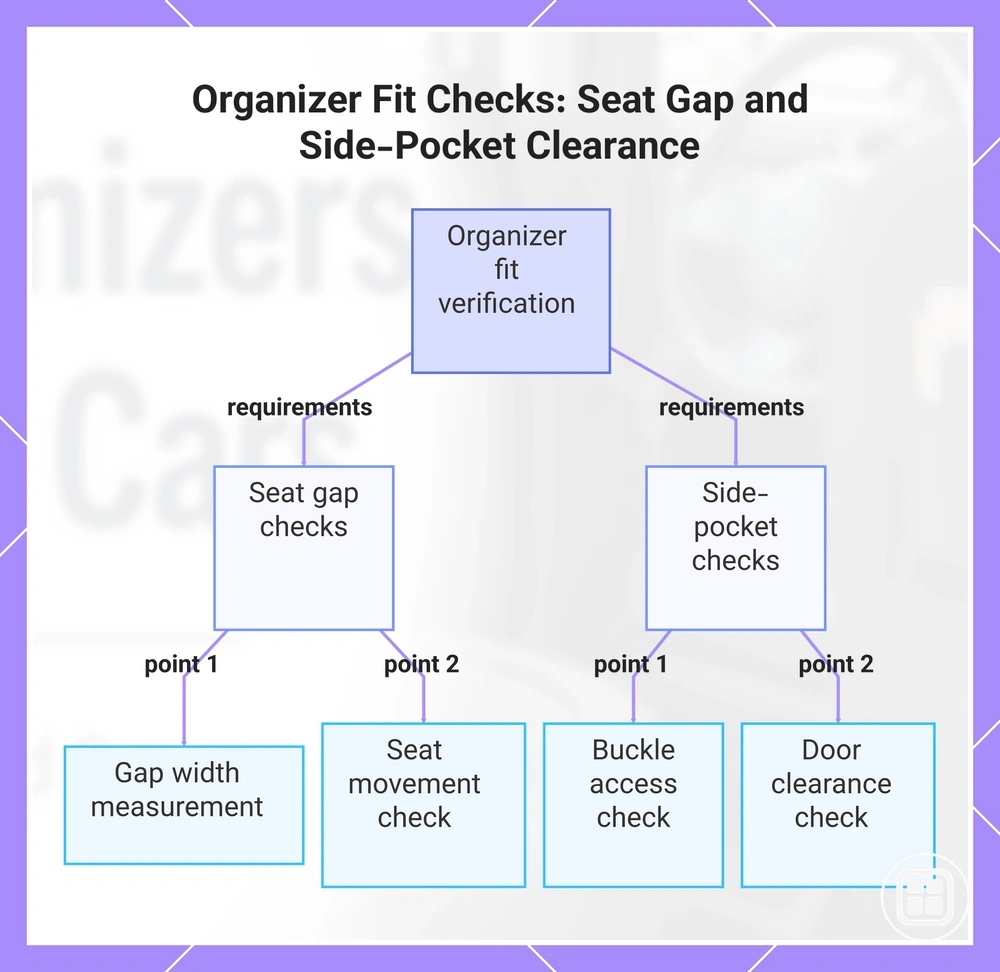
Seat gap and side-pocket organizer fit depends on measured physical clearance rather than broad fit claims. A narrow storage area may accept an organizer only when available space, access points, and surrounding components remain usable after placement.
Seat gap clearance should be measured before choosing an organizer. Fit may vary with seat shape, console design, and gap depth, and a narrow organizer can become less practical if it shifts, slips, or restricts normal access.
- Gap width: Verify that the available seat gap can accommodate the organizer without forcing the fit.
- Seat movement: Check that seat adjustment remains unobstructed after installation.
- Buckle access: Confirm that the seat-belt buckle remains easy to reach and use.
- Door clearance: Ensure that side-pocket storage and door movement remain accessible.
Side-pocket clearance depends on both available space and reachability. An organizer may fit within the pocket area, but usability can decrease when stored items become difficult to access or when clearance around the door area becomes limited.
This chart outlines the essential checks to ensure a car seat gap and side-pocket organizer fits without obstructing seat movement, buckle access, or door clearance.
Small trunk and hatchback cargo space
Small trunk and hatchback cargo space depends on available cargo-floor width, depth, and height before an organizer can fit effectively. When cargo space is limited, compatibility is determined by how much usable floor area remains and whether access to stored items stays practical after placement.
A small trunk usually has more defined cargo boundaries, making cargo-floor dimensions an important compatibility factor. A compact organizer may suit the area when it fits within the available width and depth without limiting access to frequently used or emergency items.
Hatchback cargo space can be more flexible because available volume may change with cargo arrangement or seat position. A foldable organizer may work well when storage needs vary and the cargo area must adapt to different loads.
Organizer height can influence usability in compact cargo spaces. A low-profile design may preserve easier access to the cargo floor, while a foldable design may reduce occupied space when full storage capacity is not needed.
Access remains a key compatibility requirement. Emergency items, tools, or other essentials should remain reachable, and organizer placement should not unnecessarily restrict access to the usable cargo area.
Size, dimensions, and foldability checks for tight interiors
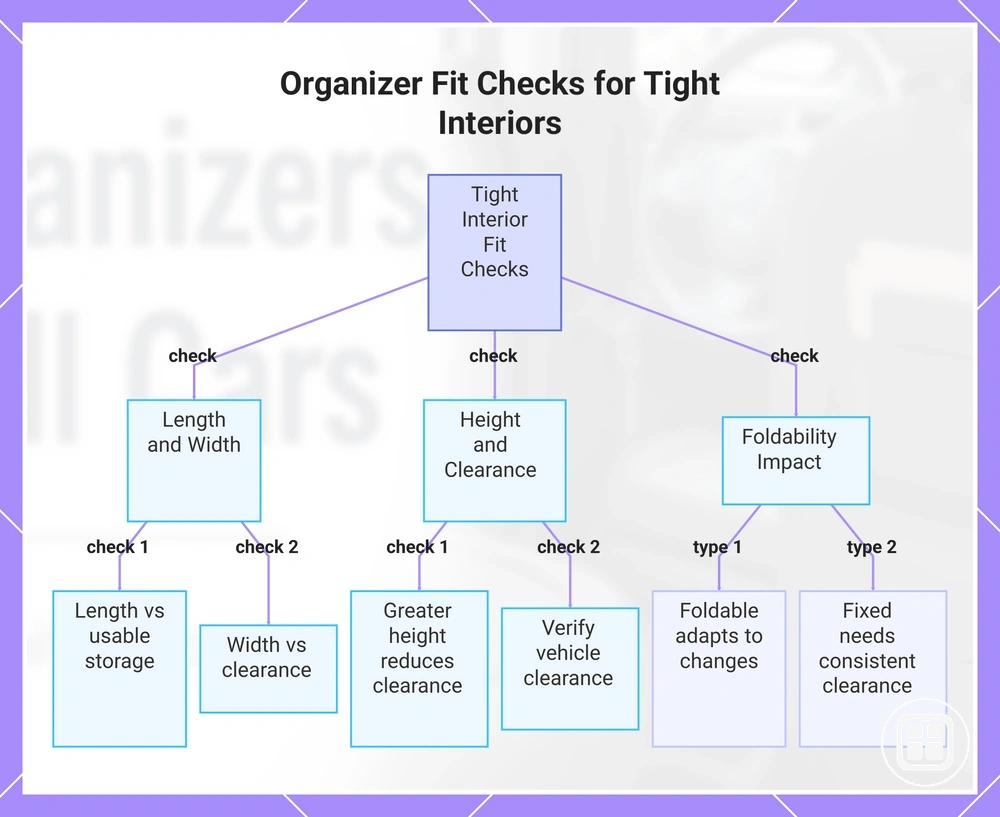
Organizer dimensions must be checked against the intended storage area before selection. Length, width, height, and available clearance determine whether an organizer may fit without creating obstruction, while foldability can influence how efficiently space is used when storage needs change.
Organizer length should be compared with the usable storage area because excess length may reduce access or create interference. Organizer width should also match the available clearance, as additional width can limit surrounding space and affect usability.
Organizer height is equally important in tight interiors. Greater height may reduce clearance around nearby components, while a lower-profile design may leave more usable space when access is limited.
Foldability is a separate sizing attribute that affects storage outcomes. A foldable organizer may adapt more easily when available space changes, whereas a fixed-shape organizer depends more heavily on consistent clearance conditions.
Vehicle clearance around seats, controls, and access points must be verified before installation. Organizer dimensions combined with available clearance can result in an acceptable fit, a partial obstruction, or a situation where a smaller or more flexible organizer may be more suitable.
This chart shows the key checks for organizer dimensions, height, clearance, and foldability to ensure a proper fit in tight vehicle interiors.
Storage layout and capacity trade-offs in compact organizers
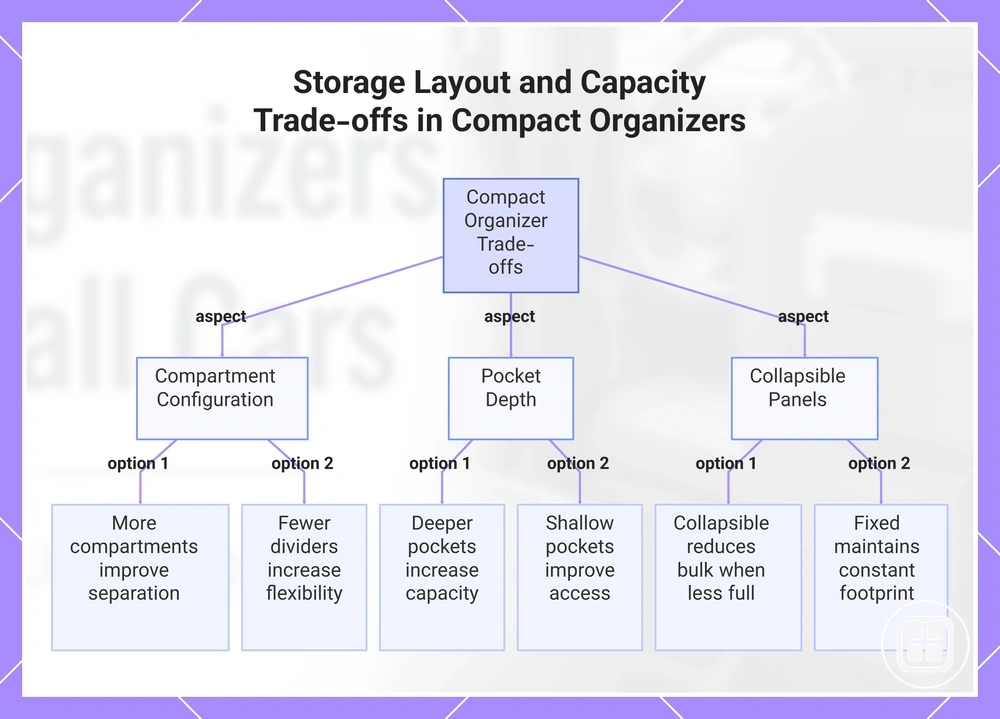
Compact organizers trade total storage capacity for easier access, item separation, and reduced bulk in small cars. The most practical layout depends on whether the priority is storing more items or keeping frequently used items organized and easy to reach within limited space.
Compartments and dividers change how storage space is allocated. More compartments can improve separation and access, but they may reduce the amount of open space available for larger items. Fewer dividers may increase storage flexibility, although organization can become less structured.
Pocket depth affects both capacity and usability. Deeper pockets may hold more items, but access can become less convenient when smaller objects sit below larger ones. Shallower pockets may support quicker retrieval when frequently used items need to remain visible and accessible.
Lids and handles influence how storage space is used rather than how much space exists. A lid may help keep contents contained, while a handle may make repositioning easier. Their usefulness depends on available space and how often the organizer is opened or moved.
Collapsible panels create a trade-off between available capacity and occupied space. A collapsible layout may reduce bulk when storage demand is lower, while a fixed layout maintains the same footprint regardless of content volume. In compact interiors, this difference can affect both usable space and everyday convenience.
This chart illustrates the key trade-offs between storage capacity and organization in compact organizers, focusing on compartment configuration, pocket depth, and collapsible panels.
Stability and secure fit in limited vehicle space
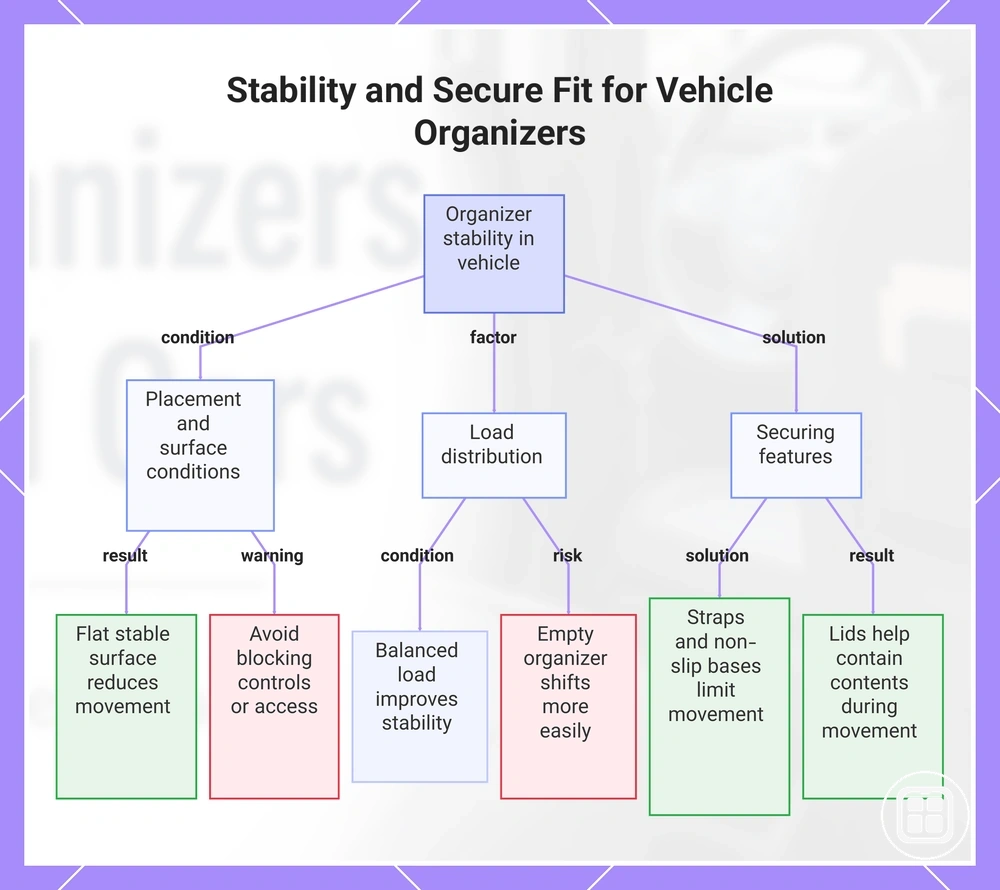
Secure fit depends on placement, surface condition, load distribution, and how the organizer is secured within the available space. An organizer should remain stable without blocking controls, restricting access, or creating unnecessary movement during normal driving.
Placement and surface condition directly affect stability. A flat, stable surface can reduce movement, while uneven or low-friction surfaces may allow an organizer to shift more easily. Any placement that interferes with controls or access points should be avoided because stable positioning is a primary safety requirement.
Straps and non-slip bases can help limit movement, but their effectiveness depends on the mounting location, organizer design, surface texture, and load. These securing features may reduce shifting in many situations, although movement can still vary with driving conditions.
Weight distribution changes stability outcomes. Heavy items concentrated on one side may increase movement, while a more balanced load may help the organizer remain in position. An empty organizer may also move more easily because it has less weight helping it stay settled on the supporting surface.
Lids and placement restrictions contribute to practical stability. A lid may help keep contents contained when movement occurs, while placement restrictions reduce the risk of interference with controls or access areas. During sudden braking, stability can depend on the combined effect of placement, load distribution, securing features, and the surface supporting the organizer.
This chart shows the key factors affecting car organizer stability, including placement, load distribution, and securing features, along with important warnings and solutions.
How to choose a small-car organizer by storage need
Storage need and compatible placement determine the most suitable organizer format for a small car. The right choice depends on what needs to be stored, how often access is required, and whether the intended placement area can accommodate the organizer without reducing usability.
| Storage need | Best placement | Organizer style | Fit caution |
|---|---|---|---|
| Daily essentials | Easy-access cabin area | Compact compartment organizer | Access should remain convenient without creating clutter |
| Documents | Protected storage area | Flat document organizer | Document size and storage dimensions may affect suitability |
| Bottles | Reachable storage location | Bottle-focused organizer | Container size and surrounding clearance can affect fit |
| Groceries | Cargo area | Foldable cargo organizer | Organizer size should not reduce practical cargo use |
| Tools | Dedicated storage zone | Structured organizer with dividers | Load distribution may influence stability |
| Travel items | Accessible storage space | Multi-compartment organizer | Frequently used items should remain easy to reach |
| Occasional cargo | Flexible cargo area | Collapsible organizer | Available space may vary with changing cargo requirements |
The selection process starts with the storage need rather than the organizer format. After identifying the intended items, placement compatibility, access frequency, and available space help determine which organizer style may be the most practical option.
Everyday essentials and quick-access items
Frequent-use items need reachable storage that remains organized without interfering with controls, passenger space, or normal vehicle operation. The most suitable organizer format depends on item size, access frequency, and the available storage area within the small car.
- Documents: A flat organizer or slim compartment may suit registration papers, parking permits, or similar items when they need to stay protected and easy to locate.
- Chargers: A small compartment organizer may help keep charging cables contained when a nearby storage area is available and cable routing remains unobstructed.
- Sunglasses: A compact organizer with a dedicated pocket may keep sunglasses accessible while reducing movement between uses.
- Bottles: A bottle-focused compartment may be suitable when the storage area provides enough clearance for the bottle size and remains easy to reach.
- Toll items: Small-access compartments may suit cards, passes, or similar items that require quick retrieval during routine travel.
- Small accessories: Divided compartments may help separate keys, coins, earbuds, or similar items when frequent access is required.
Access frequency should guide local placement. Items used regularly are often more practical in nearby storage areas, while less frequently used essentials may be stored in secondary compartments if reachability remains convenient.
Groceries, travel items, and occasional cargo
Occasional cargo depends on storage flexibility more than immediate access, which makes foldable, trunk-based, or low-profile organizers a practical match for temporary storage needs in small cars. The most suitable format depends on cargo volume, item weight, and how often stored items need to be reached.
- Groceries: A foldable trunk organizer may help separate temporary shopping loads when cargo volume changes between trips.
- Travel items: A multi-compartment cargo organizer may suit bags and trip-related items when organized access is needed within a limited cargo area.
- Cleaning supplies: A structured trunk organizer may help keep containers grouped together when the cargo floor provides suitable placement space.
- Emergency items: A low-profile organizer may be suitable when emergency supplies need a dedicated location while remaining accessible.
Item volume can influence organizer choice. Larger or irregular cargo may benefit from a foldable organizer that adapts to changing storage needs, while smaller loads may fit more efficiently within a compact low-profile layout.
Access needs and item weight can affect placement. Frequently needed cargo may be more practical near the rear access area, while heavier items may be easier to manage when the organizer remains stable on the cargo floor and preserves usable storage space.
Compact organizer options compared by placement and use case
Compact organizer options should be compared by placement and use case rather than ranking because small-car compatibility depends on available space, access needs, cargo conditions, and storage priorities. Each organizer format offers different trade-offs in capacity, accessibility, stability, and flexibility.
| Option type | Placement | Best use | Fit condition | Limitation |
|---|---|---|---|---|
| Seat-gap organizer | Between seat and console | Small everyday items | Requires accessible and stable gap space | Capacity is usually limited |
| Console organizer | Center console area | Frequent-access essentials | Controls and storage access should remain unobstructed | May reduce available console space |
| Pocket organizer | Door or seat pocket area | Lightweight accessories | Depends on pocket size and reachability | Less suitable for bulky items |
| Compact floor organizer | Front or rear floor area | Mixed daily-use storage | Requires clear floor space and stable positioning | May affect available foot space |
| Low-profile cargo organizer | Trunk or hatchback floor | Occasional cargo and emergency items | May suit cargo areas where access remains practical | Provides less vertical storage space |
| Foldable cargo organizer | Trunk or cargo area | Groceries and temporary loads | May be useful when storage needs change | Requires cargo-floor space when expanded |
Placement affects accessibility, while use case influences whether capacity, flexibility, or stability is the more important criterion. Seat-gap, console, and pocket organizers focus on reachable storage, whereas low-profile and foldable cargo organizers are generally better aligned with temporary cargo management in limited trunk space. The most suitable option depends on available space, item type, access frequency, and load conditions.
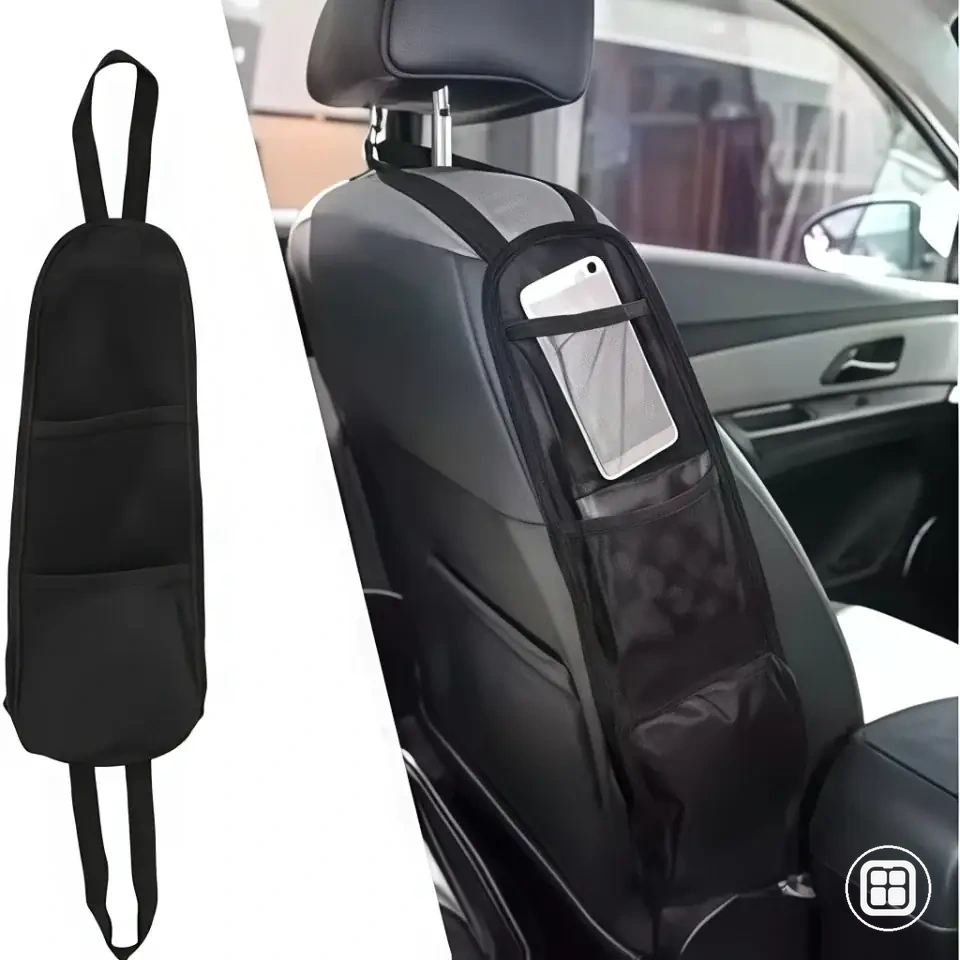
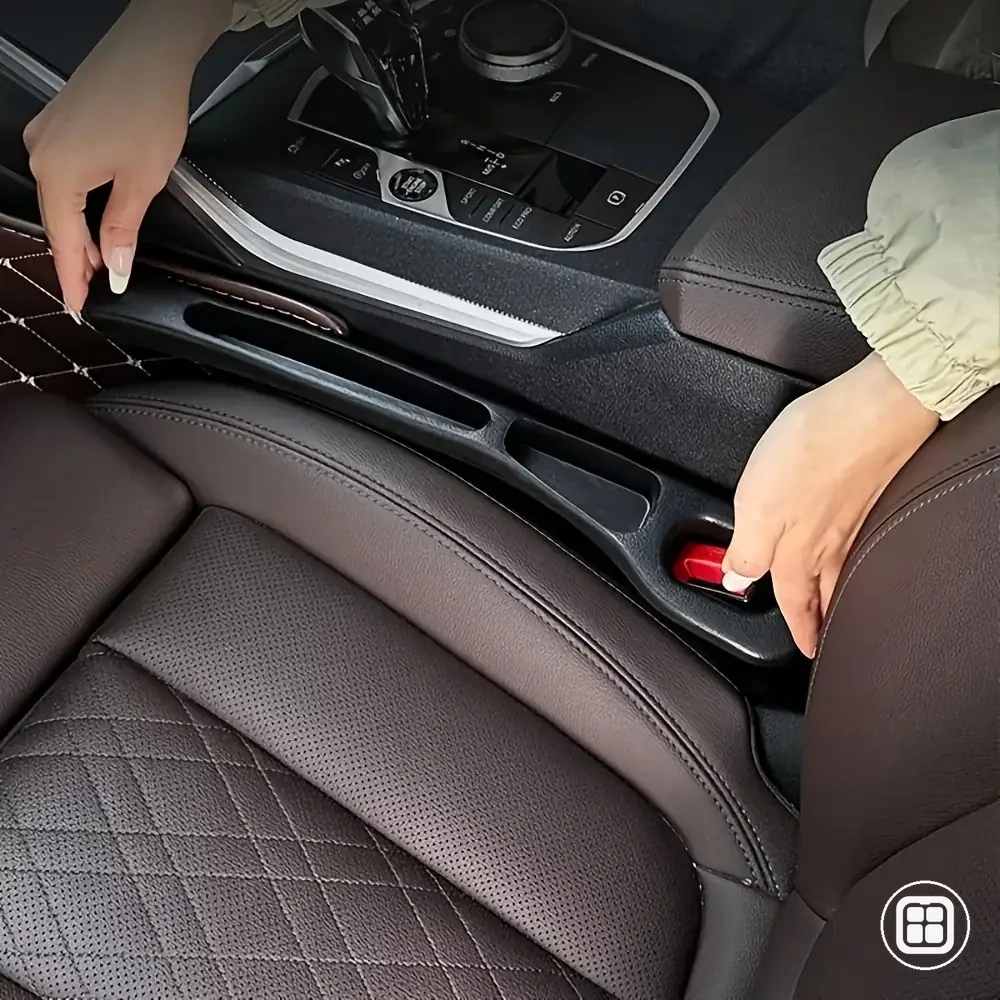
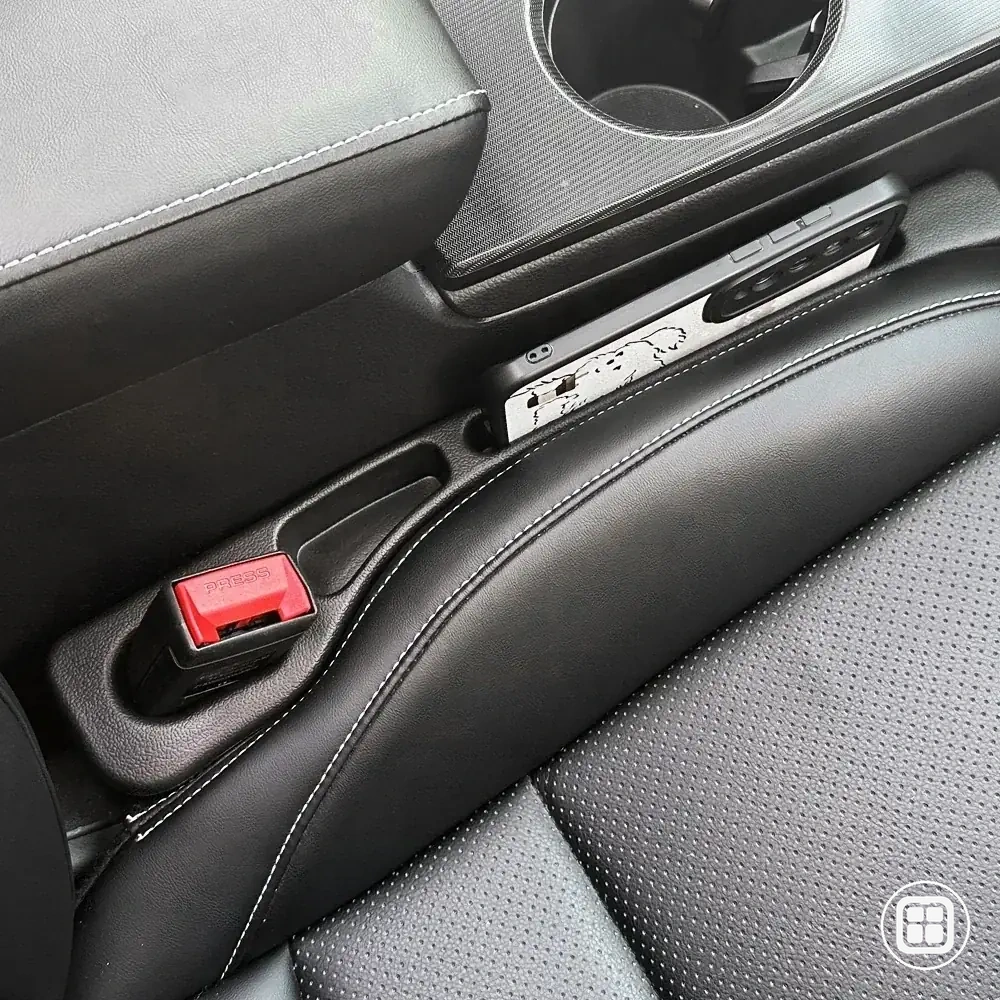
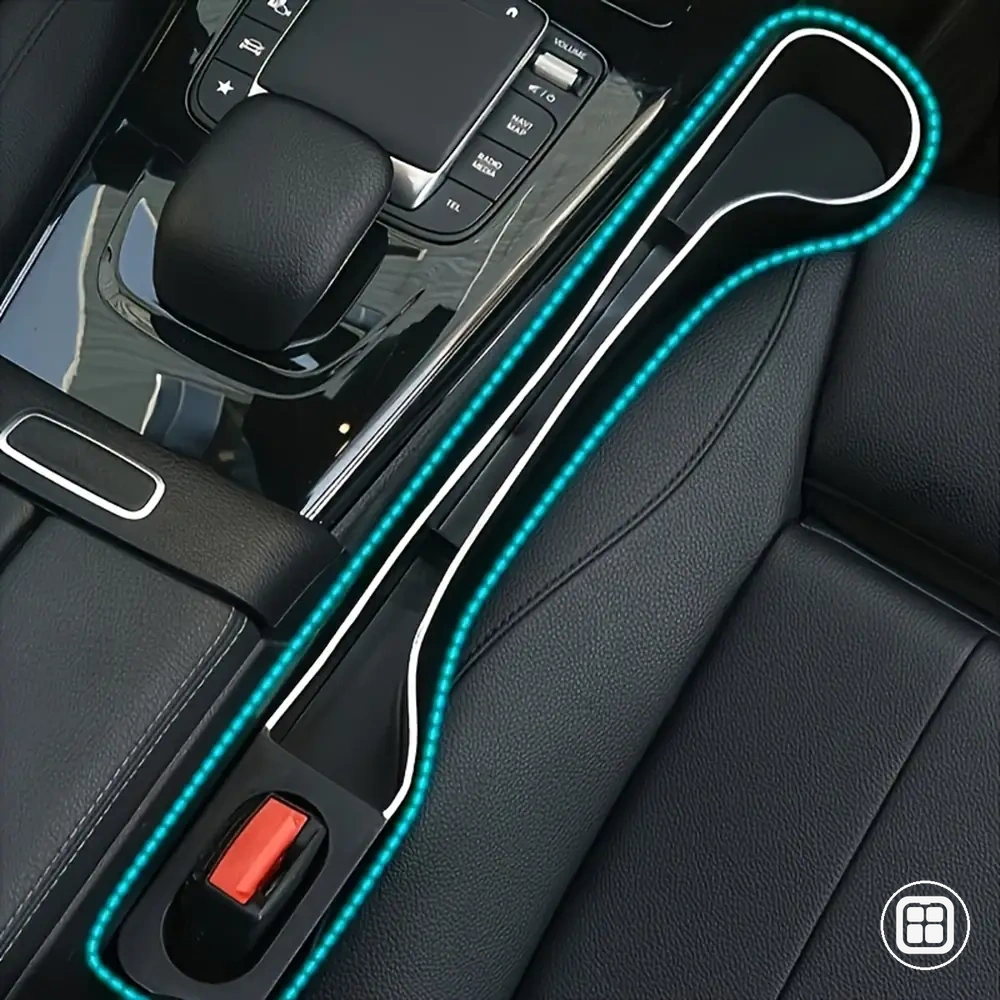
The products below are useful examples for comparing available options. Before buying, check that the compatibility criteria, key features, and product details match your needs.
Fit limits that make an organizer unsuitable for a small car
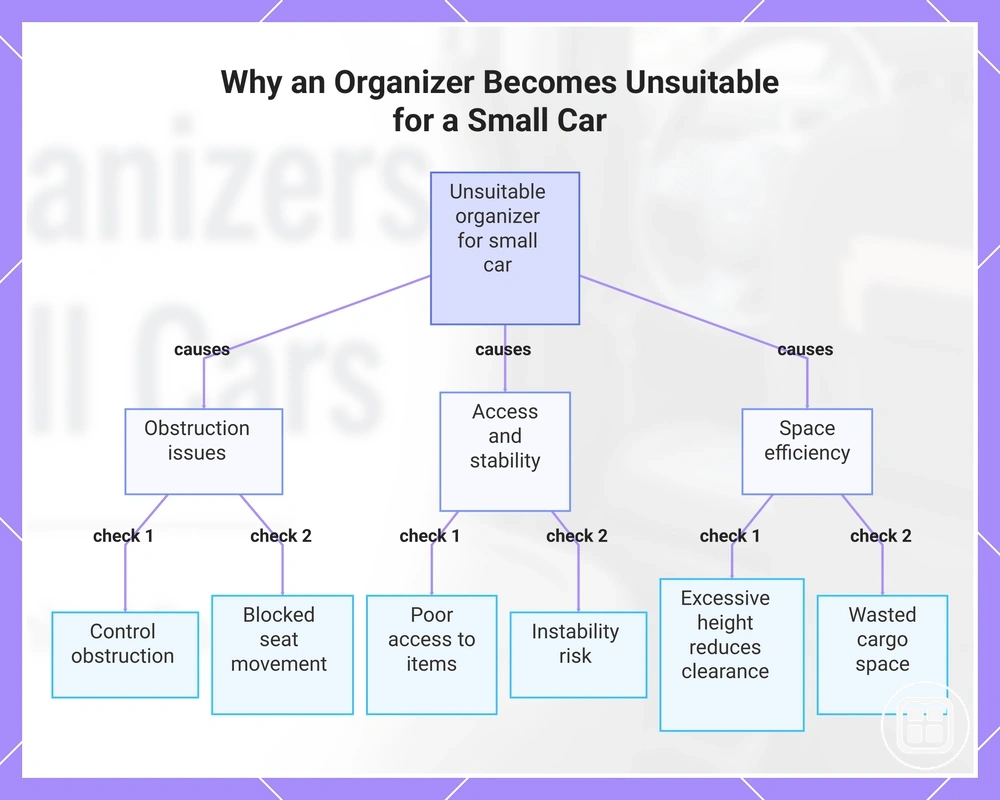
An organizer is unsuitable when the fit risk is higher than the storage benefit, meaning it interferes with vehicle usability instead of improving it. In small cars, rejection is mainly driven by obstruction, restricted movement, and loss of practical space rather than storage capacity alone.
- Control obstruction: Reject when the organizer blocks access to controls, switches, storage areas, or essential driving functions.
- Blocked seat movement: Reject when seat adjustment range or sliding function becomes restricted after placement.
- Poor access: Reconsider when items cannot be reached easily during normal use or require excessive effort to retrieve.
- Instability risk: Reconsider when the organizer may shift due to limited surface grip, uneven load, or weak placement support.
- Excessive height: Reconsider when vertical size reduces usable clearance or interferes with surrounding interior space.
- Wasted cargo space: Reconsider when the occupied area provides low storage efficiency compared to space consumed.
Fit unsuitability often reflects vehicle layout constraints such as seat geometry, console spacing, or cargo-floor design rather than product quality. In many small-car interiors, limited clearance or access pathways can make otherwise functional organizers impractical.
This chart shows the fit limits that make an organizer unsuitable for a small car, including obstruction, access, stability, and space efficiency issues.
The products below are useful examples for comparing available options. Before buying, check that the compatibility criteria, key features, and product details match your needs.