
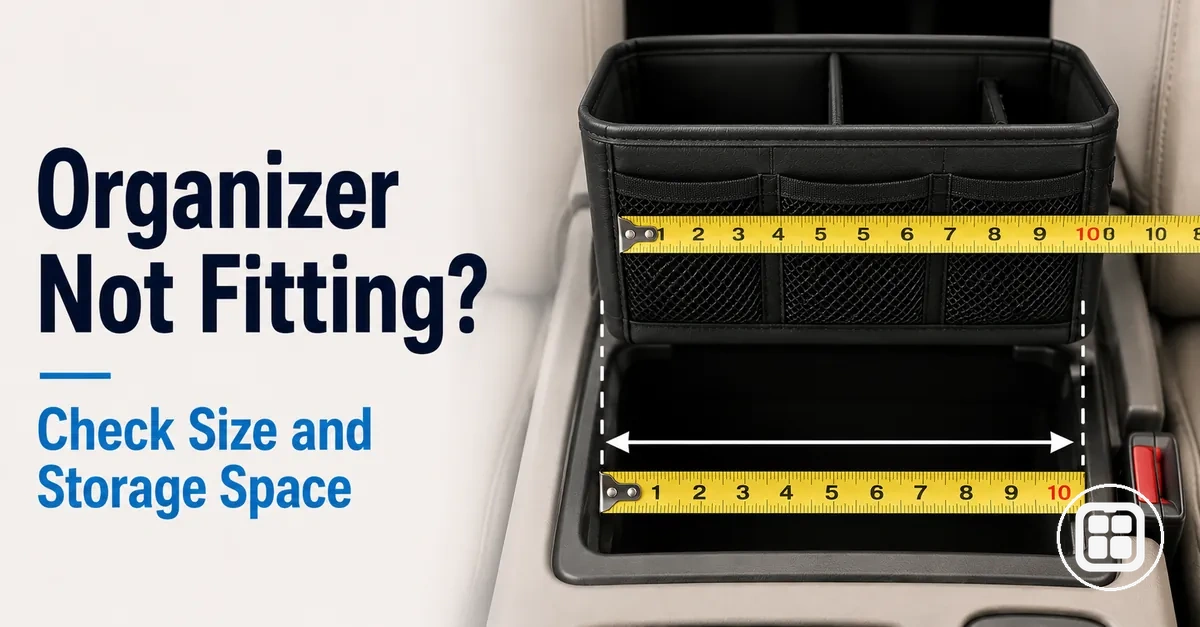
Car Organizer Fit Problems
A car organizer fit problem usually comes from size mismatch, placement mismatch, limited adjustment range, or load distortion, not one universal defect. Poor fit happens when the organizer does not match the vehicle space or placement area. The first fix is to identify which mismatch is causing the symptom.
A repeated fit symptom may show as blocked access, wasted storage area, squeezed compartments, overhang, or a car organizer that does not sit in the intended position. The likely cause can be the organizer format, the available clearance, the shape of the stored items, or the way straps, panels, and dividers adjust. A realistic fix may be repositioning, folding, adjusting, or reducing load pressure, but the result depends on the vehicle space and organizer design.
Fit diagnosis should move from the vehicle storage area to the organizer format, then to the adjustment range. Check whether the placement area gives enough usable width, depth, height, and access before treating the organizer as the only problem. If the format fits the area but still causes poor fit, the next cause may be limited strap reach, stiff panels, fixed dividers, or load shape changing the organizer footprint.
A sliding problem or securing problem is different from poor fit when the organizer fits the space but moves because it is not held firmly enough.
What Poor Car Organizer Fit Means
Poor car organizer fit is a mismatch between a car organizer and the available vehicle storage area, intended placement, or usable adjustment range. This fit condition occurs when the organizer does not align with the space where it is meant to be used. The mismatch can affect how the organizer sits, opens, or functions within the vehicle. Understanding this distinction matters before troubleshooting specific fit issues.
What Poor Car Organizer Fit Means becomes clearer when the relationship between the organizer and the available space is visible. The image below highlights how a mismatch can appear within a vehicle storage area.
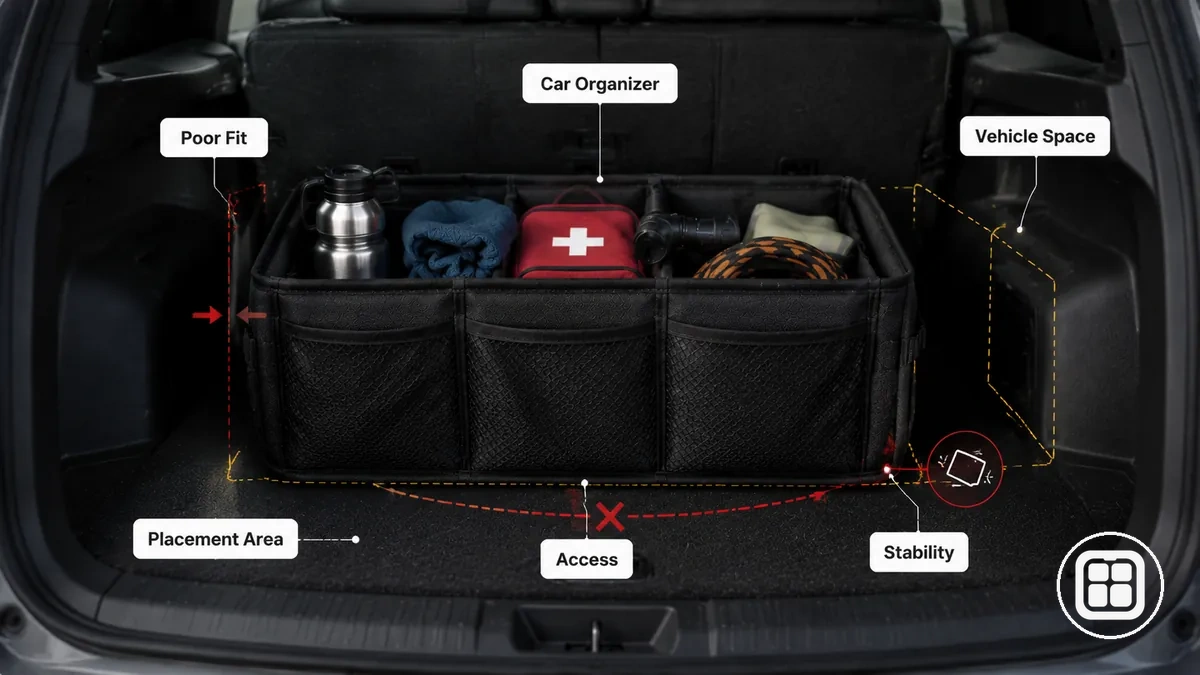
A poor fit can reduce access to stored items, create obstruction in the intended placement area, or limit storage use when available clearance is restricted. Stability may also be affected when the car organizer cannot sit properly within the vehicle space or when the adjustment range does not suit the placement conditions. A fit issue concerns size, shape, or placement relationships, while a securing issue concerns movement control after the organizer fits the space.
Common Signs a Car Organizer Does Not Fit Properly
When fit symptoms appear, a car organizer may not match the available vehicle space or intended placement area. Common Signs a Car Organizer Does Not Fit Properly are easiest to recognize through visible behavior inside the vehicle. These signs should be read as diagnostic clues rather than final causes.
Common Signs a Car Organizer Does Not Fit Properly can be organized by the visible symptoms shown in the vehicle space. The image below highlights common fit clues and how they may appear in a storage area.
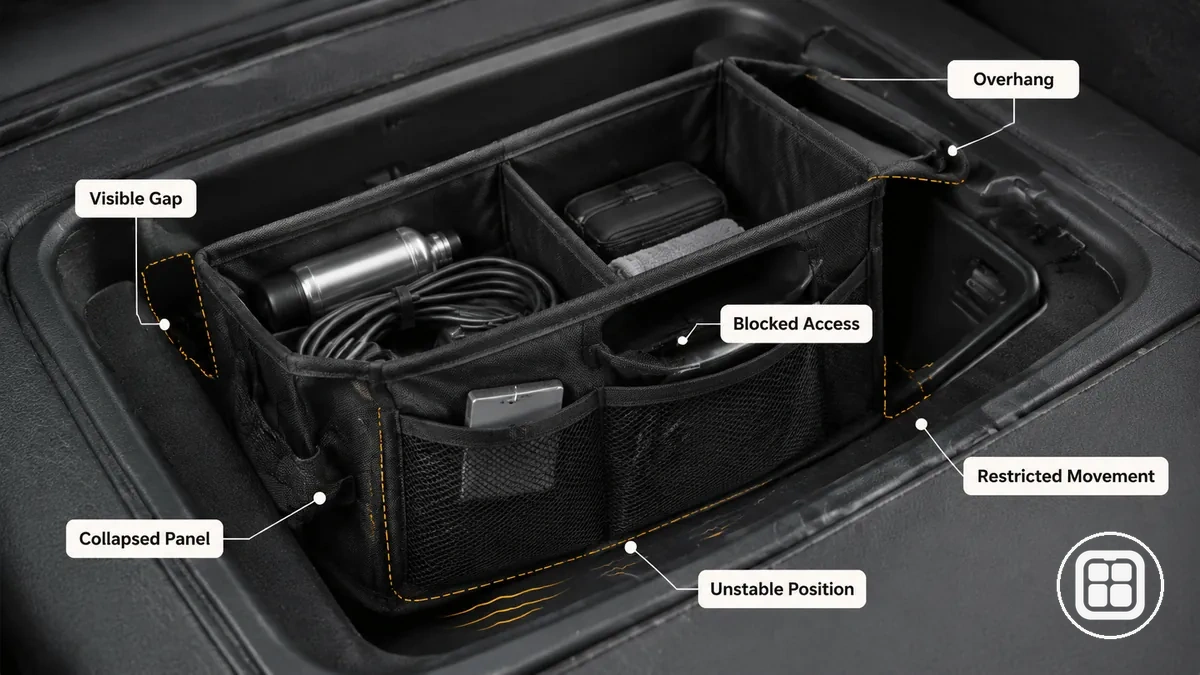
- Visible gap: A visible gap may indicate unused clearance, a space mismatch, or incorrect positioning. Inspect how the organizer aligns with the intended placement area.
- Overhang: Overhang may suggest that part of the car organizer extends beyond the available vehicle space. Check whether the storage area supports the organizer footprint.
- Blocked access: Blocked access can indicate that the organizer interferes with compartments, controls, or stored items. Examine whether the placement area allows normal access.
- Collapsed panel: A collapsed panel may indicate that the organizer is compressed by surrounding surfaces or load conditions. Review whether the available space supports the organizer shape.
- Unusable compartment: An unusable compartment may result when the organizer cannot maintain its intended form. Inspect whether limited clearance is affecting storage use.
- Restricted movement: Restricted movement may occur when the organizer interferes with seat travel, lid operation, or access paths. Check the relationship between the organizer and nearby vehicle components.
- Unstable positioning: Unstable positioning may indicate a fit condition, but movement alone is not always a fit symptom. Consider whether the issue relates to organizer fit or a separate securing problem.
Organizer Moves, Collapses, or Blocks Normal Use
When organizer movement, collapse, or blocked use appears, the likely issue may involve placement, available space, or a structure cause rather than normal storage behavior. Organizer Moves, Collapses, or Blocks Normal Use is a local symptom group that separates interference problems from ordinary storage limits. These signs are most useful for checking movement, load weight, and blocked access.
Organizer Moves, Collapses, or Blocks Normal Use becomes easier to recognize when the interference is visible within the vehicle space. The image below highlights symptom patterns that can help identify what the organizer is affecting or responding to.
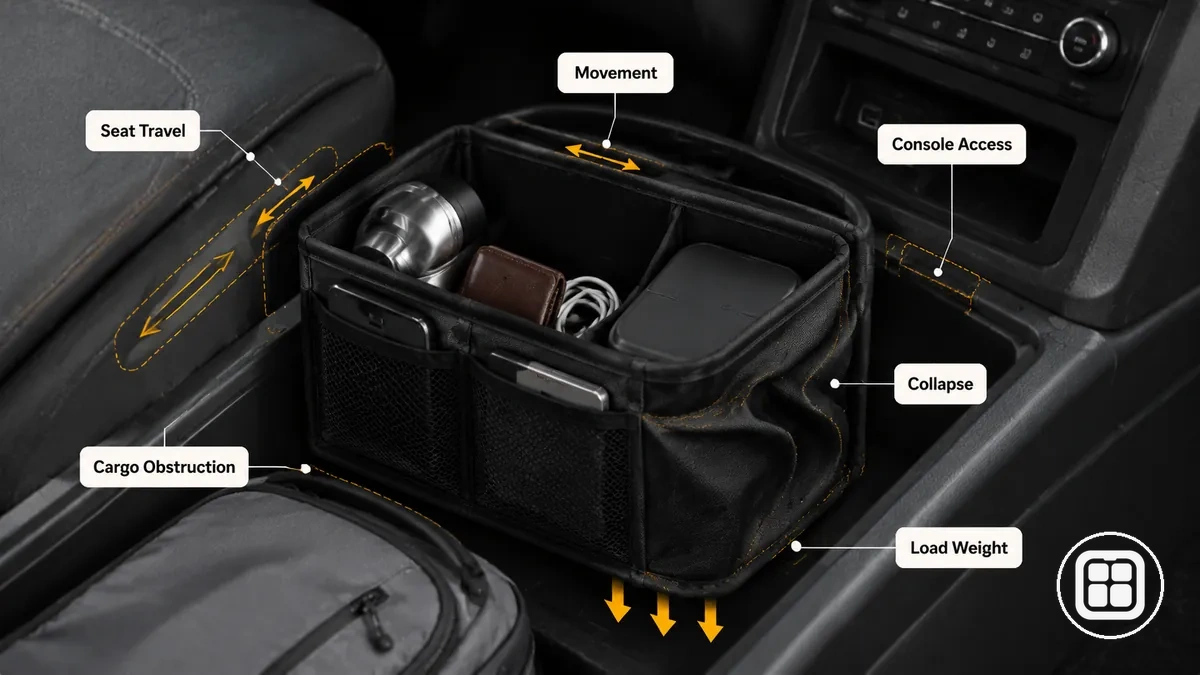
- Movement: Organizer movement may indicate a placement issue or a size cause when the organizer shifts within the available space. If movement occurs without obvious space conflict, a separate securing issue may also be involved.
- Collapse: Collapse may suggest that surrounding space, stored contents, or load weight are affecting the organizer structure. A distorted wall can point toward a structure cause rather than normal use.
- Blocked seat travel: When the organizer interferes with seat travel, the placement area may not provide enough operating clearance. This can indicate a local fit check around moving vehicle components.
- Blocked console access: Limited console access may indicate that the organizer extends into an active use area. The symptom often points to a placement mismatch within the available vehicle space.
- Cargo obstruction: Cargo obstruction may occur when the organizer occupies space needed for normal storage activity. This symptom can indicate that organizer size or placement does not align with the intended storage area.
Compartments Do Not Match the Available Space
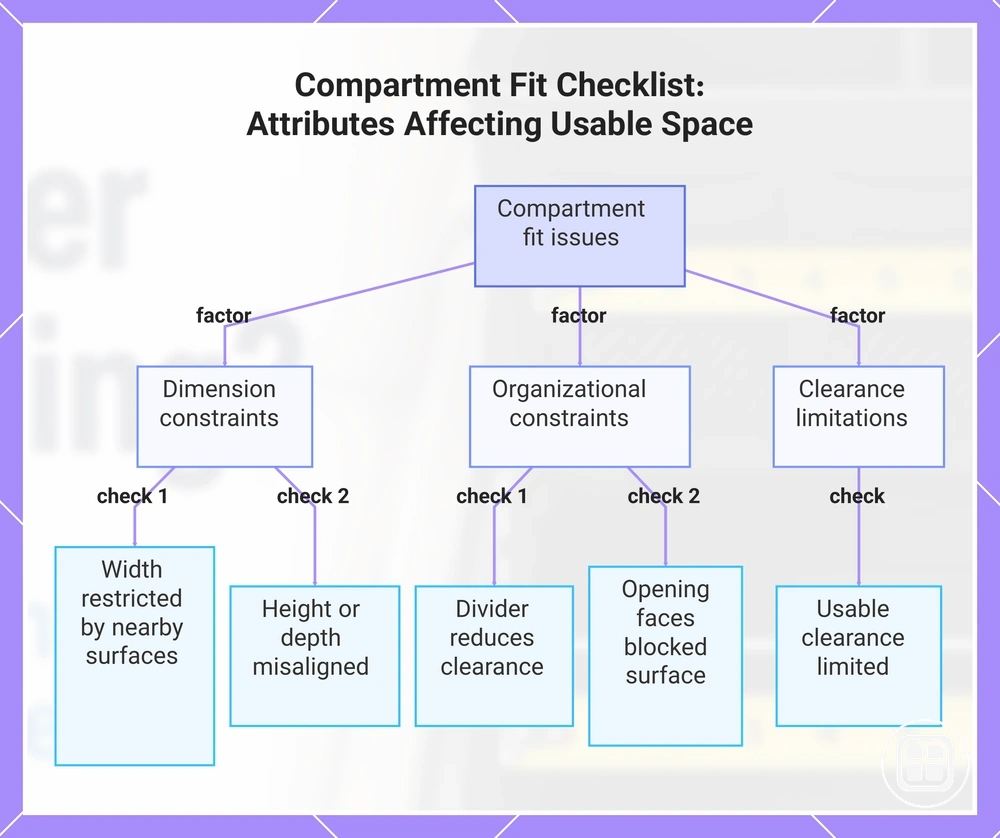
Compartments Do Not Match the Available Space when compartment fit is limited by the area around the organizer rather than the compartment itself. A compartment may become difficult to use if compartment width, height, depth, divider position, or opening direction reduces usable clearance. When a compartment cannot open fully or function as intended, check the compartment width first because it often affects the overall storage outcome.
The checklist below verifies which compartment attribute may be affecting usability.
- Compartment width: If compartment width is restricted by nearby surfaces, pocket fit may be reduced and item access may become more difficult.
- Height and depth: When height or depth does not align with the available vehicle space, the storage outcome may be limited even when the compartment appears usable.
- Divider position: A divider position that reduces divider clearance may create section fit problems and make part of the compartment harder to access.
- Opening direction: If the opening direction faces a blocked surface, access may be restricted. For example, a divider may become less usable when it cannot open into available space.
- Usable clearance: Limited usable clearance around the compartment may affect how items are inserted, removed, or organized during normal use.
This chart shows the key compartment attributes to check when the compartment does not match the available space.
Fit Checks by Vehicle Storage Area
Fit Checks by Vehicle Storage Area depend on the placement area because each vehicle storage area has different width, depth, height, clearance, and access path conditions. A fit check that works in one placement area may not apply in another because vehicle model and interior layout differences can change the available space. Each vehicle storage area changes the fit criteria.
The table below organizes fit checks by placement area and shows which attributes to verify before deciding whether the fit is suitable or may create an obstruction or mismatch.
| Placement area | Fit attribute | What to check | Possible outcome |
|---|---|---|---|
| Trunk | Width, depth, height | Check whether the placement area provides enough usable space for the organizer footprint. | Limited dimensions may lead to a fit mismatch. |
| Cargo area | Clearance and access path | Check whether stored items and surrounding surfaces leave enough operating space. | Restricted clearance may create obstruction during use. |
| Seat gap | Width and depth | Check whether the fit area matches the available gap without interfering with nearby components. | Space variation may reduce proper fit. |
| Console | Clearance and access path | Check whether controls, compartments, or normal access remain unobstructed. | Limited access path may indicate a placement mismatch. |
| Seatback | Attachment position and clearance | Check whether the attachment position aligns with the available space behind the seat. | Poor alignment may affect organizer placement. |
| Front seat | Height, clearance, access path | Check whether seat movement and nearby vehicle areas remain usable after placement. | Reduced clearance may lead to obstruction. |
Trunk and Cargo Area Fit Checks
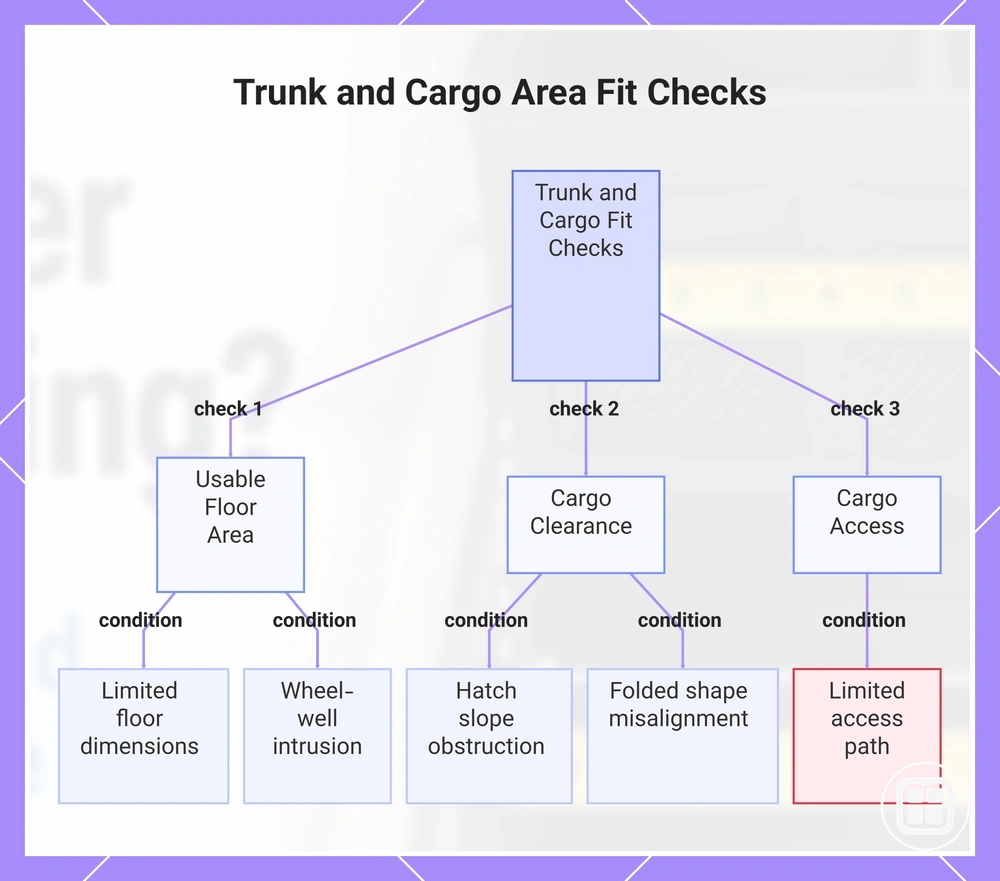
Trunk and cargo area fit checks depend on the usable space available after accounting for physical obstructions and access requirements. A car organizer may fit differently within the same cargo area because floor width, depth, and surrounding structures can change the available space. Check usable floor area and cargo clearance first because they are the core checks for trunk fit.
The checklist below verifies how trunk dimensions and cargo-area conditions may affect fit.
- Floor width and depth: If floor width or depth is limited, the organizer may not sit fully within the trunk floor, which can create a fit limit.
- Wheel-well intrusion: When wheel-well intrusion reduces usable cargo space, placement may become restricted and cargo access may be affected.
- Hatch slope: A hatch slope may reduce cargo clearance near the upper area, which can create obstruction when additional height is needed.
- Folded shape: If the folded shape does not align with the cargo floor, fit may be reduced, especially when an uneven floor limits stable placement.
- Cargo access: Limited cargo access may make loading and retrieval more difficult when surrounding structures reduce the available access path.
This chart shows the main checks for trunk and cargo area fit, including floor area, clearance, and access conditions that affect organizer placement.
Seat Gap and Console Fit Checks
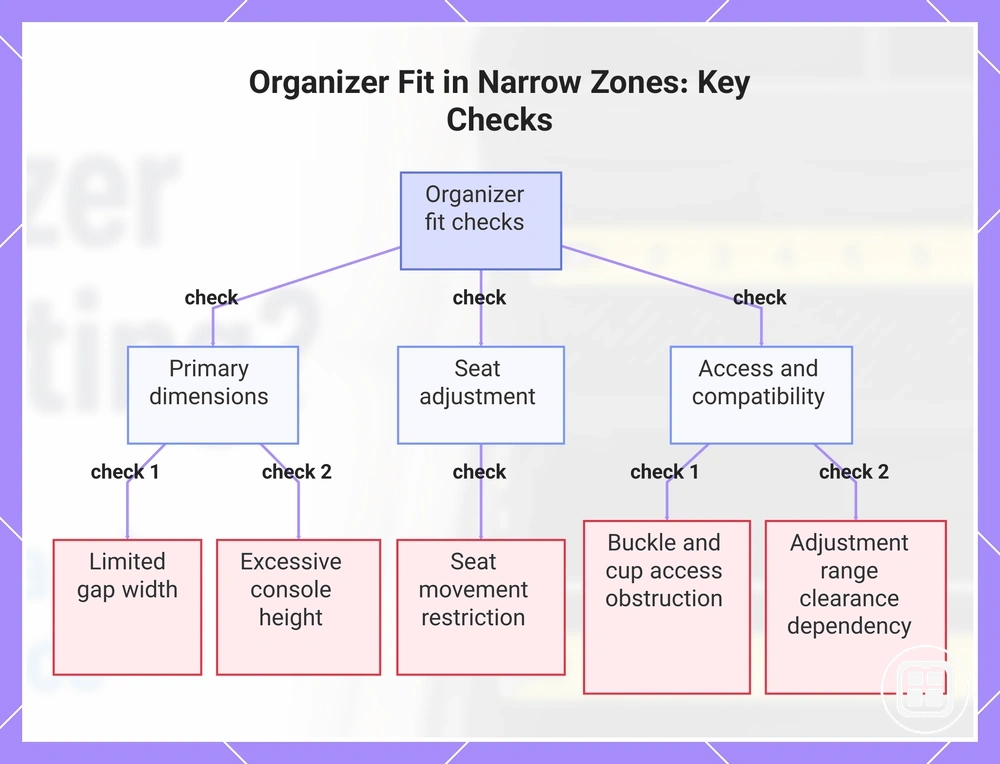
Seat gap and console fit depend on the actual space available in these narrow placement zones. Organizer fit may be limited when gap width, console height, seat movement, or nearby access points reduce usable clearance. Actual seat gap space and console area dimensions matter, so narrow placement zones need real clearance checks.
The checklist below confirms whether key narrow-zone conditions support organizer fit or may create access problems.
- Gap width: Check whether the seat gap provides enough space for organizer fit. Limited gap width may create a fit mismatch.
- Console height: Check whether console height leaves enough clearance around the organizer. Excess height may contribute to obstruction.
- Seat movement: Check whether seat movement remains unrestricted after placement. Reduced clearance may affect fit during adjustment.
- Buckle access and cup holder access: Check whether buckle access and cup holder access remain unobstructed. Restricted access may indicate a placement conflict.
- Adjustment range: Check whether the adjustment range matches the actual gap and console space. Adjustable wording may still depend on the available condition and clearance.
This chart shows the main conditions to check when verifying whether an organizer fits in seat gap and console narrow zones, highlighting potential fit issues.
Seatback and Front Seat Fit Checks
Seatback and front seat fit depend on seat shape, seat movement, and the available attachment position. Organizer fit may change when seat design reduces clearance or alters usable space around the seating area. Check seat shape and attachment points first because seat shape and attachment points control fit.
The checklist below confirms whether key seat-related conditions support fit or may create a clearance limitation.
- Headrest posts: Check whether headrest posts provide a suitable attachment position. Different post spacing may affect strap reach and overall fit.
- Seatback angle: Check whether the seatback angle leaves enough usable space for the organizer. A steep seatback angle may change the fit outcome or reduce available clearance.
- Passenger legroom: Check whether passenger legroom remains usable after placement. Limited space behind the front seat may reduce fit flexibility.
- Strap reach: Check whether strap reach matches the available attachment position. If strap reach is limited, the organizer may not align with the intended seating area.
- Front seat contour: Check whether the front seat contour supports the organizer shape. Bucket seats or heavily shaped seat surfaces may change the fit outcome.
- Access clearance: Check whether access clearance remains available around storage areas and nearby seat functions. Reduced clearance may create obstruction during normal use.
Likely Causes of Poor Car Organizer Fit
When a fit symptom appears, the likely cause may not be obvious because different attribute issues can create similar results. A blocked compartment, unstable position, or restricted access can come from a size mismatch, format mismatch, placement area limitation, or another fit cause. Similar symptoms can have different causes.
The table below uses symptom-to-cause logic to support a diagnostic check rather than assuming a single root cause.
| Symptom | Likely attribute issue | Check | What it means |
|---|---|---|---|
| Blocked access | Size mismatch | Check whether the organizer footprint exceeds the available space. | The organizer may be too large for the placement area. |
| Blocked access | Placement area | Check whether nearby vehicle components limit normal access. | The symptom may come from the location rather than organizer size. |
| Overhang or unused space | Format mismatch | Check whether the organizer shape matches the available area. | The organizer format may not align with the placement area. |
| Loose or unstable positioning | Adjustment range | Check whether the adjustment range matches the available dimensions. | The organizer may not adapt to the available space condition. |
| Collapsed sections | Structural stiffness | Check whether walls or panels maintain their intended shape under normal load. | Limited structural support may affect fit appearance and usability. |
| Distorted shape during use | Load shape | Check whether stored items alter the organizer footprint or form. | The symptom may come from load shape rather than the organizer itself. |
Size Mismatch Between Organizer and Vehicle Space
Size mismatch happens when organizer width, organizer depth, organizer height, or folded footprint does not match the usable space inside the vehicle. The result may be overhang, compression, blocked access, or wasted space depending on the available vehicle clearance. Compare organizer dimensions with usable space, not advertised dimensions alone.
The checklist below confirms which measurements may be creating the dimension mismatch.
- Organizer width: If organizer width exceeds the available vehicle clearance, the organizer may overhang or press against nearby surfaces.
- Organizer depth: If organizer depth extends beyond the usable space, the organizer may block access or reduce normal storage movement.
- Organizer height: If organizer height is greater than the available clearance, the organizer may compress or interfere with lids, seats, or access paths.
- Folded footprint: If the folded footprint does not match the placement area, the organizer may create wasted space or sit unevenly.
- Usable space: If usable space is smaller than the advertised dimension suggests, a space mismatch may appear even when the listed measurements seem compatible.
Organizer Type Mismatch With Placement Area
Organizer type depends on the placement area where the organizer format will be used. A fit failure may occur when the organizer format does not align with the physical zone, even if a compact organizer appears small enough for the space. Organizer type and placement area must match the physical placement zone.
The comparison below highlights how organizer format can create placement-fit risks.
- Trunk organizer: May create a fit risk when used outside a larger storage zone because access and available clearance can differ from the intended placement area.
- Seat gap organizer: May fail in console space if the physical zone does not match the gap-focused format, which can affect access or placement.
- Console organizer: May create obstruction when the placement area does not provide the surface layout or clearance expected by the organizer format.
- Seatback organizer: May not fit as intended when the physical zone lacks a suitable attachment position.
- Front seat organizer: May create fit issues when the available space, access route, or seating layout does not match the organizer format.
Limited Adjustment Range in Straps, Panels, or Dividers
Limited adjustment range can cause fit failure even when the organizer size seems close to the vehicle space. Straps, folds, panels, dividers, buckles, elastic sections, and rigid walls may still be too short, too stiff, too loose, or non-adjustable for the actual placement area. Adjustable or universal-fit wording does not guarantee fit in every vehicle space, so verify the straps first.
The checklist below tests which adjustable part may be limiting fit.
- Straps: If straps are too short or too loose, the organizer may not align with the intended placement area.
- Folds, panels, and rigid walls: If folds, panels, or rigid walls are too stiff, the organizer may compress, tilt, or leave unused space.
- Dividers: If dividers have limited adjustability, usable space may be reduced or compartments may not match the stored items.
- Buckles: If buckles have a narrow adjustment range, the organizer may not hold its intended shape in the vehicle space.
- Elastic sections: If elastic sections stretch too little or too much, the fit effect may feel unstable or uneven.
Fit Fixes Before Replacing the Organizer
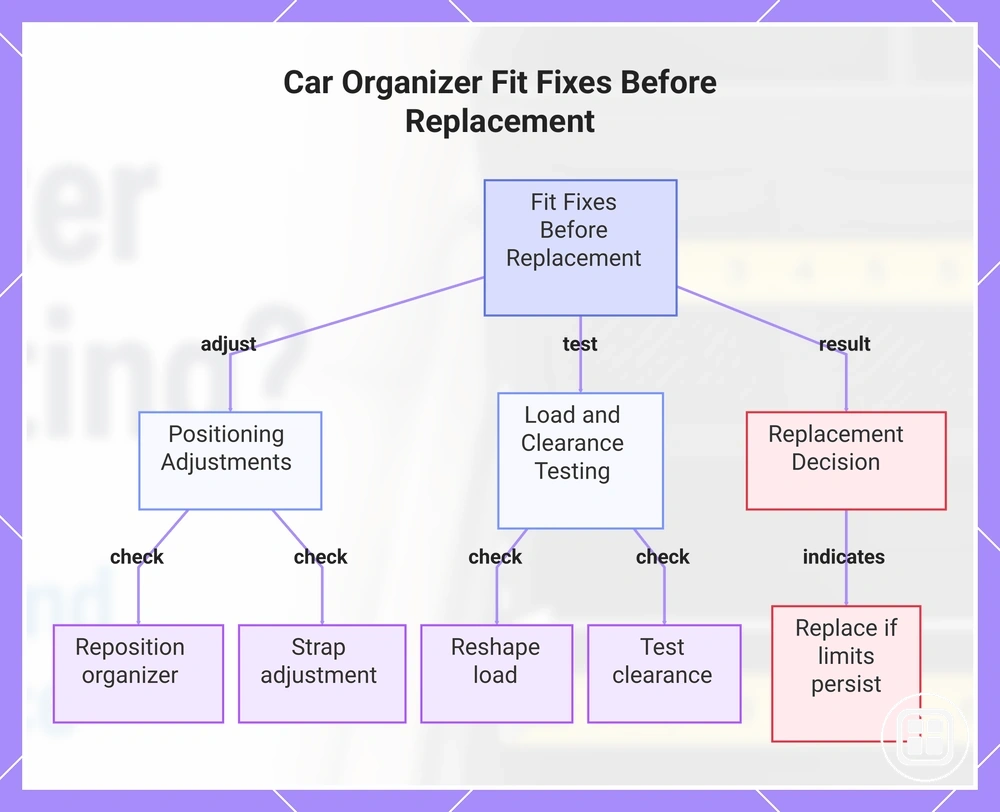
Fit fixes start with low-risk adjustments that may improve how the car organizer uses the available vehicle space. A fit symptom does not always mean the organizer is the wrong size or format because placement, adjustability, and stored-item shape can affect the result. Fit Fixes Before Replacing the Organizer organize practical checks that should be tried only when they do not force the organizer or block normal use.
- Try repositioning. If blocked access, overhang, or unused space appears, move the organizer within the placement area. A positive fit signal may be improved clearance and easier access to nearby vehicle features.
- Check folding options. If the organizer appears too large for the available space, adjust folding sections that change the footprint. A positive fit signal may be reduced compression and better alignment with the placement area.
- Perform strap adjustment. If the organizer shifts, sags, or sits unevenly, adjust the available strap range. A positive fit signal may be more stable positioning without forcing the organizer into place.
- Use divider movement. If compartments do not match stored items, reposition adjustable dividers. A positive fit signal may be improved usable space and a more balanced footprint.
- Apply load reshaping and clearance testing. If stored items create distortion or restricted movement, redistribute the load and test nearby clearance. A positive fit signal may be unobstructed access and reduced interference with surrounding vehicle areas.
- Make a replacement decision when limits persist. If blocked access, forced panel compression, repeated instability, or clearance problems remain after practical fixes, the organizer may have reached a fit limit. This stop signal can indicate that further adjustment is unlikely to resolve the fit issue safely.
This chart shows practical low-risk adjustments to try before replacing a car organizer, including positioning, load testing, and when to decide on replacement.
Adjusting Width, Fold, or Strap Position
Adjusting width, fold, or strap position can change how the organizer occupies the available space. Start with width compression only when the organizer design allows it.
- Check width compression. If the organizer slightly exceeds the available space, compress the width only within the supported design range. A positive fit signal may be reduced overhang without panel strain.
- Adjust the fold angle. If the folded shape creates obstruction, change the fold angle when the panels can move freely. A positive fit signal may be better clearance and a smaller footprint change.
- Align the panels. If panel alignment looks uneven, straighten the panels before testing nearby access. A positive fit signal may be less tilt and more stable use of the space.
- Change strap position and buckle position. If strap position changes the organizer footprint or access path, adjust strap length and buckle position without overtightening. A positive fit signal may be improved access without pulling the organizer out of shape.
- Use divider adjustment. If compartments create wasted space or blocked access, move adjustable dividers to match usable compartment space. Avoid forcing rigid panels or dividers when the design does not support movement.
Repositioning the Organizer Within the Same Area
Repositioning the organizer within the same area can help reduce a fit issue when nearby obstacles limit space or access. Test position changes before changing organizer type, and keep the evaluation inside the same vehicle area.
- Move away from wheel wells. If wheel wells reduce usable space, shift the organizer within the same area. A positive fit signal may be improved cargo access and less interference with surrounding surfaces.
- Try a side shift. If the organizer blocks a central access path, move position toward the side of the same placement zone. A positive fit signal may be a clearer access path and easier use of nearby storage space.
- Test rotation. If the current orientation creates overhang or blocked access, rotate the organizer within the same area. A positive fit signal may be better clearance and a more efficient footprint.
- Clear hinges or rails. If hinges or rails limit movement or create a blocked path, reposition the organizer away from those obstacles. A positive fit signal may be unrestricted operation of nearby vehicle components.
- Check the same-area result. If repositioning still leaves an unavoidable blocked access path or wheel-well intrusion, the current area may not provide enough usable space. This stop signal indicates that the same placement zone may not support the organizer effectively.
Reducing Load Shape That Distorts the Fit
Reducing load shape starts with checking how stored items affect the organizer footprint. Item shape and load distribution can change how the organizer sits, opens, or uses space, even when the organizer itself fits the vehicle area. Redistributing stored items can help distinguish a fit issue from a use-related issue because load shape can mimic a fit problem.
The checklist below links load conditions to visible fit effects and diagnostic meaning.
- Uneven weight: Uneven weight can cause collapse on one side or create bulging on another side. If the shape improves after redistribution, the issue may be related to load distribution rather than organizer fit.
- Tall items and hard edges: Tall items or hard edges can change the organizer footprint and create blocked access. If access improves after repositioning those stored items, item shape may be contributing to the fit effect.
- Overloaded compartments: Overloaded compartments can push outward and distort panel shape. If reducing the storage load decreases bulging, compartment load may be affecting the visible fit condition.
- Loose small items: Loose small items can shift during use and create uneven pressure inside compartments. If the organizer shape becomes more consistent after regrouping those items, movement of stored items may be influencing the outcome.
- Divider pressure: Divider pressure can reduce usable space or contribute to blocked access. For example, if moving stored items away from one divider improves access, the result may indicate a use-related pressure issue rather than a fit limitation.
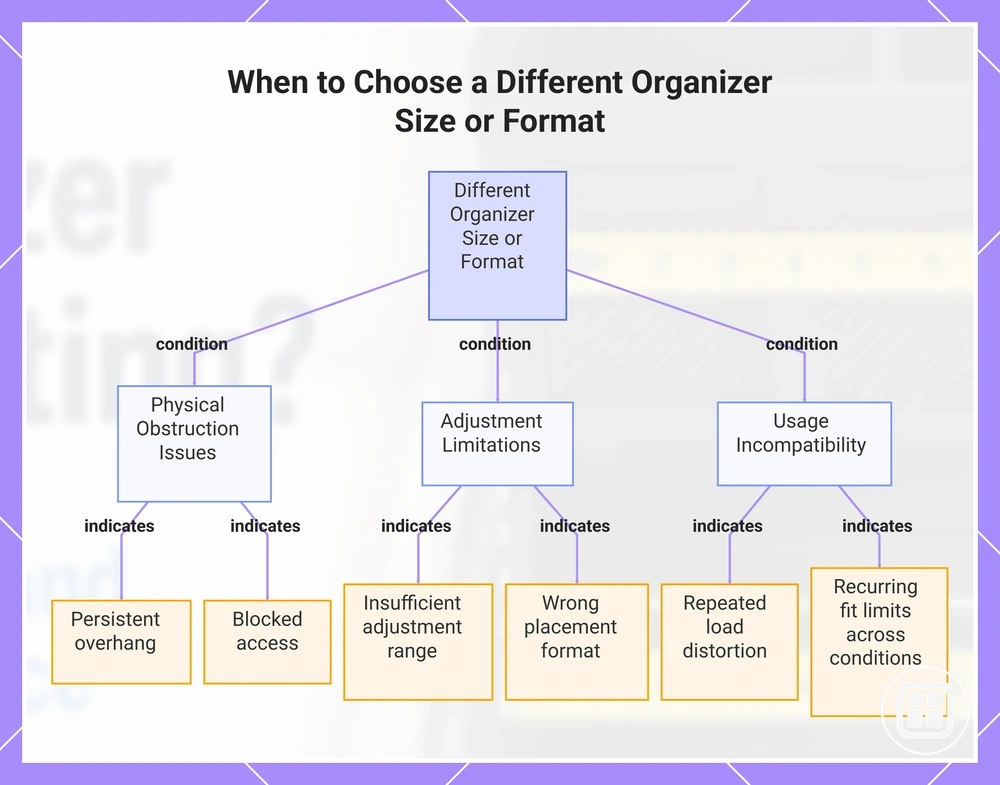
When a Different Organizer Size or Format Is Needed
A different size or different format is usually the next decision when adjustments no longer reduce repeated fit limits. One inconvenience does not necessarily indicate a mismatch, but recurring problems across normal use can suggest that the organizer and vehicle space are not working together effectively. The decision should be based on repeated fit limits.
When a Different Organizer Size or Format Is Needed can be determined by the replacement criteria below, which separate recurring fit conditions from one-time inconveniences.
- Persistent overhang: If persistent overhang remains after reasonable adjustments, a smaller organizer or foldable format may be a more suitable match for the available vehicle space.
- Blocked access: If blocked access continues during normal use, a different format may be needed because the current organizer footprint may not align with the placement area.
- Unusable compartments: If compartments remain difficult to use after adjustments, a different size or alternative format may better match the available space and storage conditions.
- Insufficient adjustment range: If straps, dividers, or panels cannot adapt to the placement area, insufficient adjustment range may indicate that an adjustable alternative format is the more appropriate next decision.
- Wrong placement format: If the organizer format does not suit the intended vehicle area, a placement-specific option may be more appropriate than continued adjustment.
- Repeated load distortion: If load redistribution repeatedly leads to bulging, collapse, or blocked access, the organizer size or format may not be well matched to the storage conditions.
- Repeated fit limits across multiple conditions: If multiple fit issues continue despite practical adjustments, the next decision may point toward a smaller, foldable, adjustable, or placement-specific alternative depending on the vehicle space.
This chart shows the key repeated fit limit conditions that indicate the need for a different organizer size or format.
When Poor Fit Is Actually a Sliding or Securing Problem
Poor fit concerns size and placement, while a sliding problem or securing problem concerns movement control after placement. An organizer can appear poorly fitted when movement changes its position, even if the original size and placement are suitable. The key diagnostic boundary is whether the issue comes from fit or from movement control.
When Poor Fit Is Actually a Sliding or Securing Problem can be clarified by separating fit symptoms from securing symptoms. The comparison table below links each issue type to its likely cause and the next diagnostic action.
| Issue type | Main signal | Likely cause | Next action |
|---|---|---|---|
| Poor fit | Persistent overhang, blocked access, or space mismatch | Size and placement may not match the available vehicle area | Check dimensions, placement area, and organizer format |
| Poor fit | Unusable compartments or restricted access | Wrong placement format or limited usable space | Evaluate whether a different size or format is needed |
| Sliding problem | Organizer shifts position during normal vehicle movement | Movement control issue after placement | Check whether the organizer is moving rather than mismatching the space |
| Securing problem | Organizer becomes loose, unstable, or changes position repeatedly | Securing issue that affects movement control | Check securing points and position stability before changing organizer size |
Back to hub overview if you want to return to the broader car organizer overview after completing this boundary check.